Hubble Unveils Ancient Star Cluster in Red, White, and Blue, Offering Glimpse into Early Universe
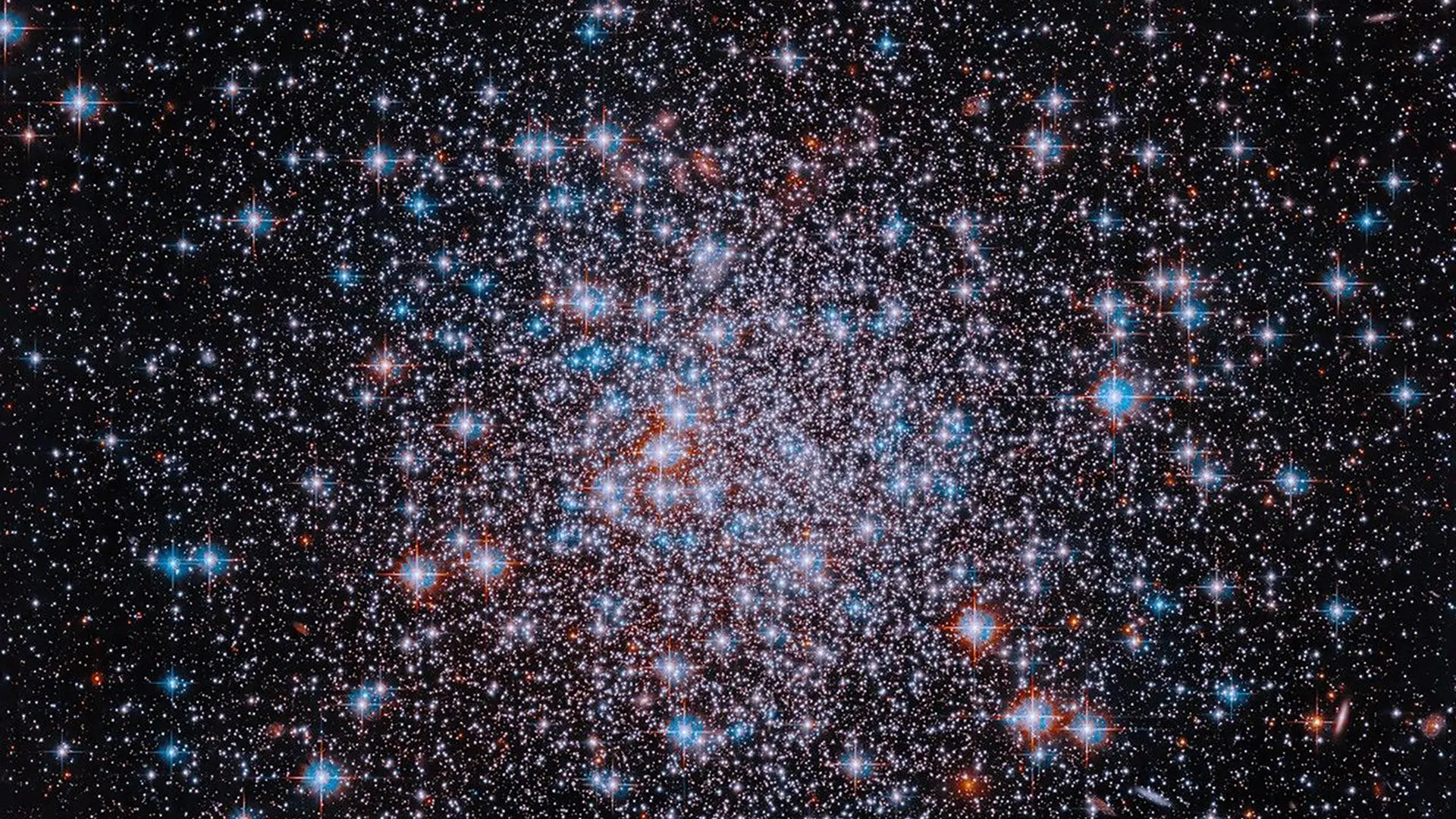
NASA's venerable Hubble Space Telescope has captured a stunning new image of one of the Milky Way's oldest star clusters, presenting a vibrant tapestry of stellar colors described as red, white, and blue. This spectacular cosmic view was released as a celestial tribute, coinciding with the nation's upcoming 250th anniversary, offering both a visual marvel and profound scientific insights.
The image showcases a dense collection of stars, each contributing to the cluster's overall hue. The descriptive 'red, white, and blue' palette likely refers to the varying types and ages of stars within the ancient grouping; hotter, younger stars often appear blue, while cooler, older stars tend towards red. Stars in different stages of their life cycle, or a blend of light from various stellar temperatures, could contribute to the white appearance, creating a visually dynamic scene for astronomers.
Beyond its aesthetic appeal, this ancient stellar grouping holds significant scientific value. Researchers believe that hidden within its depths are crucial clues regarding the universe's formative years. Studying these primordial clusters allows astronomers to peer back in time, providing a window into the conditions and processes that characterized the cosmos when it was much younger.
A key area of investigation within these clusters is the role of exploding stars, or supernovae. These powerful stellar deaths are not merely destructive events; they are cosmic engines responsible for forging and dispersing heavier elements throughout the universe. Without the enrichment provided by supernovae in the early universe, the raw materials necessary for the formation of planets, and ultimately life, would not have been available.
Hubble's continued ability to resolve individual stars within such distant and ancient structures underscores its enduring legacy as a premier astronomical observatory. For over three decades, the telescope has consistently delivered groundbreaking observations, pushing the boundaries of our understanding of galactic evolution, stellar life cycles, and the universe's origins.
The ongoing analysis of these observations contributes to a broader understanding of how our galaxy and the universe at large have evolved since the Big Bang. Each new image from Hubble, particularly those of such ancient and significant objects, adds another piece to the complex puzzle of cosmic history, guiding scientists toward a more complete picture of our place in the vast cosmos.


Comments (0)
Be the first to comment.
Join the discussion