Hubble Telescope Captures Dazzling Half-Million Star Portrait, Offering Glimpse into Milky Way's Origins
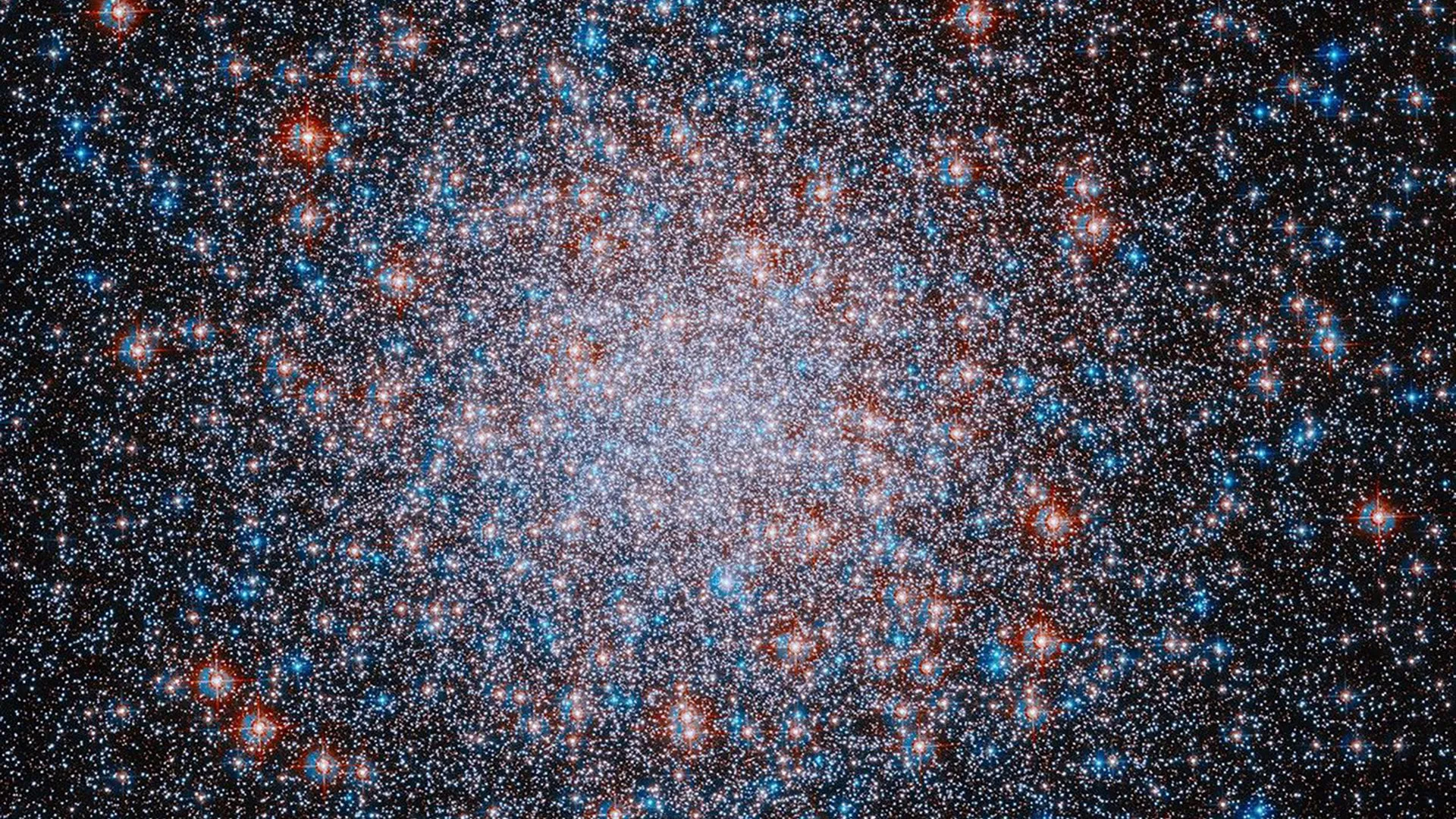
In a celestial tribute marking the United States' 250th anniversary, NASA has unveiled a breathtaking new image from the Hubble Space Telescope. The stunning portrait features Messier 3, an ancient globular cluster brimming with more than 500,000 stars, providing both a visual spectacle and a valuable scientific resource.
Messier 3, located within our galactic neighborhood, is one of the oldest and largest known globular clusters. These dense spherical collections of stars are thought to be remnants from the early universe, containing some of the oldest stars in existence. Hubble's unparalleled clarity allows astronomers to resolve individual stars within this 'star-spangled sea,' revealing its intricate structure and immense scale.
Beyond its aesthetic appeal, this dense stellar gathering plays a crucial role in scientific inquiry. Researchers are leveraging observations of Messier 3 to piece together the complex history and evolution of our own galaxy, the Milky Way. By studying the characteristics of stars within such ancient clusters, scientists can deduce conditions that prevailed billions of years ago.
A key aspect of Messier 3's scientific significance lies in its population of rare stars. These unique stellar types offer critical clues about stellar life cycles and the chemical enrichment of the universe over time. Their presence and distribution within the cluster provide astronomers with a cosmic laboratory to test theories of stellar evolution and galactic formation.
The continued operation of the Hubble Space Telescope, a collaboration between NASA and the European Space Agency, remains vital for such deep-space observations. Despite its age, Hubble consistently delivers high-resolution images that are instrumental in expanding humanity's understanding of the cosmos, from nearby planets to distant galaxies and, in this case, ancient star clusters.
Studying globular clusters like Messier 3 helps scientists understand how galaxies like the Milky Way assembled and evolved. These clusters are often considered 'fossils' of the early universe, preserving conditions and stellar populations that have long since changed in other parts of the galaxy. Insights gained from Messier 3 can inform models of the Milky Way's initial formation and subsequent development.
As astronomers continue to analyze the wealth of data captured by Hubble, the potential for new discoveries within Messier 3 remains high. Each detailed observation not only enhances our cosmic photo album but also propels our understanding of the universe's past, present, and future, further cementing the legacy of this remarkable space observatory.


Comments (0)
Be the first to comment.
Join the discussion