YouTuber Hacks Super Mario 64 onto SNES Using Homebrew Engine and Chip Upgrade
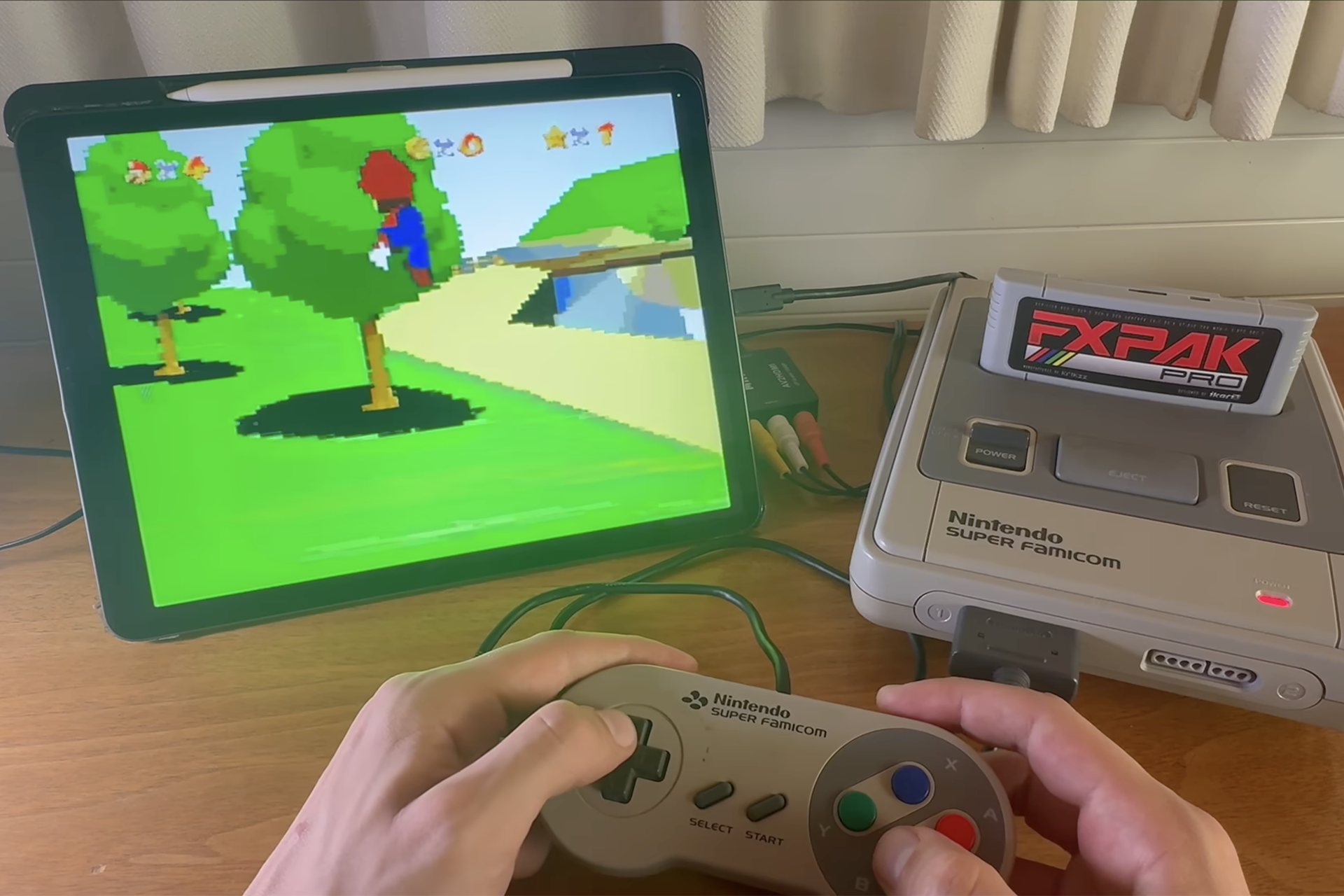
A content creator on YouTube has demonstrated that the iconic 1996 Nintendo 64 title Super Mario 64 can be made to run on a Super Nintendo Entertainment System, a feat that the original hardware designers never achieved. The video, which quickly amassed thousands of views, showcases the game booting from a cartridge modified with a custom processor and a specially written software layer.
Super Mario 64 was built for the Nintendo 64’s 64‑bit architecture, a substantial leap beyond the 16‑bit SNES. The disparity in CPU speed, memory capacity, and graphics capabilities has long made the idea of a direct port seem impossible. Yet the YouTuber, who goes by the handle "RetroEngineer," argued that the SNES’s hardware could be extended with modern components to meet the game’s minimum requirements.
To bridge the gap, the creator designed a bespoke engine that translates the game’s instructions into a form the SNES can interpret. The core of the setup is an enhancement chip—similar in concept to the Super FX and SA-1 chips used in earlier SNES titles—mounted on a custom PCB that plugs into the console’s cartridge slot. The chip supplies additional RAM, a faster processor core, and a graphics pipeline capable of handling the three‑dimensional rendering demanded by Super Mario 64. The software layer handles tasks such as texture mapping, collision detection, and input conversion, allowing the original game code to run with only minor timing adjustments.
The demonstration has sparked lively discussion among retro‑gaming enthusiasts and preservationists. Some praise the ingenuity, noting that the project highlights the flexibility of the SNES’s cartridge‑based expansion model. Others caution that the approach relies on hardware that is not widely available, limiting its practicality to hobbyists with the means to fabricate or source the custom chip. Nonetheless, the video has reignited interest in what can be achieved when modern engineering meets classic consoles.
Looking ahead, the creator hints at further experiments, including attempts to run other 64‑bit games on the SNES platform. While the current setup remains a proof of concept rather than a consumer‑ready product, it underscores a broader trend: the growing community of developers who repurpose legacy hardware with contemporary technology. Whether this leads to a new wave of homebrew releases or simply serves as a technical curiosity, the project demonstrates that the boundaries of classic gaming hardware are still being explored, decades after their original release.



Comments (0)
Be the first to comment.
Join the discussion