DJ Turns Music Mixer Into Rocket‑Control Interface in Gizmodo‑Featured Experiment
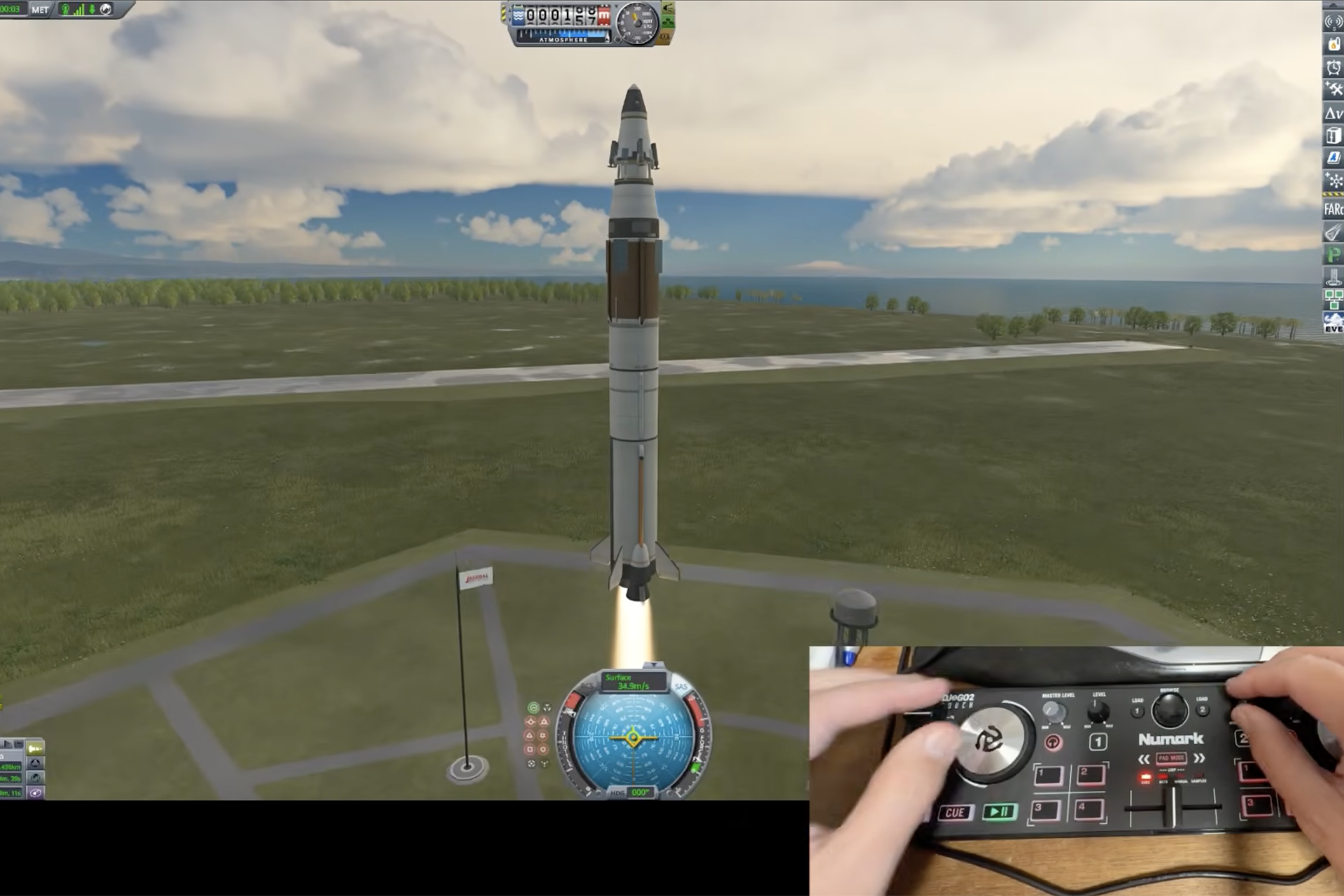
A recent Gizmodo feature spotlights a daring experiment in which a professional DJ teamed up with aerospace hobbyists to see if a standard audio mixer can be repurposed to pilot a small rocket. The project, described as a blend of performance art and engineering, aims to explore unconventional human‑machine interfaces by mapping fader movements to thrust commands.
The DJ, who prefers to remain anonymous, set up a live demonstration at a community makerspace, connecting a four‑channel mixing console to the onboard flight controller of a hobby‑grade rocket. Each channel corresponded to a specific control surface or motor throttle, allowing the DJ to "mix" the rocket's trajectory much like a track is mixed in a club.
According to the Gizmodo report, the test flight took place under clear skies and used a commercially available model rocket equipped with a programmable electronic speed controller. When the DJ adjusted the low‑frequency fader, the rocket’s main engine responded with incremental thrust changes; higher‑frequency knobs altered the orientation of the fins, effectively steering the vehicle.
While the concept may sound like a stunt, the underlying technology taps into a broader trend of using familiar consumer devices to simplify complex control tasks. Similar approaches have been explored in drone piloting, where game controllers replace traditional joysticks, and in assistive technology, where adaptive interfaces enable users with limited mobility to operate machinery.
The experiment also raises questions about safety and precision. The team conducted multiple dry runs using simulation software before the live launch, and all flight parameters were kept within the limits set by the Federal Aviation Administration for hobby rockets. No injuries or property damage were reported, and the rocket completed a brief, controlled ascent before deploying its parachute for a safe recovery.
Industry observers note that such cross‑disciplinary collaborations could inspire new educational tools. By linking the tactile feedback of audio equipment with aerospace controls, educators might engage students who are more attuned to music and pop culture than to traditional engineering curricula.
Looking ahead, the DJ and the engineering team plan to refine the interface, adding programmable presets that could allow a single knob turn to execute complex maneuvers. They also hope to open the methodology to other creators, inviting musicians, gamers, and hobbyists to experiment with alternative control schemes for aerial devices.
Gizmodo’s coverage positions the project as a proof of concept rather than a commercial product, emphasizing its role in pushing the boundaries of how everyday tools can be reimagined for scientific and artistic purposes.


Comments (0)
Be the first to comment.
Join the discussion