Vendors Offer Diverging Paths as Enterprises Wrestle With AI Agent Access Controls
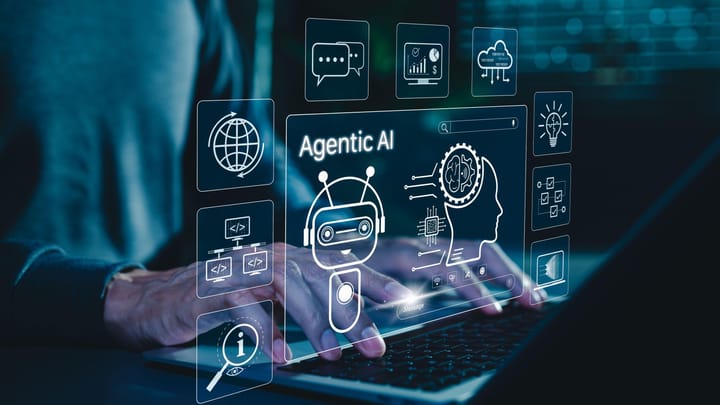
Enterprises deploying generative AI agents are confronting a growing need to enforce strict access‑control policies that keep these tools confined to their intended duties. Security leaders are seeing a convergence of identity verification, runtime monitoring, and development‑stage safeguards, but the market offers a patchwork of solutions that leaves chief information security officers (CISOs) weighing competing trade‑offs.
At the core of the challenge is the fluid nature of AI agents, which can dynamically request data, invoke APIs, or modify code as they learn and adapt. Traditional perimeter defenses are ill‑suited to such behavior, prompting vendors to embed identity‑as‑a‑service mechanisms that continuously authenticate an agent’s provenance and its privilege level before each action. This approach mirrors zero‑trust principles that have been applied to human users and devices for years.
Beyond identity, runtime controls are emerging as a second pillar. Vendors are integrating real‑time policy engines that inspect an agent’s execution context, flagging anomalous calls to sensitive resources or deviations from predefined workflows. Some solutions employ sandboxing or container‑level isolation to limit the impact of a rogue request, while others rely on behavior‑based analytics to trigger automated remediation when thresholds are crossed.
Development‑time safeguards round out the triad. By embedding policy checks into the model‑training pipeline, firms can embed guardrails that prevent the creation of agents with overly broad permissions. Tools that scan model code for hard‑coded credentials, insecure data handling routines, or unapproved third‑party libraries are gaining traction, offering a proactive layer of defense before agents are ever deployed.
Vendors, however, are not aligned on how to blend these elements. Some prioritize a unified platform that stitches identity, runtime, and development controls together under a single dashboard, promising streamlined governance for security teams. Others offer best‑of‑breed modules that excel in one domain but require custom integration for the others. The disparity forces CISOs to evaluate not only technical fit but also operational overhead, vendor lock‑in risk, and the maturity of each offering.
Analysts predict that as AI agents become more embedded in core business processes, the market will coalesce around standards for AI‑specific access control, much as the industry did for cloud security. In the meantime, security leaders are advised to pilot multiple solutions, map agent workflows against policy requirements, and maintain a clear inventory of AI assets. The decisions made today will shape how safely organizations can harness the productivity gains of autonomous AI without exposing critical data or systems to unintended risk.


Comments (0)
Be the first to comment.
Join the discussion