UN adopts resolution urging use of more proportionate world maps for Africa
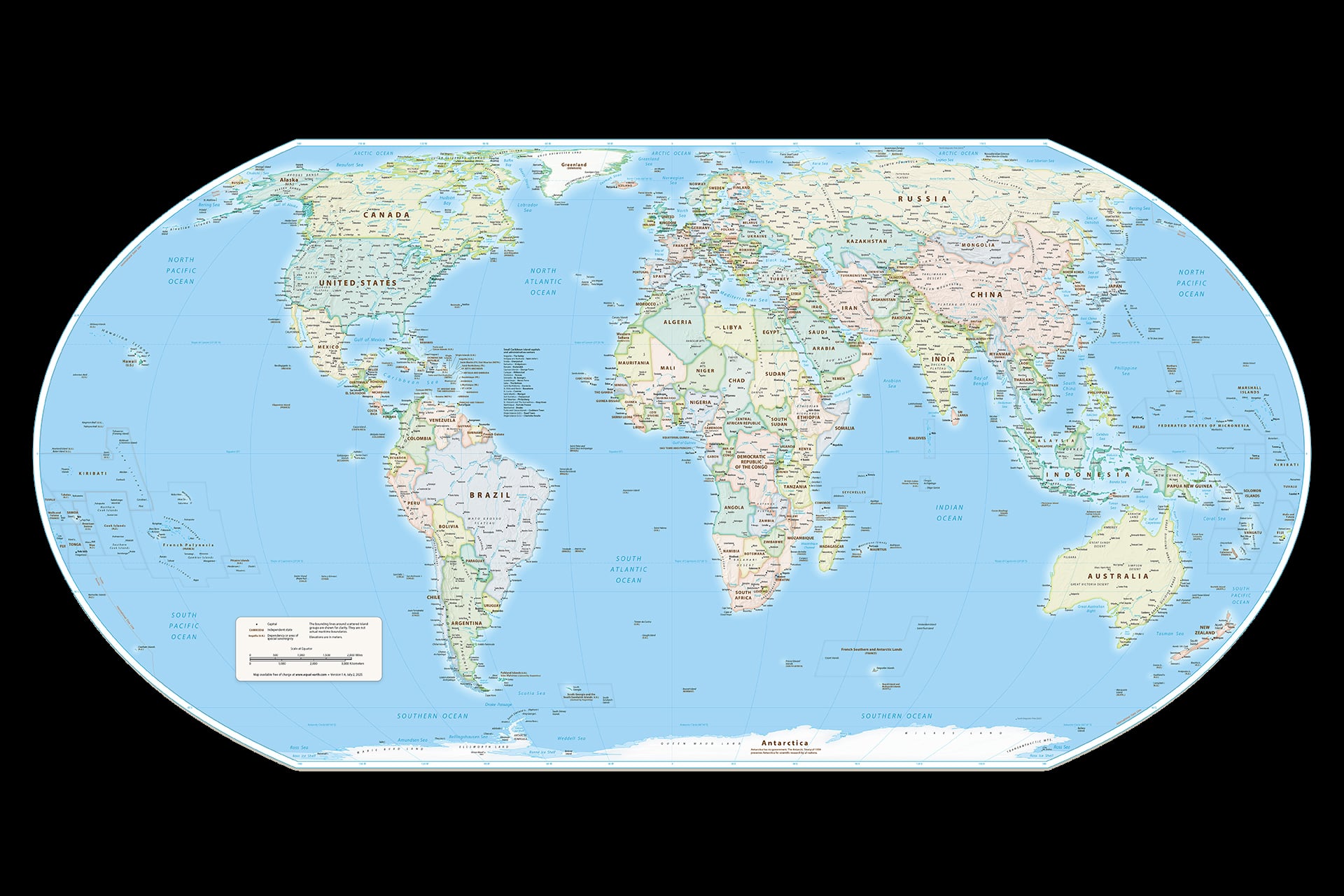
The United Nations General Assembly voted in favour of a resolution that calls on member states and UN agencies to adopt a world map that shows Africa at its true geographic size, marking the first coordinated effort to address long‑standing cartographic distortions at a global level.
For centuries, the most widely used world maps have been based on the Mercator projection, a design that stretches landmasses near the equator and shrinks those farther north and south. The result is a visual representation that makes Africa appear roughly one‑third of its actual area, a distortion that scholars say reinforces outdated stereotypes and hampers accurate geographic understanding.
The newly passed resolution urges all UN bodies, educational ministries, and publishing houses to replace the conventional depiction with a revised template that more faithfully reflects the continent’s dimensions. It also encourages digital platforms, atlas producers, and textbook authors to update their graphics within a reasonable timeframe, though the text does not prescribe a specific deadline.
Calls for a more accurate map have grown louder in recent years, driven by educators, African scholars, and civil‑society groups who argue that visual bias shapes public perception as much as written narratives. Earlier campaigns highlighted how the skewed image can affect everything from tourism marketing to foreign investment decisions, prompting a broader conversation about decolonising visual tools.
If implemented widely, the change could ripple through school curricula, reference materials, and online mapping services, offering students and the public a clearer sense of the continent’s scale relative to other regions. Advocates hope that a more proportionate visual will reinforce Africa’s economic and cultural significance in the global imagination.
Transitioning to the new standard will require coordination among cartographers, publishers, and software developers. While the resolution does not allocate dedicated funding, it invites UN agencies to provide technical guidance and to share best‑practice templates that can ease the switch for resource‑constrained nations.
The move aligns with a broader push within the UN to reassess symbols and language that may perpetuate historical biases. Observers note that the resolution, while modest in its immediate scope, signals a willingness to confront subtle forms of misrepresentation and could set a precedent for future reforms in other visual domains.


Comments (0)
Be the first to comment.
Join the discussion