Former President Trump Reportedly Weighs AI Controls Amid Security Concerns
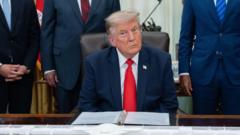
Former President Donald Trump is reportedly considering a significant shift in his approach to artificial intelligence regulation, now contemplating controls over the rapidly evolving technology. This potential pivot comes in the wake of recent security incidents involving OpenAI, marking a departure from his previous administration's generally hands-off stance on emerging tech sectors.
During his time in office, the Trump administration was largely characterized by an emphasis on deregulation and fostering innovation through minimal government intervention, particularly within the burgeoning technology landscape. The prevailing philosophy was to allow market forces and private sector development to guide the growth of cutting-edge fields like artificial intelligence, rather than implementing proactive governmental oversight.
However, recent security breaches affecting OpenAI, a prominent developer in the AI space, have apparently prompted a re-evaluation of this approach. While specific details of these incidents were not provided, they have seemingly highlighted potential vulnerabilities and risks associated with advanced AI systems, drawing attention to the need for greater security and potentially broader regulatory frameworks.
The consideration of AI controls by a former president with significant political influence underscores the growing urgency surrounding the technology's societal impact. The debate over AI regulation is multi-faceted, encompassing concerns ranging from data privacy and algorithmic bias to national security implications and the potential for job displacement. Advocates for regulation often point to ethical dilemmas and the need to prevent misuse, while opponents caution against stifling innovation and hindering the United States' competitiveness on the global stage.
Should such controls be pursued, they could manifest in various forms, including mandates for transparency in AI development, requirements for robust security protocols, or even limitations on certain applications of the technology. Implementing effective regulation for AI presents unique challenges due to its rapid advancement and complex technical nature, requiring a delicate balance between oversight and fostering continued progress.
Any move towards increased AI regulation, particularly from a figure like Donald Trump, could signal a broader bipartisan consensus forming around the necessity of governing this powerful technology. It suggests a growing recognition across the political spectrum that the potential risks of unbridled AI development may now outweigh the perceived benefits of a purely laissez-faire approach.
This reported contemplation represents a noteworthy moment in the ongoing national conversation about artificial intelligence. It highlights how real-world incidents, such as the OpenAI security breaches, can serve as catalysts for re-evaluating long-held policy positions and potentially shaping the future regulatory landscape for one of the 21st century's most transformative technologies.


Comments (0)
Be the first to comment.
Join the discussion