Astronaut Captures Dramatic 'Skull' Volcano and Ancient Lava Scars in Sahara
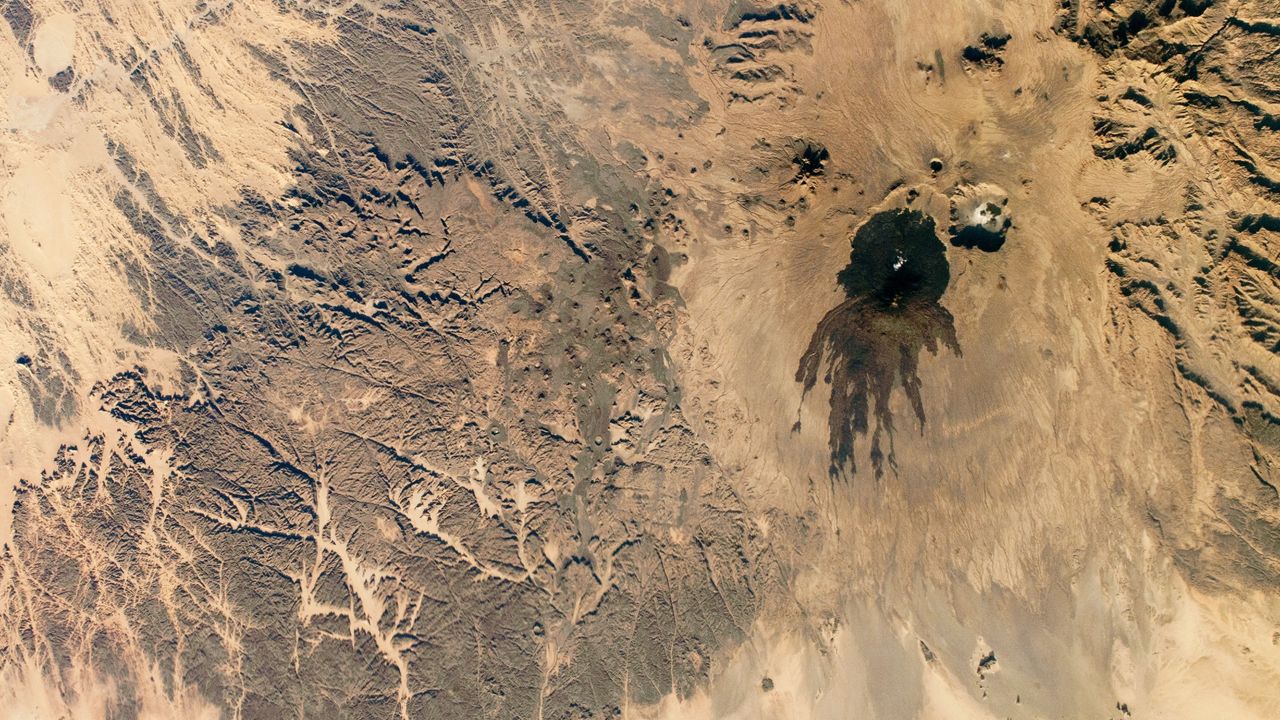
From the unique vantage point of the International Space Station, an unnamed astronaut captured a striking image on September 23, 2019, revealing the Toussidé volcano in Chad. The photograph offers a remarkable perspective on Earth's geological history, highlighting distinctive ancient lava flows and a caldera that, from orbit, bears a striking resemblance to a skull.
Toussidé, an active stratovolcano, is a prominent feature within the Tibesti Mountains, a rugged range situated in the heart of the Sahara Desert. Standing as one of Africa's largest volcanoes, its expansive caldera and numerous past lava flows attest to a long and powerful geological history, shaping the surrounding arid landscape.
The astronaut's image particularly emphasizes the petrified remains of these ancient lava flows, which appear as dark, stark scars across the volcanic terrain. Adjacent to these flows, the volcano's caldera forms a distinctive, skull-like shape, creating a powerful visual contrast against the lighter desert hues. This feature underscores the immense, enduring forces that have sculpted our planet's surface over millennia.
Observations from the International Space Station provide invaluable data for a wide range of scientific disciplines. Astronaut photography, in particular, complements automated satellite imagery by offering unique, often artistically composed, views that can draw attention to specific geological features, environmental changes, or weather phenomena in compelling ways.
The Tibesti Mountains region, due to its remote and challenging terrain, is often difficult to study extensively from the ground. Orbital imagery, such as this photograph of Toussidé, therefore plays a crucial role in helping researchers understand the long-term patterns of volcanic activity, the processes of erosion, and the unique environmental characteristics of this vast desert expanse.
The visible ancient lava flows serve as a chronological record of Toussidé's past eruptions, illustrating the volcano's life cycle and its contribution to the geological evolution of the region. Even in dormancy, volcanic landscapes continue to be shaped by natural forces, leaving behind dramatic and often visually stunning geological formations.
Ultimately, such imagery not only supports scientific research but also provides a powerful visual testament to the dynamic and often breathtaking beauty of Earth's surface. These orbital perspectives help foster a broader appreciation for our planet's complex geological processes and its ever-changing natural wonders, seen through the eyes of those orbiting above.


Comments (0)
Be the first to comment.
Join the discussion