New Study Shows Martian Gullies Likely Formed by Carbon Dioxide Frost, Not Water
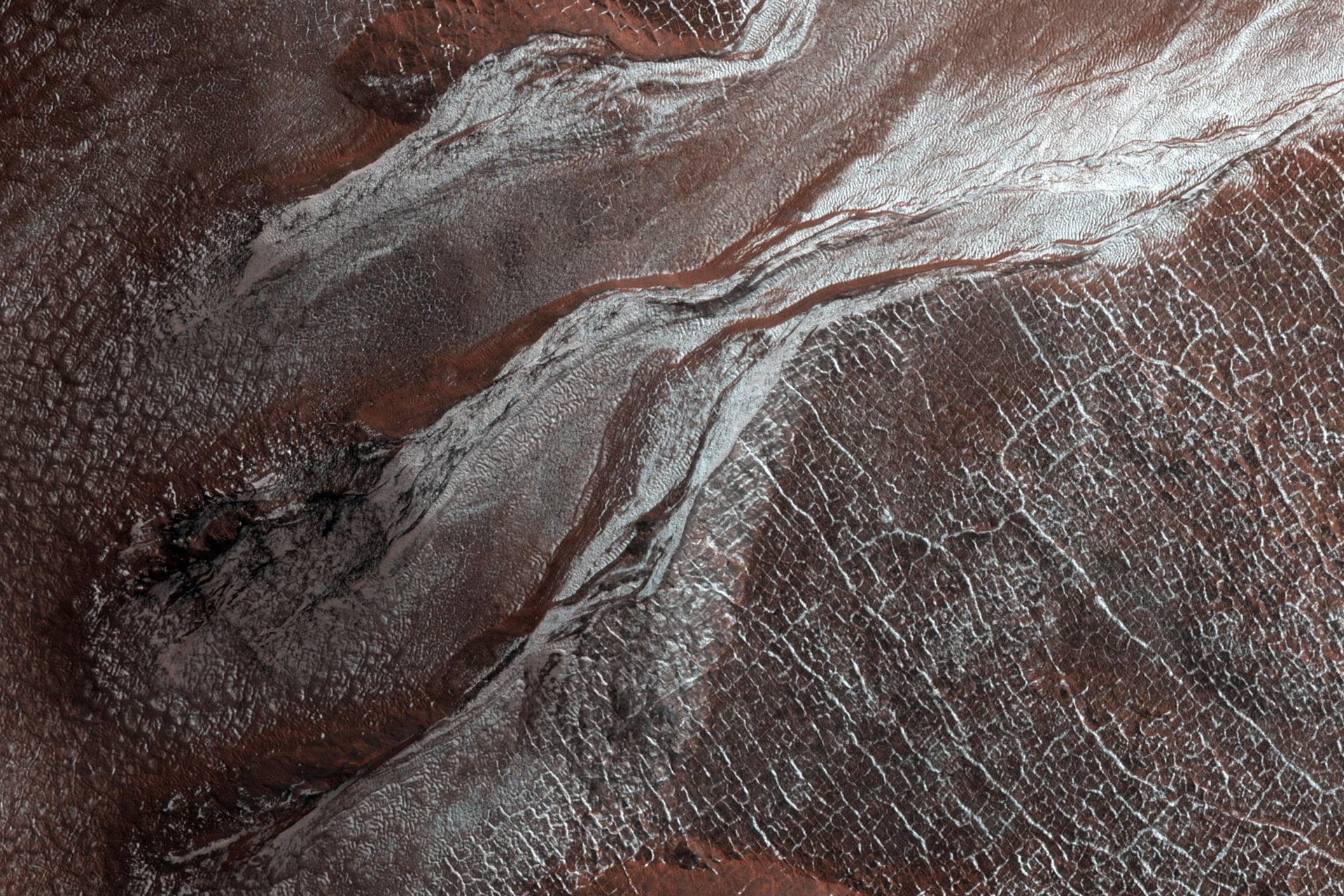
Recent high‑resolution imaging analysis challenges the long‑standing view that the small valleys and channels on Mars’ slopes were carved by liquid water, pointing instead to seasonal carbon‑dioxide frost as the primary driver.
The gullies, first catalogued in the early 2000s by orbiting spacecraft, sparked excitement because their shape—narrow incisions with alcove‑like heads and fan‑shaped deposits—mirrored features created by water on Earth, leading many to see them as evidence of recent wet activity.
A team of planetary scientists re‑examined these formations using the HiRISE camera aboard the Mars Reconnaissance Orbiter, which captures details as fine as 30 cm per pixel. By comparing images taken across multiple Martian years, they documented that new deposits appear during the planet’s winter, when surface temperatures are low enough for carbon‑dioxide frost to accumulate, and then vanish in the spring as the frost sublimates.
This seasonal pattern aligns with the behavior of CO₂ ice rather than any temperature window that could sustain liquid water. Laboratory work and climate simulations support the idea that thin layers of CO₂ frost can become unstable, flow downslope, and entrain loose soil, carving channels that closely resemble those previously attributed to water.
Geographically, many active gullies are situated on pole‑facing slopes that receive limited sunlight, making them prime locations for frost retention. The researchers argue that this bias reinforces a frost‑driven formation model, although they acknowledge that older, now‑inactive gullies might have formed under different, possibly wetter, conditions.
While the study reduces the likelihood of contemporary liquid water shaping these features, it does not dismiss the possibility of a more aqueous past on Mars. The work highlights the value of time‑sequenced, high‑resolution observations for deciphering planetary geology, and suggests that future missions equipped with ground‑penetrating radar or in‑situ sampling could further assess whether subsurface ice contributed to the ancient gullies.


Comments (0)
Be the first to comment.
Join the discussion