Breakthrough Technique Enables Five Silicon Qubits to Operate in Unison with Near‑Perfect Fidelity
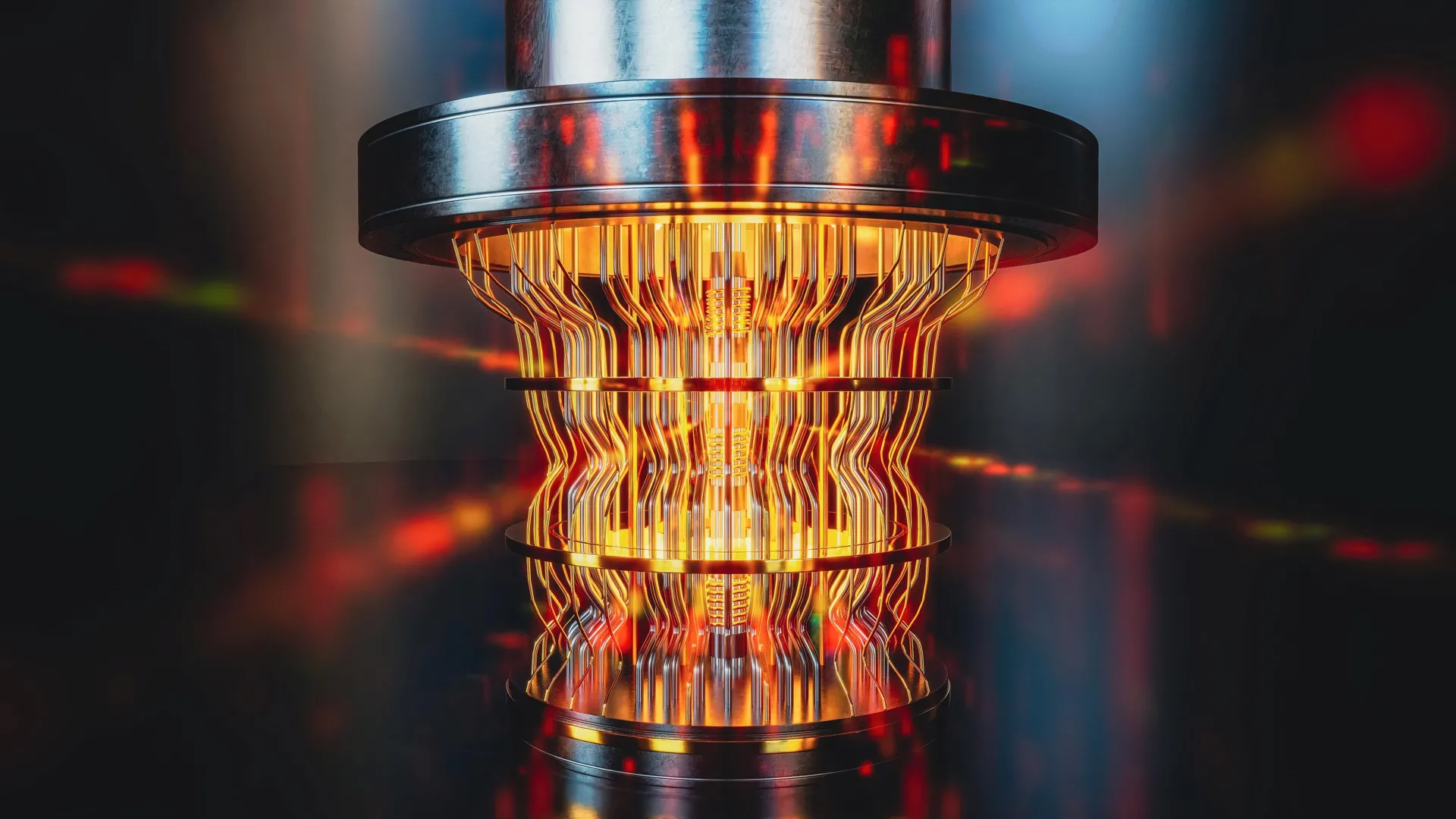
Researchers have announced a method that allows five silicon‑based quantum bits, or qubits, to function simultaneously while preserving a fidelity rate of roughly 99.9 percent. The achievement addresses a long‑standing obstacle in the race to build larger, fault‑tolerant quantum processors, where maintaining precision across multiple interacting qubits has proven exceptionally difficult.
The team, working with silicon chips that mimic the semiconductor technology used in everyday electronics, devised a control scheme that synchronizes the qubits’ operations without introducing the noise that typically degrades performance. By fine‑tuning the timing and voltage pulses that manipulate each qubit, they were able to keep error rates at a level comparable to those seen when a single qubit is operated in isolation.
This level of accuracy matters because quantum error correction—essential for scaling beyond a handful of qubits—requires each individual operation to be correct well over 99 percent of the time. Previously, adding more qubits to a silicon platform resulted in a steep drop in fidelity, forcing researchers to either limit system size or resort to more complex, less scalable architectures. The new technique demonstrates that silicon, a material already mastered by the micro‑chip industry, can meet the stringent demands of quantum computing without sacrificing scalability.
Industry observers note that the breakthrough could accelerate the integration of quantum processors into existing manufacturing pipelines. Silicon qubits benefit from the same lithographic processes that produce billions of classical transistors, potentially lowering production costs and speeding up the transition from laboratory prototypes to commercial devices. While the current demonstration involves only five qubits, the underlying principles are expected to extend to larger arrays, paving the way for the next generation of quantum chips.
Looking ahead, the researchers plan to test the control protocol on larger silicon lattices and to combine it with emerging error‑correction codes. If successful, the approach could bring practical quantum advantage—where quantum computers solve problems beyond the reach of classical machines—closer to reality across fields such as cryptography, materials science, and complex optimization. For now, the work stands as a clear signal that the hidden barriers to scaling silicon quantum hardware are beginning to crumble.



Comments (0)
Be the first to comment.
Join the discussion