Physicists Rethink Relativity After Ultra‑Distant Photon Defies Expectations
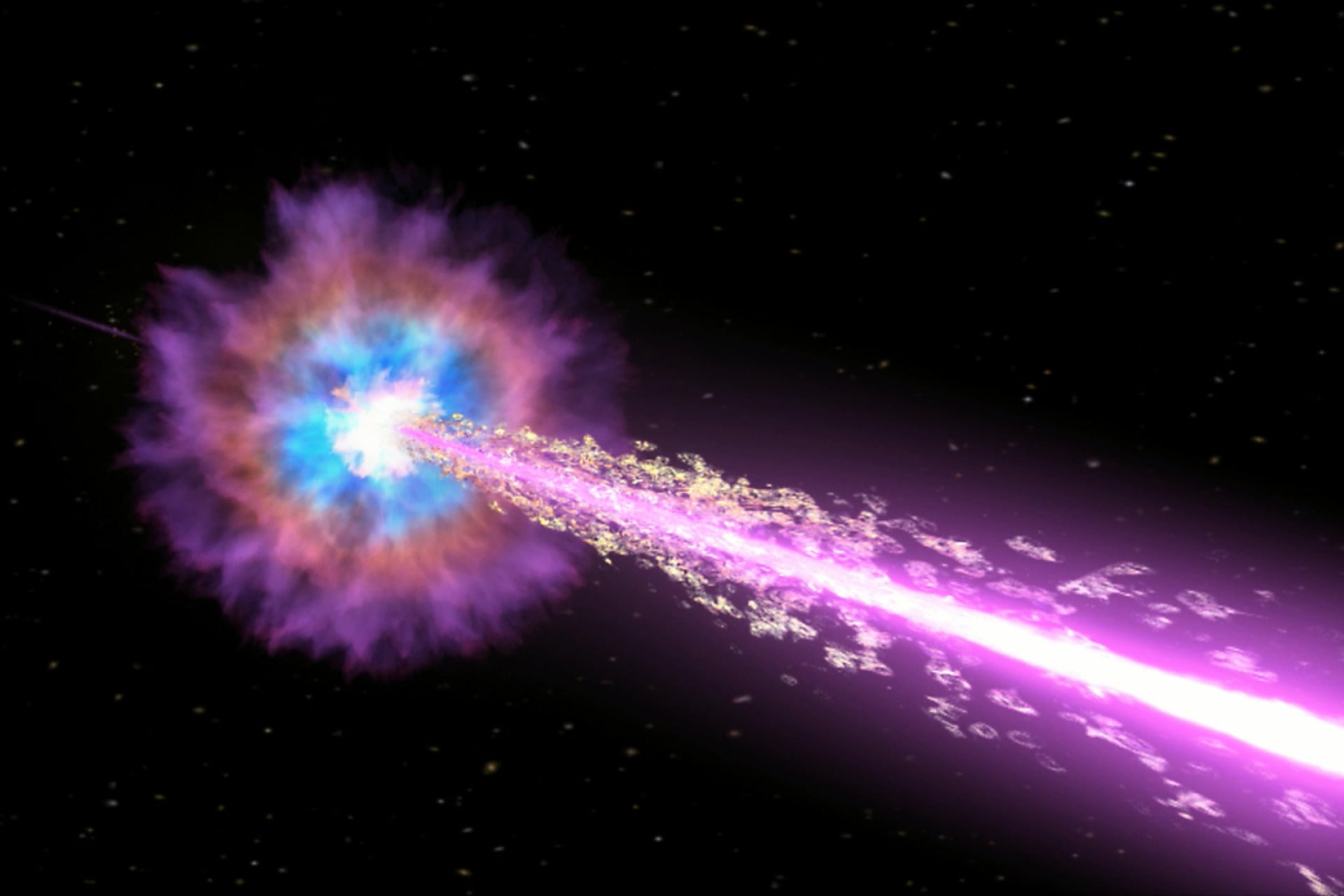
A photon that appears to have traveled across billions of light‑years without losing its energy has sparked a fresh debate among physicists, who say the observation may require revisions to aspects of Einstein's theory of relativity.
The particle was recorded by a high‑sensitivity telescope array while monitoring a distant cosmic explosion. Its arrival, despite the extreme distance and the intervening intergalactic medium, was unexpected because conventional models predict that photons of such energy should be absorbed or scattered long before reaching Earth.
According to the prevailing framework of special relativity, the speed of light is a universal constant and photons should not experience alterations that would allow them to bypass known attenuation processes. The new detection suggests that, under certain conditions, the photon may have behaved in a way that contradicts those expectations.
In response, several theoretical groups have begun exploring extensions to the standard model that relax strict Lorentz invariance or incorporate quantum‑gravity effects. Some proposals involve tiny violations of the speed‑of‑light limit at ultra‑high energies, while others invoke novel interactions with dark‑matter fields that could preserve the photon’s integrity over cosmic distances.
Einstein’s relativity, formulated over a century ago, has withstood countless experimental tests, from particle accelerators to GPS satellites. Yet the theory is known to be incomplete when it comes to reconciling gravity with quantum mechanics, leaving room for subtle corrections that might only become apparent in extreme astrophysical settings.
The significance of the finding extends beyond theoretical speculation. If the photon truly evaded expected attenuation, it could reshape our understanding of how high‑energy radiation propagates through the universe, influencing models of gamma‑ray bursts, active galactic nuclei, and the cosmic background.
Researchers plan to verify the result by searching for similar events in archival data and by coordinating future observations with next‑generation observatories. Additional measurements will help determine whether the anomaly is a statistical fluke, an instrumental artifact, or a genuine signal of new physics.
While the scientific community remains cautious, the episode underscores how rare cosmic messengers can challenge entrenched ideas and push the boundaries of fundamental physics.


Comments (0)
Be the first to comment.
Join the discussion