New 3‑D Cosmic Cartography by DESI Challenges Core Assumptions in Cosmology
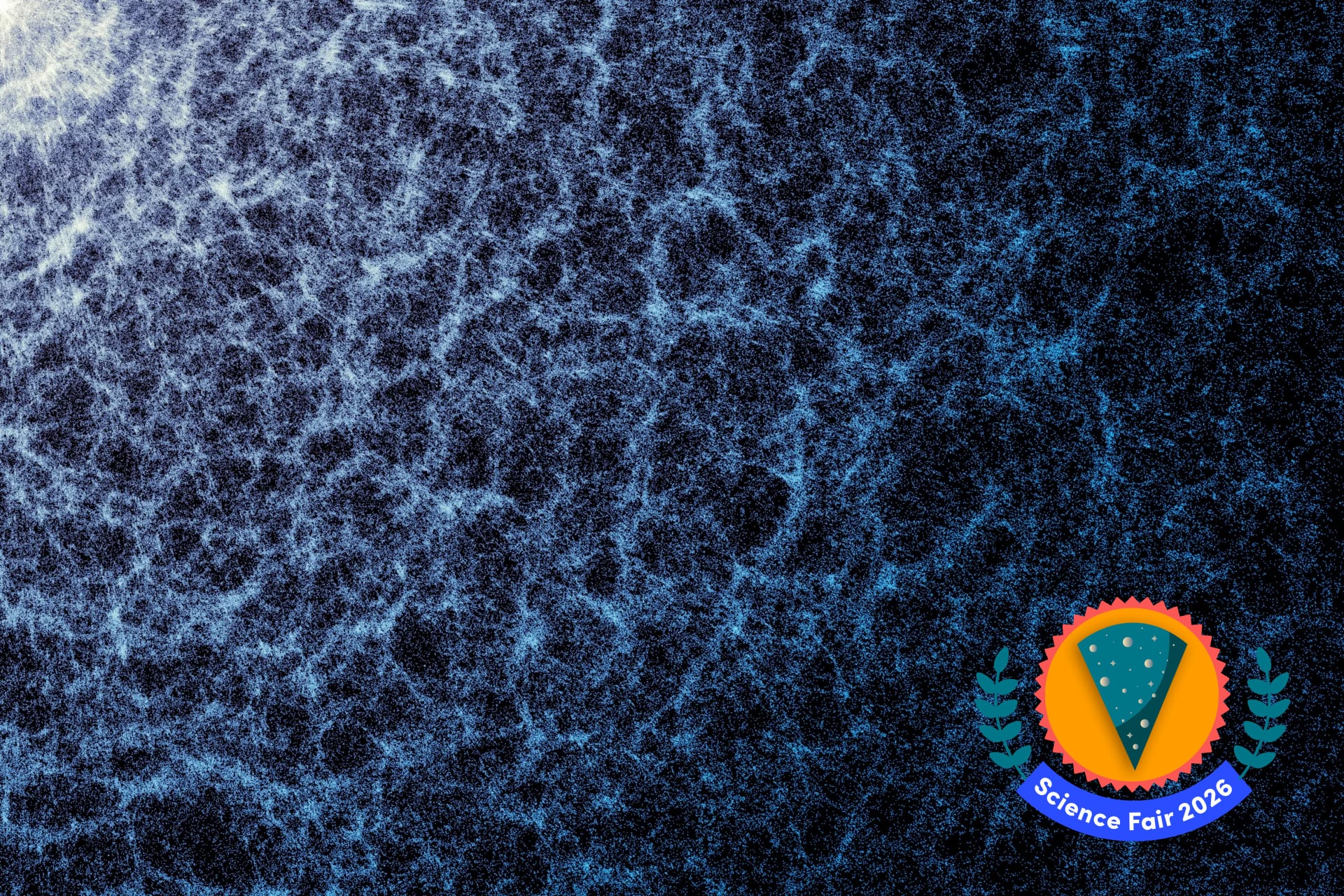
The Dark Energy Spectroscopic Instrument (DESI) collaboration has released the most extensive three‑dimensional map of the observable universe to date. By charting the positions of millions of galaxies and quasars across a vast swath of the sky, the map offers an unprecedented view of the large‑scale structure that underpins modern cosmology. Researchers say the sheer scope of the data set is already prompting a re‑examination of long‑standing models that describe the universe’s composition and its rate of expansion.
DESI, a joint effort involving more than a dozen institutions and hundreds of scientists, uses a 5000‑fiber spectrograph mounted on the Mayall telescope at Kitt Peak. Over the past few years the instrument has collected spectra for tens of millions of distant objects, converting redshift measurements into precise distance estimates. The resulting three‑dimensional catalogue spans a volume far larger than that covered by earlier surveys such as the Sloan Digital Sky Survey, allowing cosmologists to trace the cosmic web with finer granularity than ever before.
The new map is already exposing subtle discrepancies between observed clustering patterns and predictions derived from the standard Lambda‑Cold Dark Matter model. In particular, measurements of the distribution of matter on intermediate scales appear to be at odds with the values of the Hubble constant inferred from the cosmic microwave background. While the differences are modest, they are statistically significant enough to spark vigorous debate about whether additional physics—such as evolving dark energy or new particle species—might be required.
Many observers describe the current period as a “golden era” for cosmology, driven by a convergence of high‑precision surveys, advanced simulations, and improved analytical techniques. Alongside DESI, projects like the Vera C. Rubin Observatory and the Euclid space telescope are poised to deliver complementary data sets that will test the same cosmological parameters from independent angles. The synergy among these efforts promises to either reinforce the prevailing framework or reveal cracks that could lead to a paradigm shift.
Looking ahead, the DESI team plans to expand its coverage to include fainter galaxies and to refine redshift measurements with updated calibration pipelines. As the catalogue matures, researchers anticipate tighter constraints on dark energy’s equation of state and a clearer picture of how structures grew over cosmic time. Whether the emerging tensions resolve within the existing model or compel a revision of fundamental assumptions, the unprecedented depth of the new three‑dimensional map ensures that the next few years will be decisive for our understanding of the universe.


Comments (0)
Be the first to comment.
Join the discussion