NASA Prepares X‑59 Quiet Supersonic Jet for First Noise Evaluation This Year
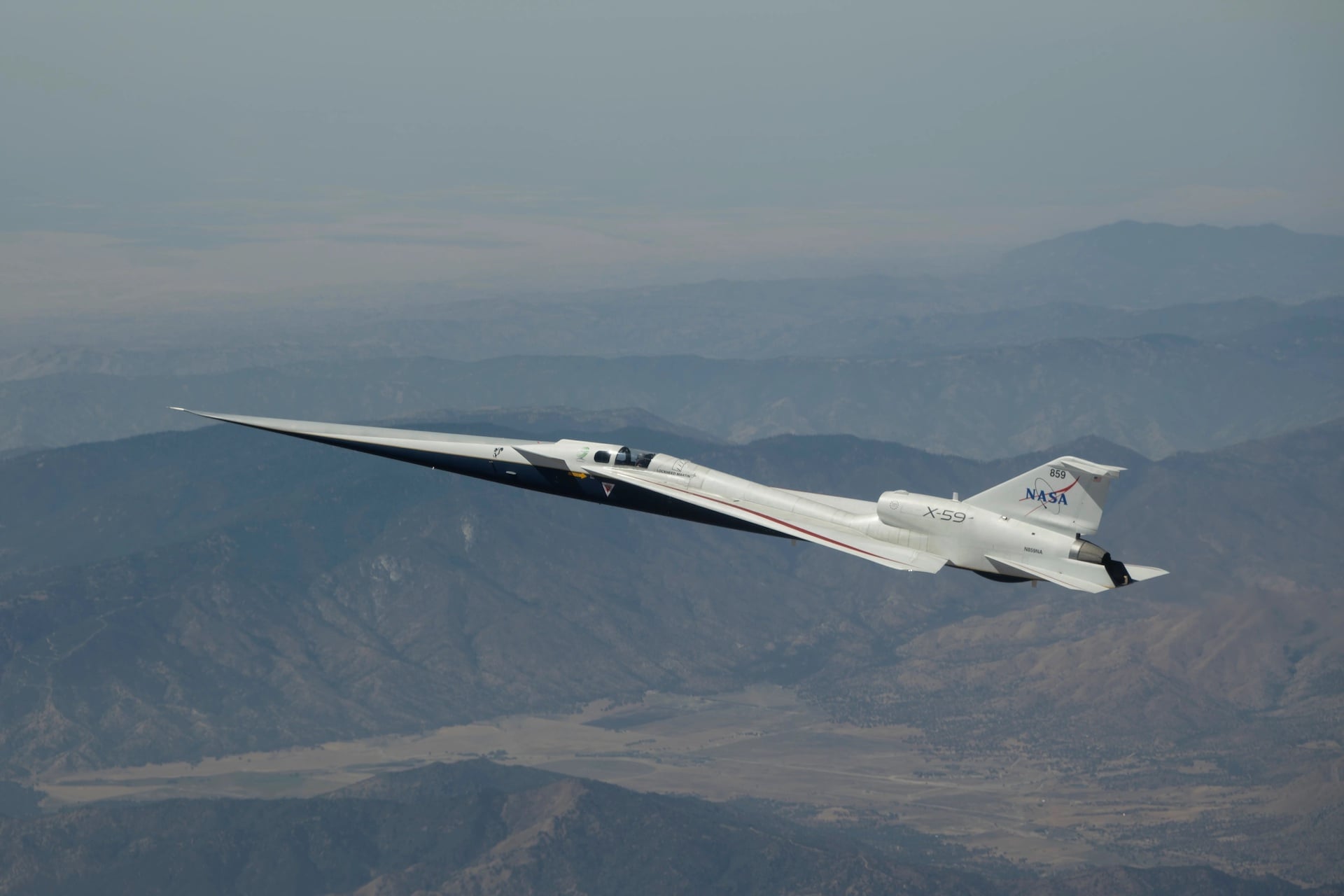
NASA announced it will conduct a noise test of its X‑59 Quiet Supersonic Technology aircraft later this year, aiming to measure how much quieter the prototype is compared to conventional supersonic planes.
The X‑59, built by Lockheed Martin under NASA’s Quiet Supersonic Technology program, is engineered to transform the traditional “sonic boom” into a softer “sonic thump” by spreading the shock wave over a longer distance through a specially contoured fuselage and an elongated nose.
During the upcoming test the jet will fly over a designated corridor while an array of ground‑based microphones records its acoustic signature, allowing engineers to compare real‑world data with earlier wind‑tunnel and simulation results.
Should the aircraft meet its noise targets, NASA plans to submit the findings to the Federal Aviation Administration, which is reviewing new regulations that could eventually allow supersonic flights over land. Current rules prohibit commercial supersonic travel over populated areas because of disruptive booms.
The effort fits into a larger push to revive commercial supersonic travel after the Concorde’s retirement in 2003. Industry observers view a quieter aircraft as essential for viable market routes, especially across the United States.
Beyond the engineering goals, NASA intends to use the X‑59 to collect data on public perception of low‑level sonic events, information that will shape future certification and rulemaking processes.
The flight is slated for later this year, pending final clearance. NASA officials say the aircraft has already completed extensive ground testing and a limited series of flight checks, positioning it for the acoustic measurement campaign.
If the test validates the design, it could lead to a second‑generation prototype and eventually a commercial version, potentially reopening trans‑oceanic routes at supersonic speeds without the noise penalties that halted earlier attempts.
Stakeholders will watch the outcome closely, as it may signal a turning point for the supersonic industry and for regulators seeking to balance technological progress with community impact.


Comments (0)
Be the first to comment.
Join the discussion