Meta partners with Korean startup to craft ultra‑dense CXL‑based AI datacenter
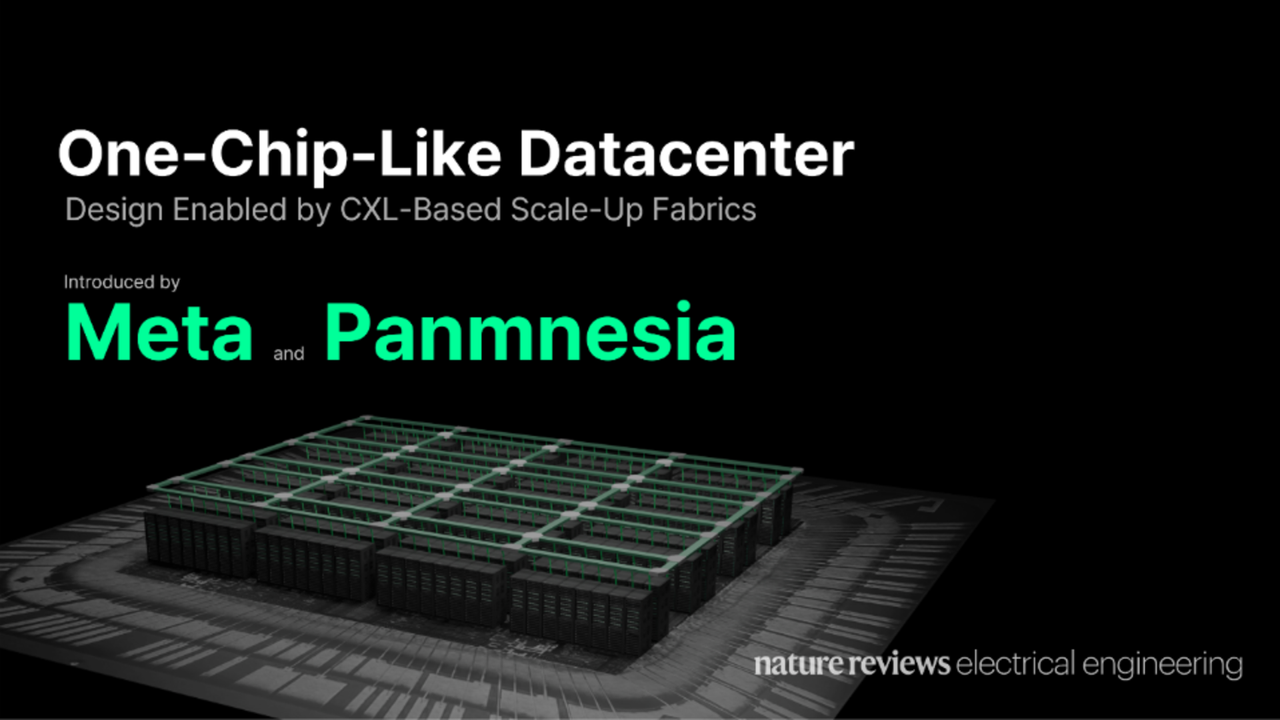
Meta is collaborating with a South Korean hardware firm to develop a highly integrated datacenter design that can host close to a thousand artificial‑intelligence GPUs within a single logical domain. The initiative leverages a Compute Express Link (CXL) architecture that the social‑media giant introduced last year, aiming to streamline communication between processors, accelerators and memory across many server racks.
The Korean company, Panmnesia, provides a CXL‑centric interconnect that links central processing units, graphics processing units and memory modules, allowing up to sixteen accelerators to be coordinated per CPU. This expands the earlier configuration, which supported coordination of only two devices per processor, and promises tighter synchronization for large‑scale AI workloads.
By unifying the hardware under a single domain, Meta hopes to reduce latency and improve bandwidth for training and inference tasks that power its recommendation engines, content moderation tools and emerging virtual‑reality applications. The dense arrangement also seeks to cut the physical footprint of AI clusters, a growing concern as the company expands its compute capacity to meet rising demand for generative AI features.
Industry observers note that the move reflects a broader shift toward composable infrastructure, where memory and accelerator resources can be pooled dynamically. CXL, an open standard backed by major chipmakers, enables such fluid resource allocation, and Meta’s early adoption signals confidence in its scalability for future AI models that will require ever‑larger parameter counts.
Meta’s partnership with Panmnesia follows a series of internal projects aimed at custom silicon and specialized hardware. While the company has not disclosed timelines or cost estimates, the collaboration suggests a strategic effort to control more of the datacenter stack, from chip design to rack‑level integration, reducing reliance on third‑party vendors.
Analysts expect that, if successful, the architecture could be rolled out to other data centers within Meta’s global network, potentially influencing how other tech firms design AI‑focused facilities. The next steps involve prototype testing across multiple racks, after which Meta will assess performance gains before committing to larger deployments.


Comments (0)
Be the first to comment.
Join the discussion