Steam Deck Still Competes in 2026 Amid Rising Prices and New Handheld Rivals
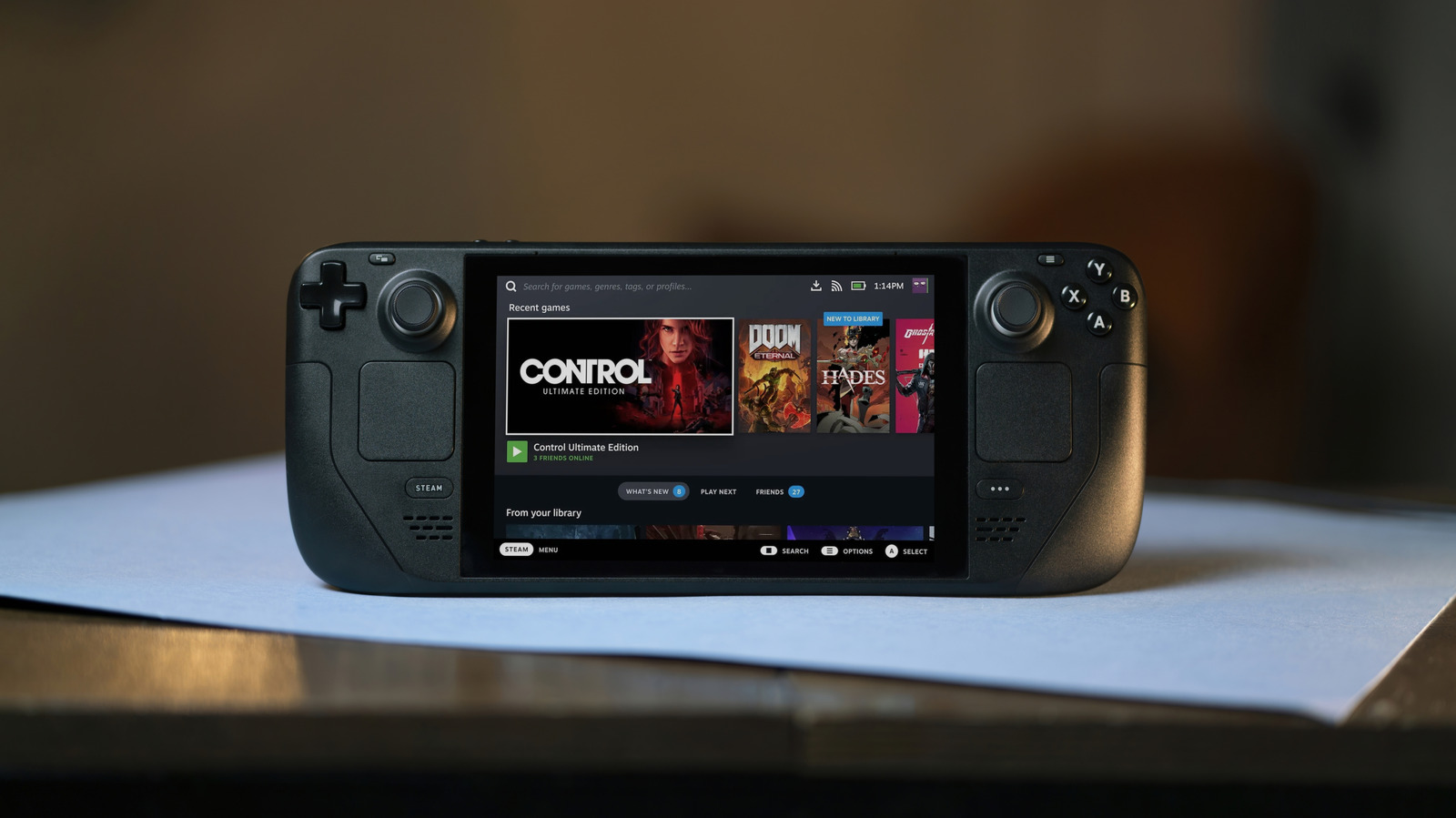
The handheld gaming market that Valve entered with the Steam Deck in 2022 continues to evolve, and as of mid‑2026 the device is still regarded as a capable portable PC, but its value proposition has narrowed. Early adopters praised its ability to run the full Steam library on a 7‑inch screen, yet newer entrants have introduced comparable performance at lower or similar price points, prompting buyers to reassess whether the Deck remains the best choice.
The current Steam Deck model ships with a custom AMD APU that pairs a Zen 2 CPU core cluster with RDNA 2 graphics, 16 GB of LPDDR5 RAM and a 64‑GB eMMC base storage option, expandable via a high‑speed microSD slot. Valve’s proprietary SteamOS 3.0, built on Arch Linux, provides a console‑like interface while still allowing users to install third‑party software. Since its launch the retail price has risen from $399 for the base model to $449, and the higher‑end 512 GB version now costs $649, reflecting component cost increases and modest inflation.
Competing handhelds released over the past two years have shifted the price‑performance curve. The ASUS ROG Ally, launched in early 2025, uses a Ryzen 7 7840U processor, a 7‑inch 1080p LCD and a 512 GB SSD for $599, and its Windows‑based OS grants access to both the Microsoft Store and Steam. Lenovo’s Legion Go, announced in late 2025, offers a detachable controller, a 7.5‑inch OLED display and a Ryzen 7 7840U for $629, while the AYN Odin, a budget‑oriented device, sells for $399 with a less powerful processor but still runs many indie titles smoothly. These alternatives compress the gap that the Deck once enjoyed.
Consumer sentiment in 2026 reflects both appreciation for the Deck’s mature software ecosystem and concern over its rising cost. Valve has continued to push updates that improve battery life, controller ergonomics and compatibility with newer Steam features such as Remote Play Together and Cloud Saves. However, the higher entry price means that the Deck now competes directly with devices that ship with Windows, offering broader game library access without the need for Proton compatibility layers. Resale values remain relatively strong, but prospective buyers must weigh the cost against the flexibility of a Windows handheld.
Looking ahead, Valve has hinted at a next‑generation Steam Deck that could incorporate a newer Zen 3+ architecture and a higher‑refresh display, though no launch window has been confirmed. In the meantime, the existing Deck benefits from a robust community of modders and a growing catalog of optimized titles, which can offset the price premium for dedicated Steam users. For gamers who prioritize a seamless Steam experience and are comfortable with the current hardware limits, the Deck still offers a compelling portable PC; for those seeking the latest specs at a comparable price, the newer rivals present strong arguments.



Comments (0)
Be the first to comment.
Join the discussion