Apple’s Mac Studio Matures: A Look at Design Tweaks and Power Boosts Across Three Generations
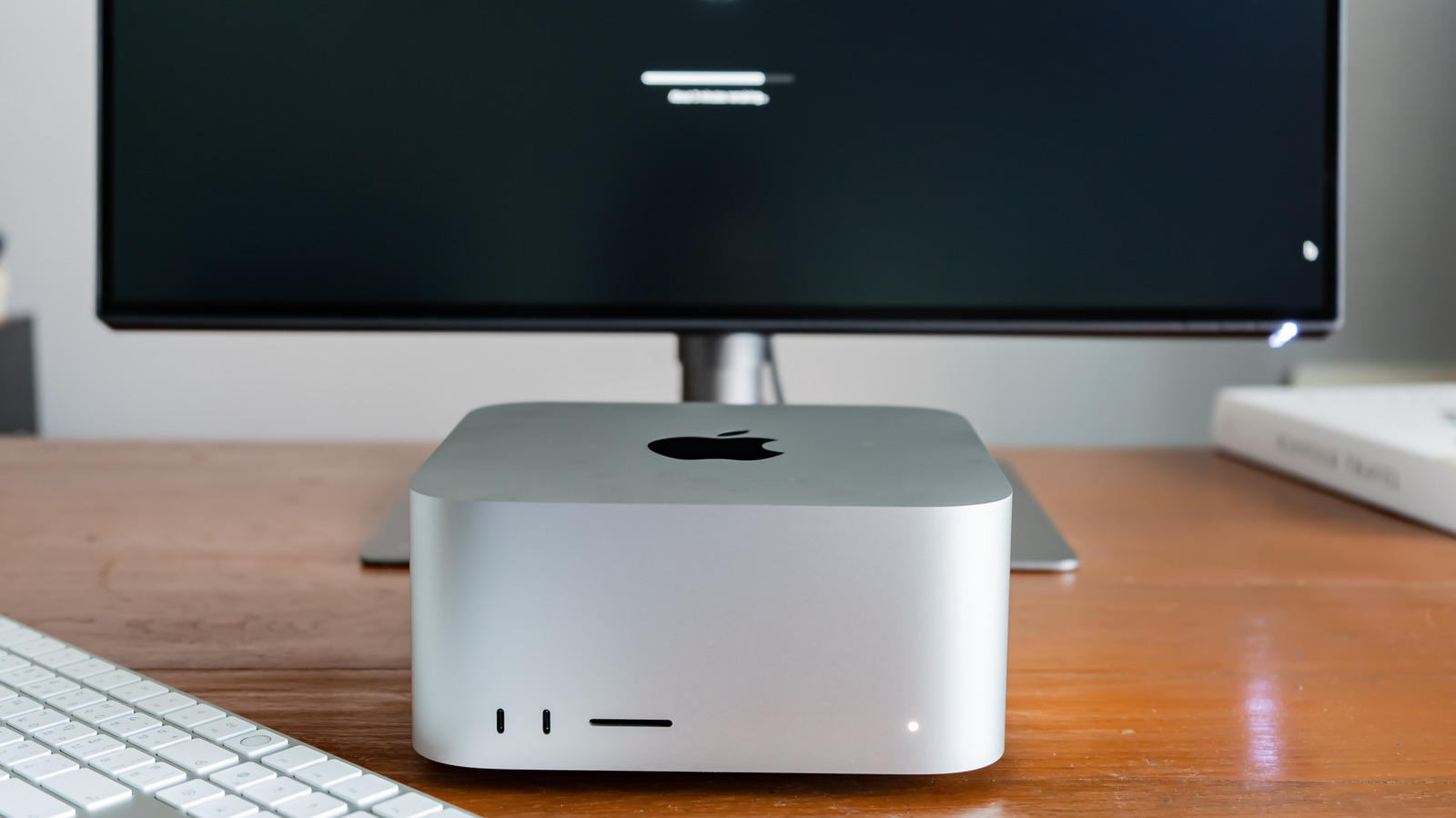
Apple’s Mac Studio has moved from a niche, high‑performance desktop to a central fixture in many professional workflows, with each new iteration bringing notable internal upgrades and modest external refinements.
The original Mac Studio debuted in early 2022, packing Apple’s first‑generation M1 Max and, for the top model, the M1 Ultra chip—a dual‑M1 Max configuration that promised desktop‑class performance in a compact 7.7‑inch square chassis. Its design was deliberately minimal, featuring a matte aluminum enclosure, a single front‑facing power button, and a generous array of ports, including four Thunderbolt 4, two USB‑A, HDMI, and a 10‑Gb Ethernet slot.
Within a year, Apple introduced the second‑generation model powered by the M2 Ultra processor. While the external silhouette remained largely unchanged, the new silicon delivered a measurable jump in CPU and GPU throughput, thanks to increased core counts and higher memory bandwidth. Benchmarks released by Apple and independent testers showed up to a 30 percent improvement in rendering tasks and smoother handling of large‑scale video projects, reinforcing the Mac Studio’s appeal to creators who need sustained performance without the bulk of a tower.
Beyond raw speed, the 2023 refresh added subtle design tweaks. The rear panel saw a re‑arranged port layout that placed the power connector closer to the left edge, simplifying cable management in cramped studio setups. Apple also refined the cooling system, employing a larger heat‑pipe network that kept the fan noise down even under prolonged loads. Internally, the new models support up to 128 GB of unified memory, a step up from the 64 GB ceiling of the M1 Ultra, allowing more demanding data‑intensive applications to run smoothly.
These changes matter because the Mac Studio occupies a unique niche between Apple’s consumer‑focused desktops and the high‑end, modular Mac Pro. Its relatively small footprint, combined with professional‑grade performance, makes it an attractive alternative for freelancers, small studios, and even larger enterprises looking to standardize on Apple silicon without sacrificing expandability. The added memory capacity and improved thermal design also extend the device’s useful lifespan, delaying the need for costly upgrades.
Industry analysts note that Apple’s iterative approach—maintaining a consistent form factor while swapping in more powerful chips—mirrors its strategy with the iMac and MacBook lines. This continuity helps developers optimize software for a stable hardware envelope, while users benefit from predictable accessory compatibility. At the same time, the incremental design adjustments signal Apple’s awareness of real‑world feedback, especially regarding port placement and acoustic performance.
Looking ahead, speculation centers on whether Apple will introduce a next‑generation Mac Studio built on the upcoming M3 architecture, potentially featuring even higher core counts and further memory scaling. Rumors also suggest a possible shift to a modular internal layout, which could allow users to upgrade components such as storage or GPUs without replacing the entire unit. Until official details emerge, the current Mac Studio lineup stands as a testament to Apple’s ability to refine a product through focused hardware enhancements while keeping the aesthetic core intact.
For professionals weighing desktop options, the evolution of the Mac Studio underscores a broader industry trend: the convergence of compact design and workstation‑level performance, driven by the rapid advancement of Apple’s custom silicon.



Comments (0)
Be the first to comment.
Join the discussion