Boeing Secures $12.68 Million to Convert MQ‑25 Stingray Into Electronic‑Warfare Platform
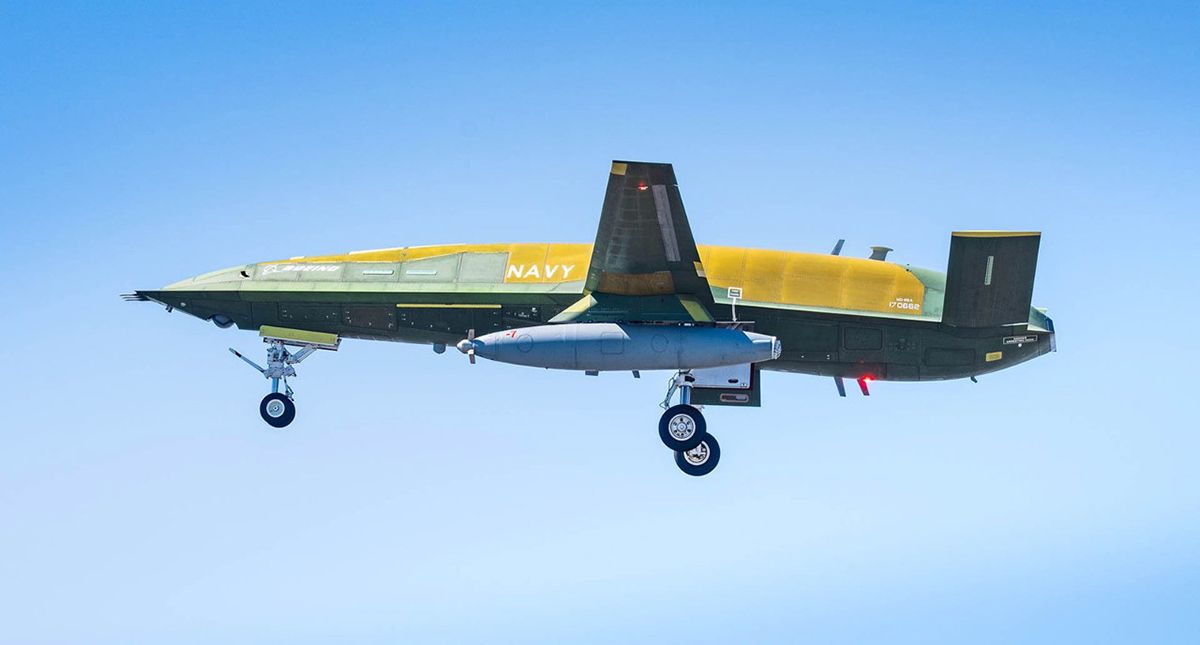
Boeing announced it has secured a $12.68 million investment to retrofit its MQ‑25 Stingray unmanned aerial vehicle with advanced electronic‑warfare (EW) capabilities, a shift that expands the drone’s original refueling role into a broader combat‑support function.
The funding, which will support upgrades to the aircraft’s radio‑frequency (RF) blanker, encrypted data storage, and mission‑computer security, is slated to be used through November 2029. These modifications are intended to give the MQ‑25 the ability to jam hostile radar, protect friendly communications, and conduct other electronic‑attack missions while still retaining its aerial‑refueling capacity.
The Navy’s April 2026 acquisition report still lists aerial refueling as the Stingray’s primary mission, reflecting the platform’s original purpose as the service’s first carrier‑based unmanned refueler. However, the recent investment signals a strategic pivot toward integrating EW functions, aligning the MQ‑25 with the Navy’s broader push to field multi‑role unmanned systems that can operate in contested environments.
Developed under the U.S. Navy’s Unmanned Carrier Aviation (UCA) program, the MQ‑25 has faced a mixed development history, including cost overruns and schedule delays. By adding electronic‑warfare capabilities, Boeing aims to increase the aircraft’s operational value and justify continued funding amid competing defense priorities.
The upgrade package focuses on three key areas: an enhanced RF blanker to suppress enemy radar emissions, hardened and encrypted onboard storage to protect mission‑critical data, and a fortified mission‑computer architecture that resists cyber intrusion. Together, these changes are expected to enable the Stingray to operate alongside carrier strike groups, providing both fuel and electronic protection to manned aircraft.
Industry analysts note that the investment, while modest compared with the overall program budget, could serve as a proof‑of‑concept for future unmanned EW platforms. If successful, the Navy may consider fielding additional MQ‑25s or similar drones equipped with electronic‑attack suites, reducing the need for separate, dedicated EW aircraft.
Looking ahead, Boeing will work closely with the Navy’s Naval Air Systems Command (NAVAIR) to integrate the upgrades, conduct flight testing, and certify the modified systems. The timeline extends to late 2029, after which the Navy will assess the platform’s performance and decide whether to expand the EW role or revert to a primarily refueling focus.
The move underscores a broader trend in U.S. military procurement: leveraging existing airframes to address emerging threats without incurring the cost of entirely new platforms. By repurposing the MQ‑25, the Navy hopes to enhance its electronic‑warfare posture while preserving the strategic advantage of a carrier‑based unmanned refueler.


Comments (0)
Be the first to comment.
Join the discussion