BepiColombo Enters Final Approach Phase After Eight‑Year Journey to Mercury
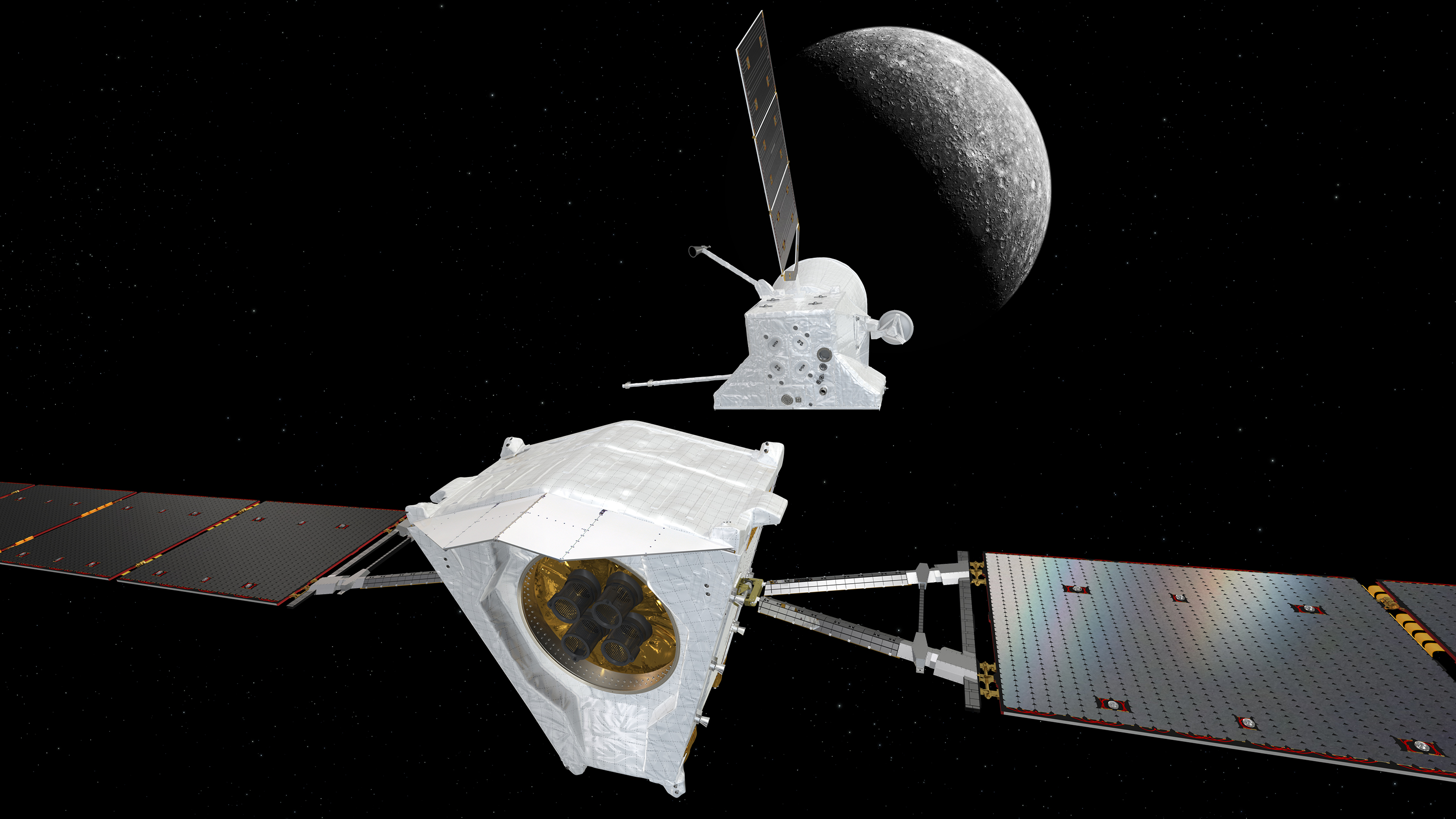
Europe's BepiColombo mission has cleared a pivotal checkpoint as it moves into the last leg of its eight‑year trek toward Mercury, the Sun‑scorched planet at the inner edge of the Solar System. The robotic spacecraft, a joint effort by the European Space Agency (ESA) and Japan's JAXA, is now on a direct trajectory that will culminate in its arrival at the planet later this year.
Launched in October 2018, BepiColombo embarked on a complex cruise that included multiple gravity‑assist flybys of Earth, Venus and Mercury itself. Those maneuvers slingshotted the twin orbiters—ESA's Mercury Planetary Orbiter and JAXA's Mio (Mercury Magnetospheric Orbiter)—into a path that gradually shrank their orbit around the Sun. The recent milestone marks the end of that cruise phase, confirming that the spacecraft’s propulsion and navigation systems are performing as designed after years of deep‑space travel.
Mercury presents a formidable target for exploration. Its proximity to the Sun subjects it to extreme temperatures and intense radiation, while its small size and rapid orbital period make precise navigation challenging. BepiColombo’s arrival will therefore fill gaps left by NASA’s MESSENGER mission, which orbited Mercury from 2011 to 2015, by delivering higher‑resolution measurements of the planet’s surface composition, magnetic field and exosphere.
The mission, budgeted at just under $2 billion, carries a suite of instruments aimed at unraveling long‑standing mysteries about Mercury’s formation and evolution. Scientists hope to clarify why the planet possesses a surprisingly strong magnetic field despite its modest size, and to assess the abundance of volatile elements that could shed light on early Solar System conditions. The dual‑orbiter design allows simultaneous study of Mercury’s interior and its magnetospheric environment, a capability that was not possible with earlier missions.
Looking ahead, the spacecraft will perform a series of orbital insertion burns beginning in late 2025, after which the two orbiters will separate and commence their respective science campaigns. ESA plans to focus on high‑precision mapping of Mercury’s geology, while JAXA will concentrate on the planet’s magnetic and plasma environment. The data returned is expected to inform models of planetary formation not only for Mercury but also for exoplanets that orbit close to their stars.
By reaching the innermost planet, BepiColombo underscores the growing maturity of interplanetary exploration, demonstrating that multinational collaborations can successfully tackle technically demanding missions. The final approach phase is a testament to years of engineering, navigation and international coordination, and the scientific community now awaits the first observations that will expand humanity’s understanding of the Solar System’s most enigmatic world.


Comments (0)
Be the first to comment.
Join the discussion