Cosmic Ripples Hint at Ancient Black Holes, Rekindling Dark Matter Quest
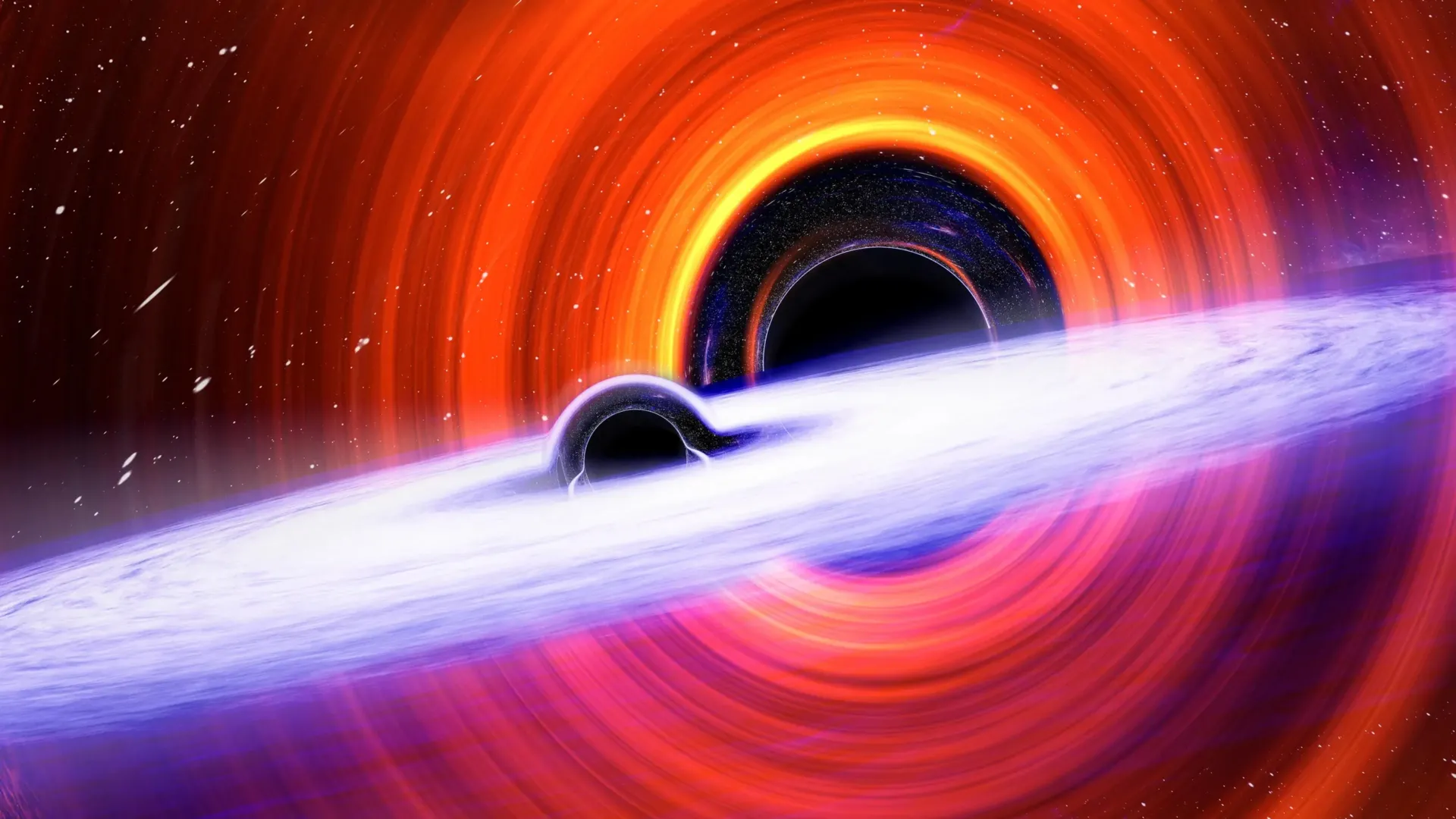
An unprecedented gravitational wave detection from the Laser Interferometer Gravitational-Wave Observatory (LIGO) has ignited excitement within the scientific community, suggesting a potential breakthrough in one of cosmology's most enduring puzzles. This peculiar signal has renewed speculation that primordial black holes, long confined to theoretical models, might finally be within the grasp of discovery, offering a tantalizing clue to the mysterious nature of dark matter.
Gravitational waves, ripples in spacetime caused by cataclysmic cosmic events, have become a crucial tool for observing the universe. Since their first direct detection, observatories like LIGO have opened a new window into phenomena like merging black holes and neutron stars. However, this latest signal stands apart, prompting researchers to consider a less conventional origin: black holes formed in the universe's earliest moments, rather than from the collapse of massive stars.
Primordial black holes (PBHs) are hypothetical celestial objects that could have formed just fractions of a second after the Big Bang, preceding the formation of stars and galaxies. Unlike stellar black holes, their masses could span a vast range, from minuscule to enormous. The concept of PBHs has gained particular interest because, if they exist in sufficient numbers, they could account for a significant portion, if not all, of the universe's elusive dark matter.
Dark matter, an invisible substance that interacts gravitationally but does not emit or absorb light, constitutes roughly 27% of the universe's mass-energy content. Its existence is inferred from its gravitational effects on visible matter, yet its fundamental composition remains unknown. The possibility that primordial black holes could be the missing dark matter particles would fundamentally reshape our understanding of cosmic structure and evolution.
While the detection is extraordinary, scientists emphasize that further investigation and confirmation are essential. The “unusual” nature of the signal implies it doesn't neatly fit into existing models of stellar-mass black hole mergers. Researchers will now meticulously analyze the data, search for similar events, and refine their theoretical frameworks to determine if this signal indeed points to the existence of these ancient cosmic relics.
The renewed focus on primordial black holes underscores the dynamic nature of astrophysical research. If subsequent observations validate this hypothesis, it would not only solve a major cosmic enigma but also provide unprecedented insights into the conditions of the very early universe and the processes that shaped its fundamental constituents. The quest to unveil dark matter continues, now with a potentially powerful new direction.


Comments (0)
Be the first to comment.
Join the discussion