Webinar Shows How Rogue OAuth Apps Undermine Google Workspace Security
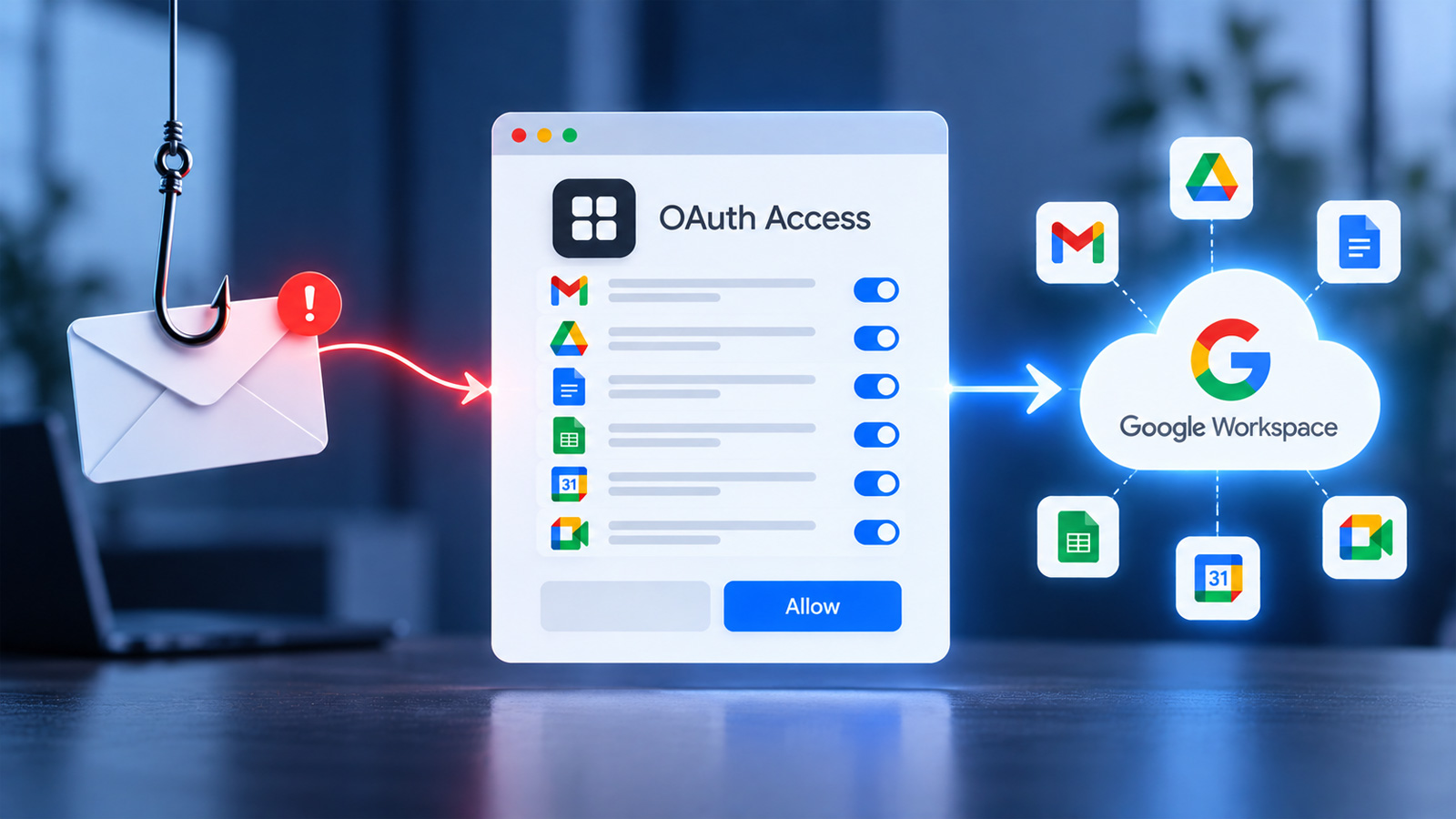
A recent online briefing highlighted a growing threat to Google Workspace users: malicious OAuth applications that can bypass traditional password protections and grant attackers unfettered access to corporate data.
Unlike classic credential‑theft attacks, the method demonstrated relies on social engineering to persuade users to authorize a rogue third‑party app. Once granted, the app inherits the same permissions as a legitimate integration, allowing it to read, modify, or export emails, documents, and other resources without triggering typical sign‑in alerts.
The presenters walked the audience through two concrete scenarios. In the first, a phishing email directed recipients to a counterfeit app that requested read‑only access to Gmail and Drive, which many users approved out of habit. In the second, a more sophisticated campaign used a seemingly innocuous productivity tool that asked for broader admin scopes, enabling the attacker to enumerate users and exfiltrate sensitive files across the organization.
Both cases underscored a key weakness: Google Workspace’s security model often emphasizes password strength and multi‑factor authentication, yet OAuth tokens can remain valid for weeks even after a user’s password is changed. This persistence makes token‑based abuse a potent vector for data breaches.
To mitigate the risk, the webinar recommended several controls. Administrators should enforce the principle of least privilege by limiting the scopes any third‑party app can request, regularly audit authorized OAuth clients, and employ automated alerts for anomalous token usage. Additionally, user education campaigns that explain the dangers of granting excessive permissions were urged as a complementary defense.
Security researchers also advised leveraging Google’s built‑in token revocation tools and enabling security key enforcement for high‑risk accounts, thereby adding an extra layer of verification before tokens are issued.
As organizations continue to adopt cloud collaboration suites, the session concluded that vigilance around OAuth authorizations will be as critical as password hygiene in preventing future data compromises.


Comments (0)
Be the first to comment.
Join the discussion