Villager’s Chance Find Reveals Lost Ramses II Statue Fragments in Egypt
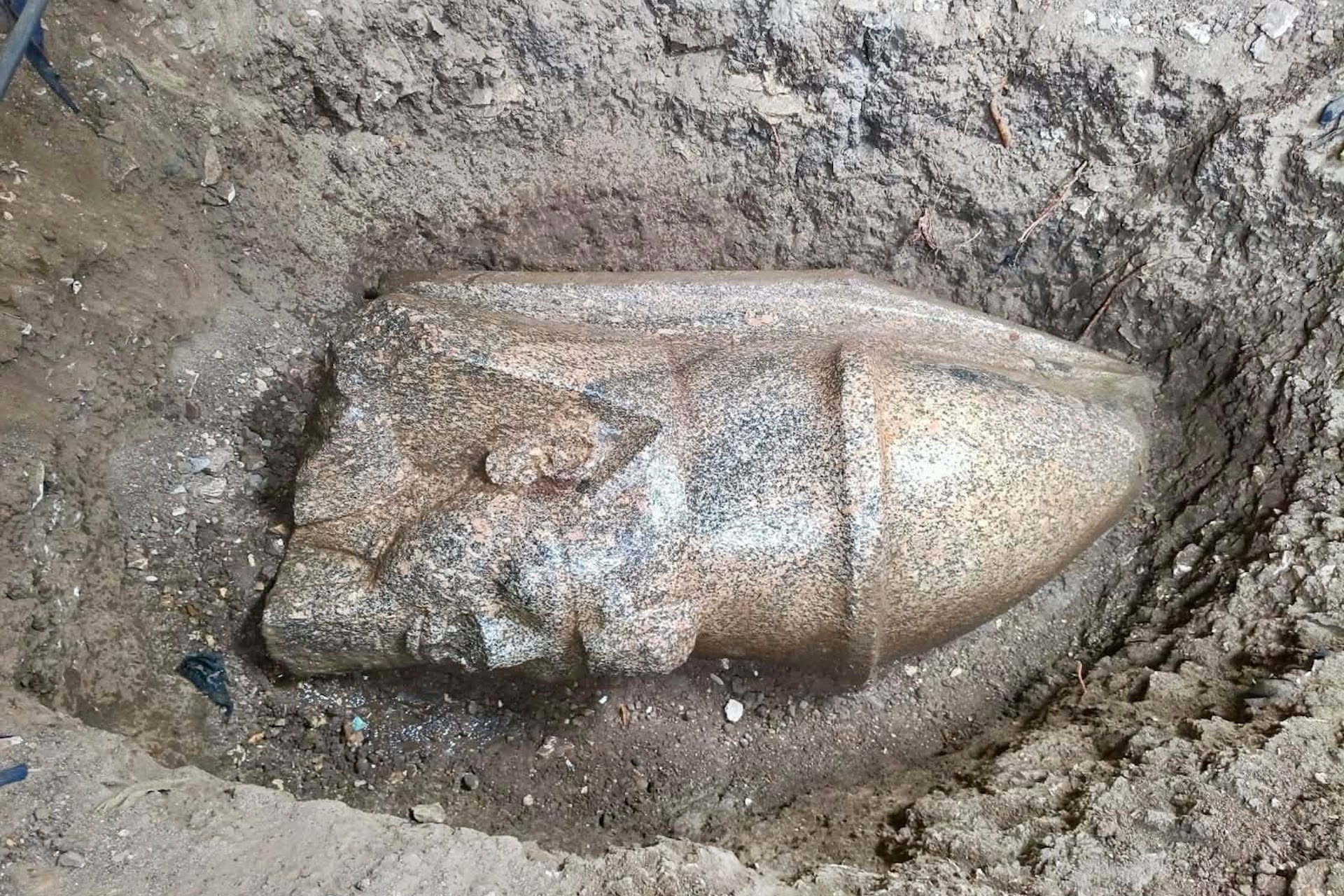
A farmer working his field in the Egyptian countryside inadvertently uncovered an inscribed stone that set off a rapid rescue excavation, ultimately revealing the shattered remains of a colossal statue of Pharaoh Ramses II and two additional royal figures.
The stone, bearing hieroglyphic markings, was reported to local authorities who summoned a team of archaeologists from the Ministry of Tourism and Antiquities. Initial assessments suggested the inscription referenced a royal monument, prompting a swift response to prevent further damage amid ongoing agricultural activity.
Archaeologists arrived on site and, within days, uncovered a massive pink granite block that had broken away from a larger composition. The block, measuring roughly three meters in height, displayed the characteristic stylized features of New Kingdom royal portraiture, confirming its association with the 13th‑century BC ruler Ramses II, whose reign is famed for monumental building projects across the Nile Valley.
Further excavation revealed the fragmented remains of two additional statues, likely representing members of the royal family or high officials. While the statues are heavily damaged, the surviving pieces include portions of drapery and partial facial features that align with artistic conventions of the period, offering scholars a rare glimpse into the scale and craftsmanship of statues that once stood in a now‑lost temple complex.
The discovery underscores the ongoing challenges of preserving Egypt’s archaeological heritage in regions where modern land use intersects with ancient sites. Rescue excavations such as this are typically launched when construction, farming, or natural erosion threatens undiscovered artifacts, allowing specialists to document and protect them before they are lost.
Experts emphasize that the find adds to the growing inventory of Ramses II monuments, a pharaoh whose name appears on countless temples, tombs, and statues throughout Egypt and the Near East. The presence of a colossal head suggests the original statue may have been comparable in size to the famed seated figure at Abu Simbel, reinforcing the notion that Ramses II commissioned multiple grand statues to assert his authority and divine right.
Conservation teams are now tasked with stabilizing the granite fragments and transporting them to a nearby laboratory for detailed analysis. Researchers plan to employ 3‑D scanning and photogrammetry to reconstruct the original appearance of the statues, a process that could eventually allow for virtual or physical reassembly.
While the exact original location of the monument remains uncertain, the find provides clues about a previously undocumented temple or sanctuary in the region. Ongoing surveys aim to map the surrounding area for additional architectural elements, which could illuminate the broader religious and political landscape of the era.
Authorities have announced that the site will be protected under Egyptian law, and the Ministry intends to involve local communities in monitoring efforts to prevent future inadvertent damage. The incident serves as a reminder that even routine agricultural work can unearth pieces of humanity’s distant past, offering fresh opportunities to deepen our understanding of ancient Egypt’s monumental legacy.


Comments (0)
Be the first to comment.
Join the discussion