New Calculations Sharpen the Search for Venus’s Elusive UV Absorber
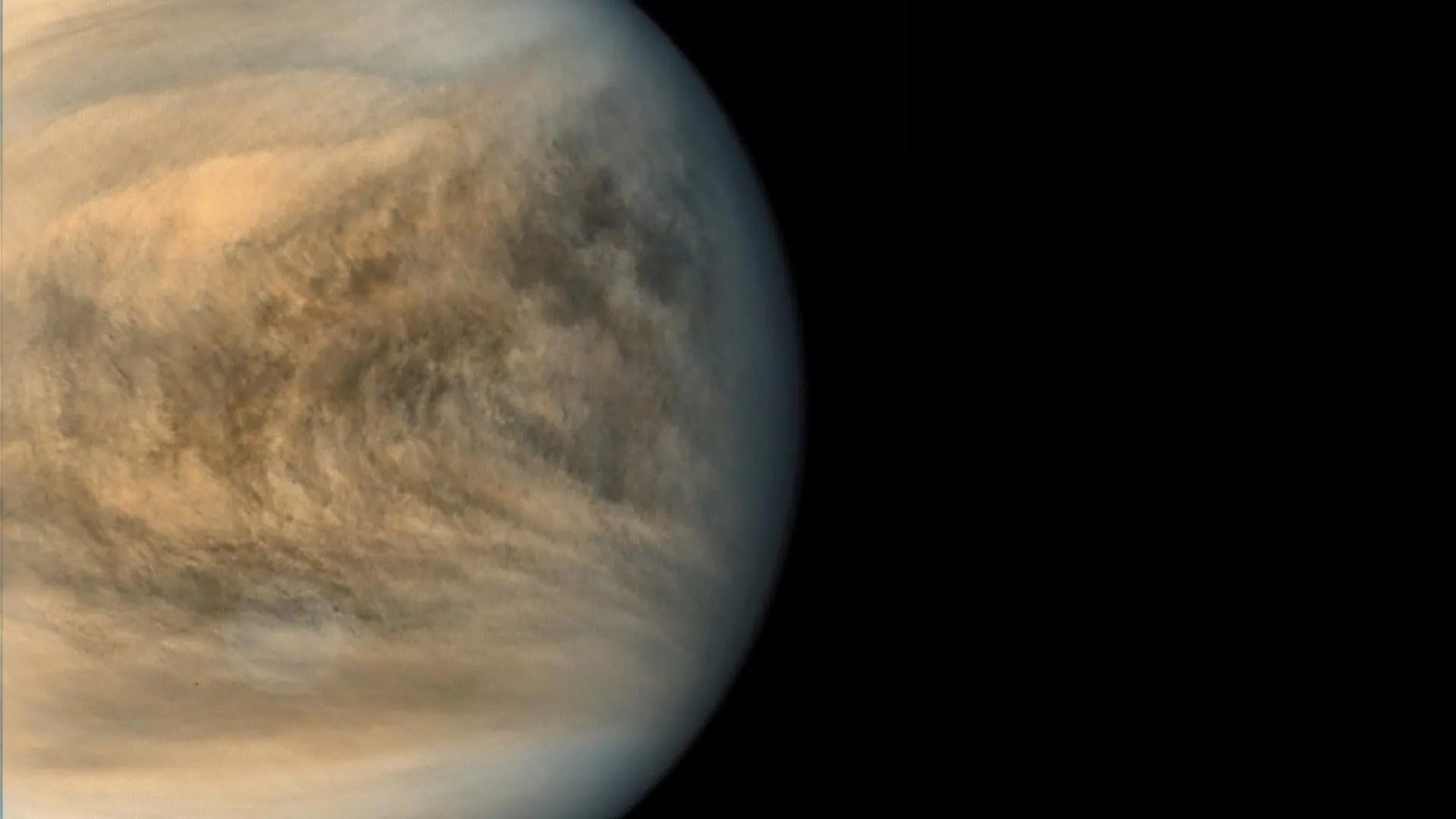
Scientists have quantified the light‑absorbing power of the mysterious substance that creates the dark ultraviolet markings in Venus’s pale yellow clouds, dramatically narrowing the list of possible candidates and giving upcoming missions a clearer target.
The dark UV patterns have puzzled astronomers for more than a hundred years. From ground‑based telescopes to orbiters, the planet’s upper cloud deck appears mottled with high‑contrast spots that absorb strongly at ultraviolet wavelengths, yet the chemistry behind them has remained unknown.
Researchers applied radiative‑transfer modeling to the observed contrast, calculating the minimum absorption coefficient required for the material to produce the measured darkness. Their analysis shows that the absorber must be exceptionally efficient, demanding an absorption strength far greater than that of many previously suggested gases.
This result eliminates a swath of candidates that were thought plausible, such as simple sulfur compounds with modest UV cross‑sections. The remaining possibilities are limited to a few highly absorbing substances, including certain sulfur allotropes, ferric chloride, or yet‑unidentified complex organics that can survive Venus’s harsh acidic environment.
The finding arrives as NASA’s VERITAS and ESA’s EnVision missions prepare for launch, both equipped with spectrometers capable of probing the ultraviolet spectrum with unprecedented precision. With a concrete target absorption value, instrument teams can fine‑tune observation strategies to confirm or reject the narrowed list of compounds during close flybys.
Future work will combine laboratory spectroscopy of candidate materials with in‑situ measurements from descent probes, should they be deployed. Resolving the identity of the UV absorber will not only solve a long‑standing mystery but also improve models of Venus’s cloud chemistry, energy balance, and atmospheric dynamics.


Comments (0)
Be the first to comment.
Join the discussion