Ancient Chinese Skeleton Suggests Nose‑Mutilation Was Used as Capital Punishment
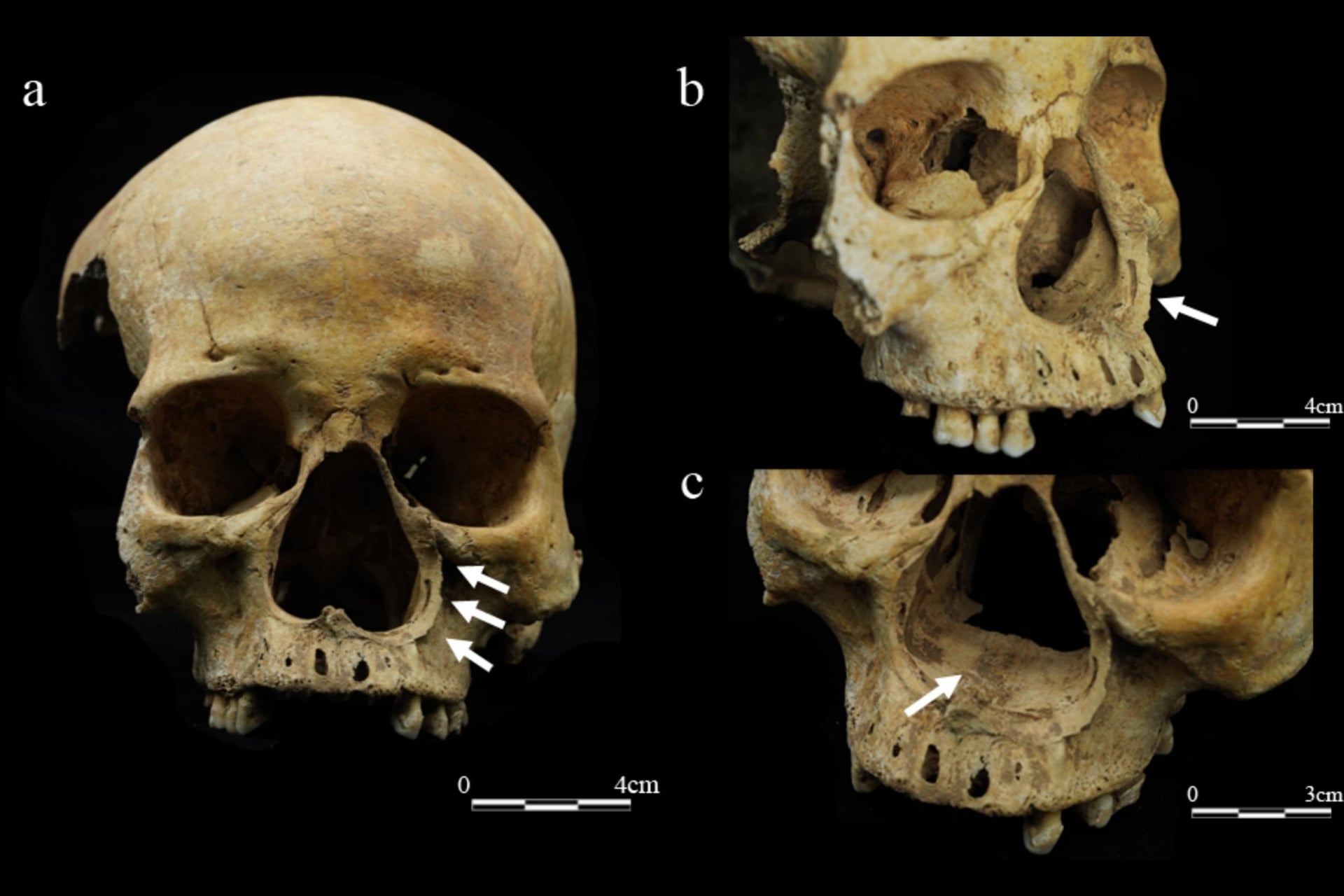
Archaeologists have uncovered a human skeleton that may confirm historical accounts of nose‑cutting as a form of legal retribution in Imperial China, a practice previously known mainly from textual sources.
The remains, discovered at a burial site in eastern China, belong to a woman whose facial bones show clear evidence of a surgical removal of the nose. Radiocarbon dating places the skeleton in the Tang dynasty (618‑907 CE), a period when legal codes prescribed severe bodily penalties for crimes ranging from treason to moral offenses.
Researchers from a university in Shanghai examined the skull using CT scans and microscopic analysis. They found that the nasal bones were cleanly severed, and the surrounding tissue displayed signs of healing, indicating that the woman survived the operation and received some form of medical care afterward. The team notes that the bone edges are smooth rather than jagged, suggesting the procedure was carried out by a skilled practitioner rather than as a crude execution.
Historical texts such as the Tang Code mention “cutting off the nose” as a punitive measure, but scholars have long debated whether such punishments were actually carried out or served as rhetorical deterrents. The new skeletal evidence provides physical proof that the penalty was not merely symbolic. Moreover, the presence of healed bone indicates that the victim was not immediately executed, aligning with records that some offenders were allowed to live with their disfigurement as a permanent mark of disgrace.
While the skeleton shows signs of medical attention—possibly suturing or the application of herbal poultices—the burial itself appears to have been deliberately modest. The grave lacked grave goods and was situated away from more elaborate tombs, leading the researchers to conclude that the woman was interred with a degree of social stigma, consistent with the notion of being “buried in shame.”
Experts caution that a single find cannot fully reconstruct the legal and cultural context of nose‑mutilation, but the discovery opens new avenues for interdisciplinary study. Combining archaeological data with legal history could clarify how punishments were administered, who performed them, and how society treated those who survived such penalties.
The find also raises broader questions about the treatment of bodily injury in ancient China, including the role of early medical practitioners in addressing punitive wounds. Future excavations at nearby sites may uncover additional remains that either corroborate or challenge this interpretation.
As the debate continues, the skeleton stands as a tangible reminder that the punitive practices described in ancient statutes left lasting marks on real individuals, bridging the gap between textual records and the lived experiences of people in Imperial China.


Comments (0)
Be the first to comment.
Join the discussion