Star Birth Slows While Cosmic Hydrogen Stays Abundant, New Study Finds
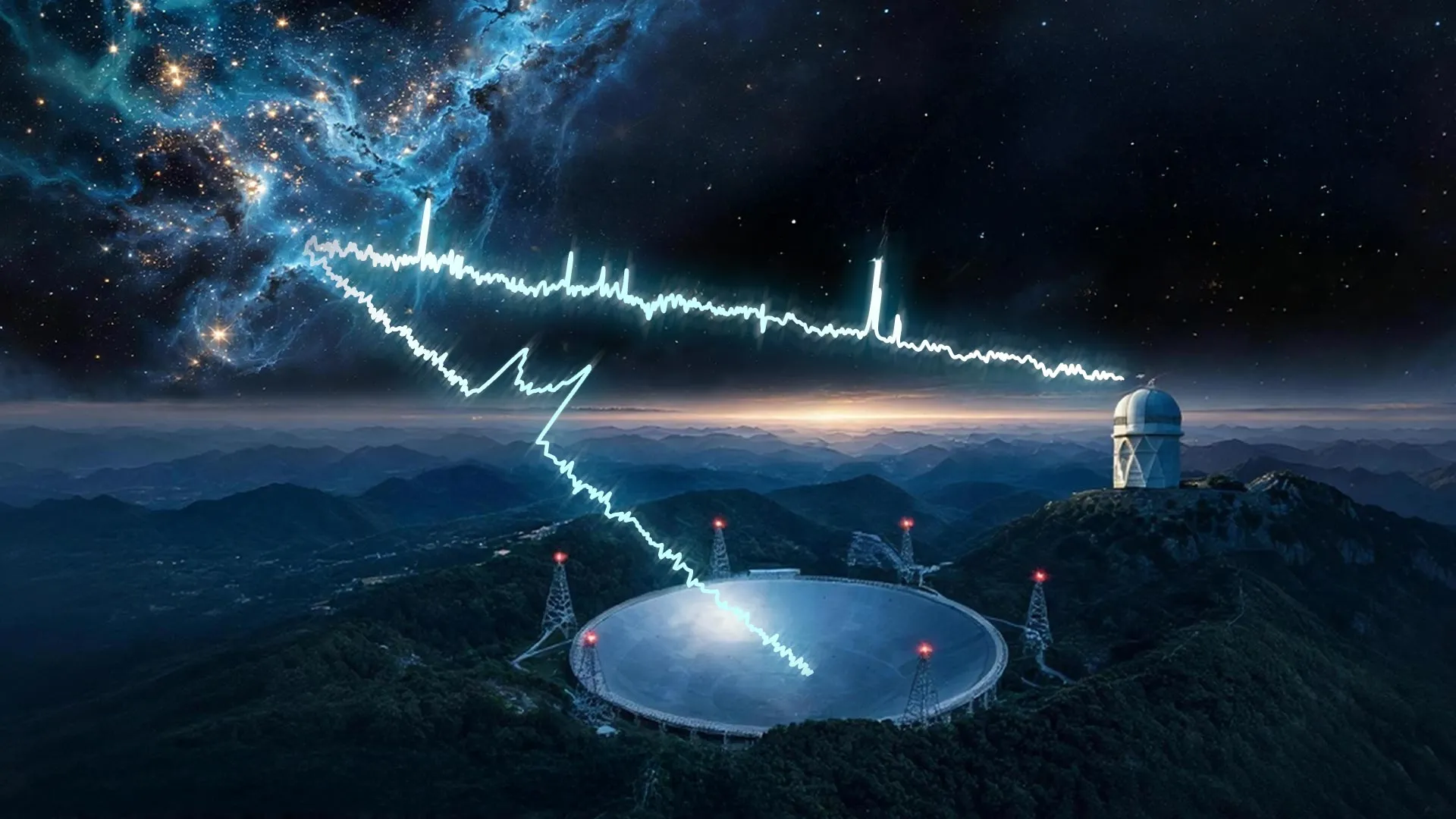
A new analysis shows that the universe's rate of creating new stars has dropped sharply over the last 4.5 billion years, even though the supply of neutral hydrogen – the basic fuel for star formation – has remained virtually unchanged.
Measurements of star‑forming activity across a wide range of galaxies indicate a steep decline from the peak epoch of cosmic star formation to the present day. Astronomers have quantified this slowdown using ultraviolet and infrared observations that trace recent stellar births, confirming a long‑standing trend of dwindling stellar production.
In contrast, observations of the 21‑centimetre emission line of neutral hydrogen, conducted with China’s Five‑hundred‑meter Aperture Spherical Telescope (FAST) and supplemented by other large‑scale surveys, reveal that the total mass of this gas in the observable universe has hardly diminished. The data suggest that the reservoir of raw material for making stars is still plentiful, a finding that challenges conventional expectations.
Traditional models of galaxy evolution often link the fall in star formation to the gradual exhaustion of gas supplies. The new results undermine that simple picture, implying that the bottleneck now lies elsewhere – perhaps in the ability of the gas to cool, condense, and collapse under gravity.
Scientists propose several mechanisms that could inhibit the conversion of hydrogen into stars despite its abundance. Energetic feedback from supermassive black holes and massive stellar winds can heat surrounding gas, preventing it from reaching the low temperatures needed for collapse. Additionally, increased turbulence and a rise in the metallicity of interstellar matter may alter the physical conditions required for star‑forming clouds to form.
The discovery has broad implications for understanding the future trajectory of galaxies. If the current inefficiency persists, the universe may enter an era where vast quantities of hydrogen linger in a diffuse state, with only sporadic pockets managing to ignite new stars. This scenario would affect predictions of galaxy brightness, chemical enrichment, and the long‑term fate of cosmic structures.
Future research will aim to map the distribution and physical state of hydrogen with even greater precision, combining FAST observations with upcoming facilities such as the Square Kilometre Array. Parallel advances in computer simulations will test how heating, feedback, and environmental factors regulate star formation. Together, these efforts hope to resolve why the cosmic star‑making engine has stalled while its fuel tank remains full.


Comments (0)
Be the first to comment.
Join the discussion