White Storks Choose Industrial Estate for Nest, Signifying Conservation Breakthrough
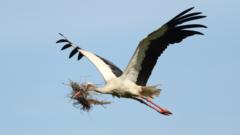
White storks originating from the renowned Knepp Estate in Sussex have been observed nesting within an industrial park near Guildford, marking a significant moment for wildlife conservation in the United Kingdom. This unexpected choice of habitat underscores a major milestone in efforts to re-establish these iconic birds.
The discovery is being celebrated by conservationists as a crucial development, building upon years of dedicated reintroduction initiatives. The Knepp Estate has been at the forefront of a pioneering rewilding project, which includes bringing white storks back to the British landscape after a centuries-long absence.
The chosen nesting location, an industrial estate, presents a stark contrast to the more traditional wetlands and open landscapes typically associated with stork habitats. This adaptability demonstrated by the birds highlights their resilience and capacity to thrive in diverse environments, even those shaped by human activity.
White storks were once a breeding species in Britain, though they disappeared from the country’s breeding record over 600 years ago. Their gradual return in recent decades, initially as migratory visitors, and now as breeding pairs, represents a powerful symbol of ecological restoration and the potential for species to reclaim lost territories.
This event bolsters the argument for rewilding initiatives, showing how creating suitable conditions, even within a wider human-dominated landscape, can encourage biodiversity to flourish. The success at Knepp, aimed at restoring natural processes across its land, appears to be extending its positive impact beyond its boundaries.
The establishment of a nest outside the immediate confines of a dedicated rewilding project suggests a broader dispersal and integration of the stork population into the wider British ecosystem. This could pave the way for more widespread breeding and a more robust, self-sustaining population in the future.
For those working to restore nature, the sight of these majestic birds nesting in such an unconventional spot near Guildford offers immense encouragement. It serves as a vivid reminder that wildlife can adapt and thrive when given the opportunity, even in unexpected corners of our modern world.


Comments (0)
Be the first to comment.
Join the discussion