Satellite‑Detected Shifts in Penguin Guano Reveal Antarctic Food‑Web Changes
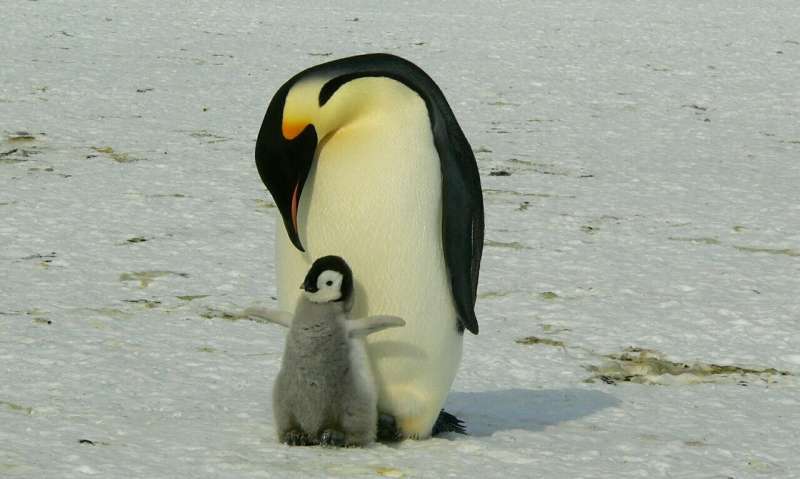
Scientists analyzing satellite imagery have discovered that the hue of penguin colonies’ guano, visible from orbit, is changing—a sign that the birds' diets are adapting to a warming Antarctic environment.
The observations, derived from high‑resolution optical satellites, show a gradual lightening of the typically orange‑red stains that mark breeding sites. Researchers link this shift to a decrease in the consumption of krill, whose reddish pigments dominate the excrement of penguins that feed primarily on the crustacean.
Antarctic sea‑ice extent has been on a long‑term decline, reducing the habitat where krill thrive. As the ice retreats earlier each spring, krill populations have been reported to contract, prompting several penguin species to turn more to fish and other marine prey. Fish‑based diets lack the carotenoid compounds that give krill‑rich guano its characteristic color, resulting in the paler stains now captured by space‑borne sensors.
Remote sensing of guano offers a novel, non‑intrusive method for tracking ecosystem change across the continent’s vast, hard‑to‑reach coastlines. Traditional ground surveys are limited to a few accessible colonies, but satellite coverage can monitor thousands of sites simultaneously, providing a continent‑wide picture of trophic adjustments over time.
The technique builds on earlier work that used aerial photography to map penguin populations. By focusing on the spectral signature of the waste rather than the birds themselves, scientists can infer shifts in feeding behavior without disturbing the animals. Preliminary analyses suggest that the color change is most pronounced in regions where sea‑ice loss has been greatest, such as the western Antarctic Peninsula.
Understanding these dietary shifts matters because penguins sit near the top of the Antarctic food web. Changes in their foraging patterns can ripple through the ecosystem, affecting predator‑prey dynamics and the overall health of marine biodiversity. Moreover, the findings add another piece of evidence to the broader narrative of climate‑driven alterations in Southern Ocean productivity.
Future work aims to calibrate the satellite data with on‑the‑ground measurements of guano composition and penguin stomach contents, strengthening the link between observed color variations and specific dietary components. Researchers also plan to extend the approach to other seabird species whose waste may similarly reflect environmental change.
As the Antarctic continues to warm, satellite‑based monitoring of penguin guano could become an essential tool for tracking the health of the region’s marine ecosystems, offering a cost‑effective and expansive view that complements traditional field studies.


Comments (0)
Be the first to comment.
Join the discussion