Top Mathematicians Challenge OpenAI’s Claim of Solving Million‑Dollar Problem
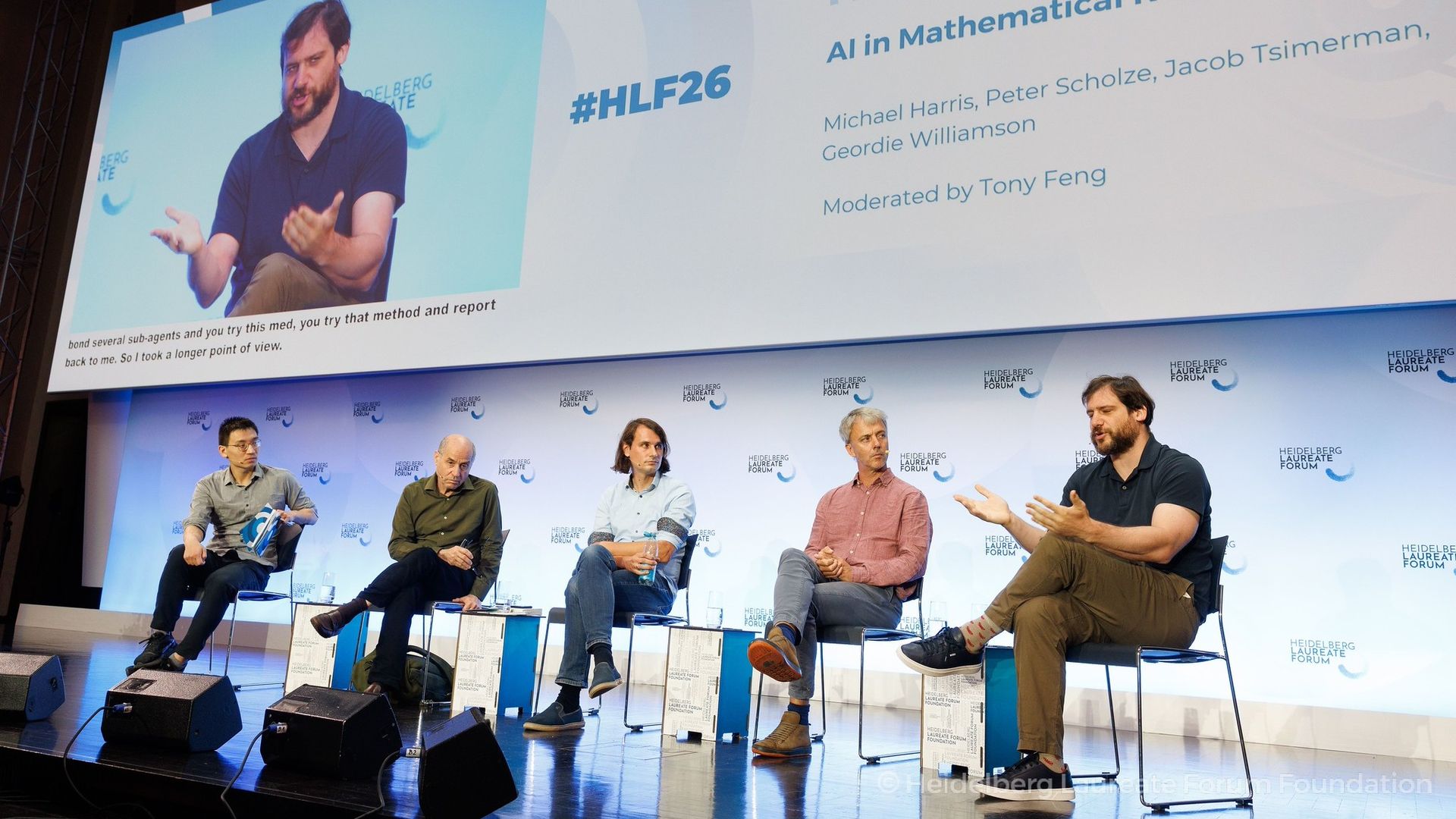
OpenAI’s latest artificial‑intelligence system announced it had produced a solution to one of the Clay Mathematics Institute’s million‑dollar Millennium Problems, prompting an immediate and vocal backlash from a group of leading mathematicians convened in Heidelberg, Germany.
The contested problem, long regarded as a benchmark of deep mathematical insight, carries a prize of one million dollars for a proof that meets the Institute’s rigorous standards of originality, completeness and peer validation. Historically, breakthroughs on such problems emerge after years, sometimes decades, of incremental work by a small community of specialists.
During a closed‑door panel of senior researchers, participants described the AI’s approach as “predatory,” suggesting that the technology was being used to appropriate a prize without the customary scholarly vetting. The mathematicians emphasized that a claimed proof must survive detailed scrutiny, replication and publication in a respected journal before any award can be considered.
Critics also raised concerns about attribution and accountability. While the AI generated a manuscript that appeared mathematically sound, the underlying reasoning was opaque, and the system could not be interrogated in the same way a human author can. The panel warned that accepting such a result without transparent verification could undermine the integrity of mathematical research.
Supporters of the AI’s achievement argue that machine‑generated insights could accelerate discovery, especially in fields where pattern recognition exceeds human capacity. If the proof withstands verification, it would represent a landmark moment for both mathematics and artificial intelligence, potentially reshaping how complex conjectures are approached.
The next steps involve a formal examination by independent experts and, if warranted, a review by the Clay Mathematics Institute itself. OpenAI has indicated it will cooperate with the verification process and has not yet commented on the criticisms. The episode has sparked a broader debate within the scientific community about the role of AI in generating original research and the safeguards needed to preserve scholarly standards.


Comments (0)
Be the first to comment.
Join the discussion