Physicists Probe Whether Space‑Time Is a Derived Illusion, Not a Fundamental Fabric
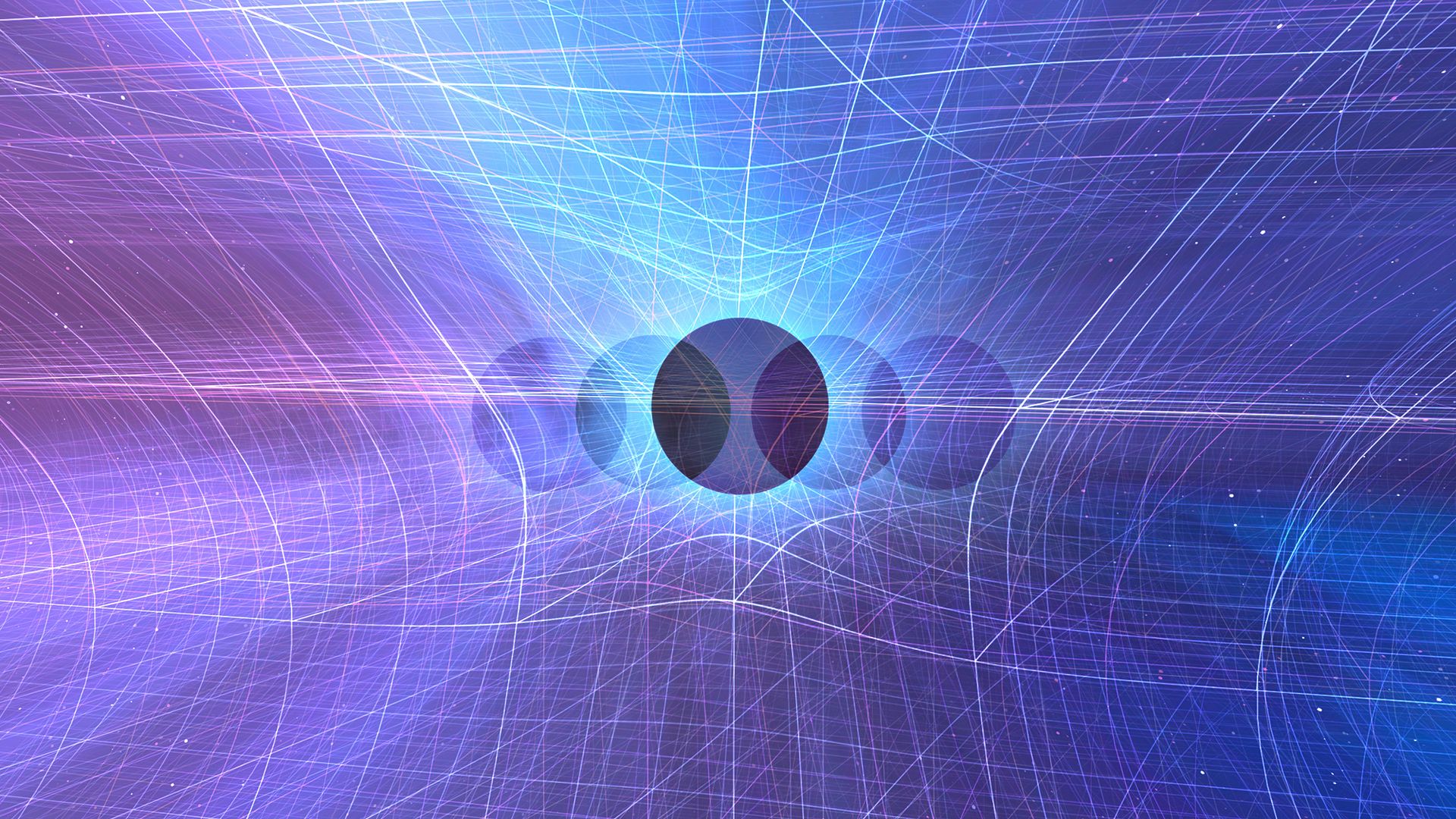
Physicists are intensifying efforts to test the provocative idea that the familiar dimensions of space and time may not be fundamental components of the universe, but rather emergent phenomena arising from a deeper, as‑yet‑unknown substratum. The notion challenges a century‑long paradigm in which space‑time serves as the immutable stage on which particles and forces interact.
Modern research draws on clues from quantum mechanics, black‑hole thermodynamics and the holographic principle, suggesting that information encoded on lower‑dimensional surfaces could give rise to the three‑dimensional world we experience. Experimental programs ranging from ultra‑precise interferometry to high‑energy particle collisions are being designed to detect subtle deviations that would betray an underlying pre‑geometric layer.
The renewed focus reflects a broader dissatisfaction with the incompatibility between general relativity, which treats space‑time as smooth and continuous, and quantum theory, which operates on probabilistic, discrete events. By treating space‑time as an emergent construct, researchers hope to bridge the divide and move toward a unified description of gravity and quantum phenomena.
Several theoretical frameworks are currently under scrutiny. In some approaches, space‑time emerges from networks of quantum entanglement, while others invoke “tensor networks” that mathematically reconstruct geometry from entangled bits of information. Though these models differ in detail, they share the common prediction that at sufficiently small scales the conventional notion of distance and duration breaks down.
If empirical evidence supporting emergent space‑time materializes, the implications would ripple through cosmology, particle physics and even philosophy, reshaping our understanding of causality, locality and the very meaning of existence. Researchers caution that the field is still speculative, but the convergence of theoretical insight and advancing experimental capability makes the coming decade a potentially transformative period for fundamental physics.


Comments (0)
Be the first to comment.
Join the discussion