OWASP Unveils OASIS AI Initiative to Accelerate Fixes for Open‑Source Flaws
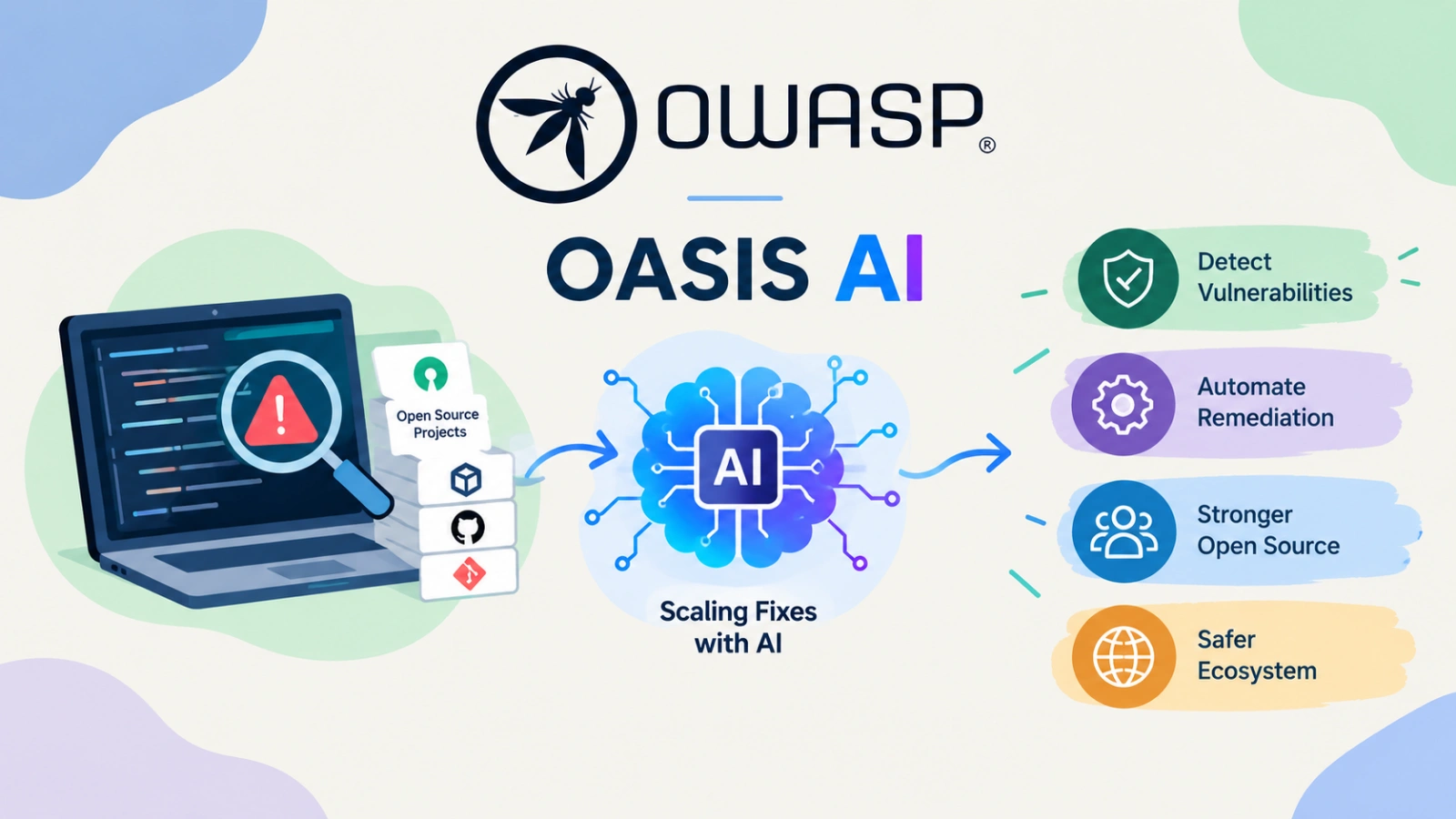
On August 26, 2026, the Open Web Application Security Project (OWASP) announced a new global program called the Open Automated Security Initiative for Software (OASIS), aimed at narrowing the gap between discovering vulnerabilities in open‑source components and delivering practical patches.
The launch took place in San Francisco and highlighted OASIS as a collaborative platform that combines artificial‑intelligence‑driven analysis with community‑sourced remediation. By integrating AI models that can automatically generate code fixes with the expertise of volunteer developers, the initiative seeks to scale remediation efforts that have historically lagged behind vulnerability discovery.
Open‑source software underpins a large share of modern applications, but its rapid adoption has outpaced the capacity of maintainers to address security flaws. OWASP’s research indicates that many reported vulnerabilities remain unfixed for months, exposing organizations to potential exploits. OASIS is designed to shorten that window by providing actionable patches directly to project maintainers, who can then review and merge them.
The program will operate through a publicly accessible repository where AI‑generated patches are posted alongside detailed explanations of the underlying issue. Contributors from the global security community can audit, refine, or reject these suggestions, ensuring that human oversight remains a core component of the workflow. OWASP plans to partner with major open‑source foundations and cloud providers to embed the OASIS pipeline into existing development ecosystems.
Industry observers note that the initiative arrives at a time when AI‑based code analysis tools have matured enough to understand complex codebases, yet the industry still lacks a unified mechanism for turning detection into remediation. By positioning OASIS as an open, standards‑based effort, OWASP hopes to foster interoperability among disparate security tools and encourage broader adoption of automated fixing practices.
Looking ahead, OWASP intends to measure the impact of OASIS through metrics such as the time between vulnerability disclosure and patch deployment, as well as the proportion of AI‑generated fixes that are accepted upstream. The organization also signaled that future phases may expand to cover additional programming languages and integrate with continuous‑integration pipelines, further embedding security into the software development lifecycle.



Comments (0)
Be the first to comment.
Join the discussion