Offshore Wind Turbine Bases May Lower Surface Waters Through Enhanced Mixing, Study Finds
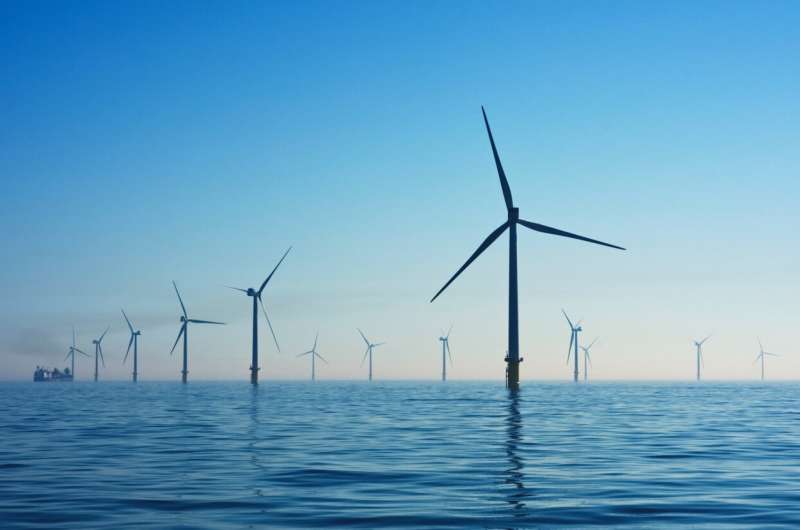
New findings from the European PELAgIO ECOWind research programme indicate that the physical structures supporting offshore wind turbines can alter the temperature of the water directly above them. By generating turbulence that pulls cooler, deeper water toward the surface, the turbine foundations have been observed to produce a measurable drop in sea‑surface temperature in the immediate vicinity of the farms.
The study combined high‑resolution oceanographic instruments deployed around several operational wind farms with numerical simulations that reproduced the flow around monopile and jacket foundations. Sensors recorded temperature, salinity and velocity profiles at multiple depths, while the models isolated the contribution of the turbine structures from wind‑driven mixing. The integrated approach allowed the researchers to quantify the cooling effect and to map how it varies across different sites.
At the heart of the phenomenon is the disruption of the normally stratified water column. As currents encounter the large cylindrical or lattice‑like bases, they generate vortices that extend vertically. These vortices entrain water from below the thermocline—often several degrees cooler than the surface layer—and transport it upward. The result is a thin, cooler skin of water that can persist for hours, especially when ambient wind forcing is modest.
The magnitude of the cooling depends heavily on local oceanographic conditions. In regions where the water column is strongly stratified, the temperature contrast between depth and surface is larger, amplifying the effect. Conversely, in well‑mixed areas or during periods of strong surface winds, the additional mixing from the foundations is dwarfed by natural processes, and any surface temperature change becomes negligible.
These observations have practical implications for both climate and marine life. A modest, localized reduction in sea‑surface temperature could contribute to the overall heat‑budget balance of a coastal zone, complementing the low‑carbon energy produced by the turbines. For marine organisms, altered temperature patterns may affect plankton blooms, fish recruitment and the distribution of temperature‑sensitive species, prompting a need for ecological monitoring.
Nevertheless, the researchers caution against assuming a uniformly beneficial outcome. Enhanced mixing might also redistribute nutrients or pollutants, and the cooling effect could be offset by other climate‑related stressors. Because the interaction is highly site‑specific, regulators and developers are urged to incorporate oceanographic assessments into the planning stages of new offshore wind projects.
Future work will expand the monitoring network to a broader array of wind farms and refine the models to predict temperature changes under different climate scenarios. By integrating these insights, policymakers can better evaluate the trade‑offs of offshore wind expansion, ensuring that renewable energy growth proceeds with an informed understanding of its oceanic footprint.


Comments (0)
Be the first to comment.
Join the discussion