AI Trains 12‑Ton John Deere Loader to Dance on Two Wheels
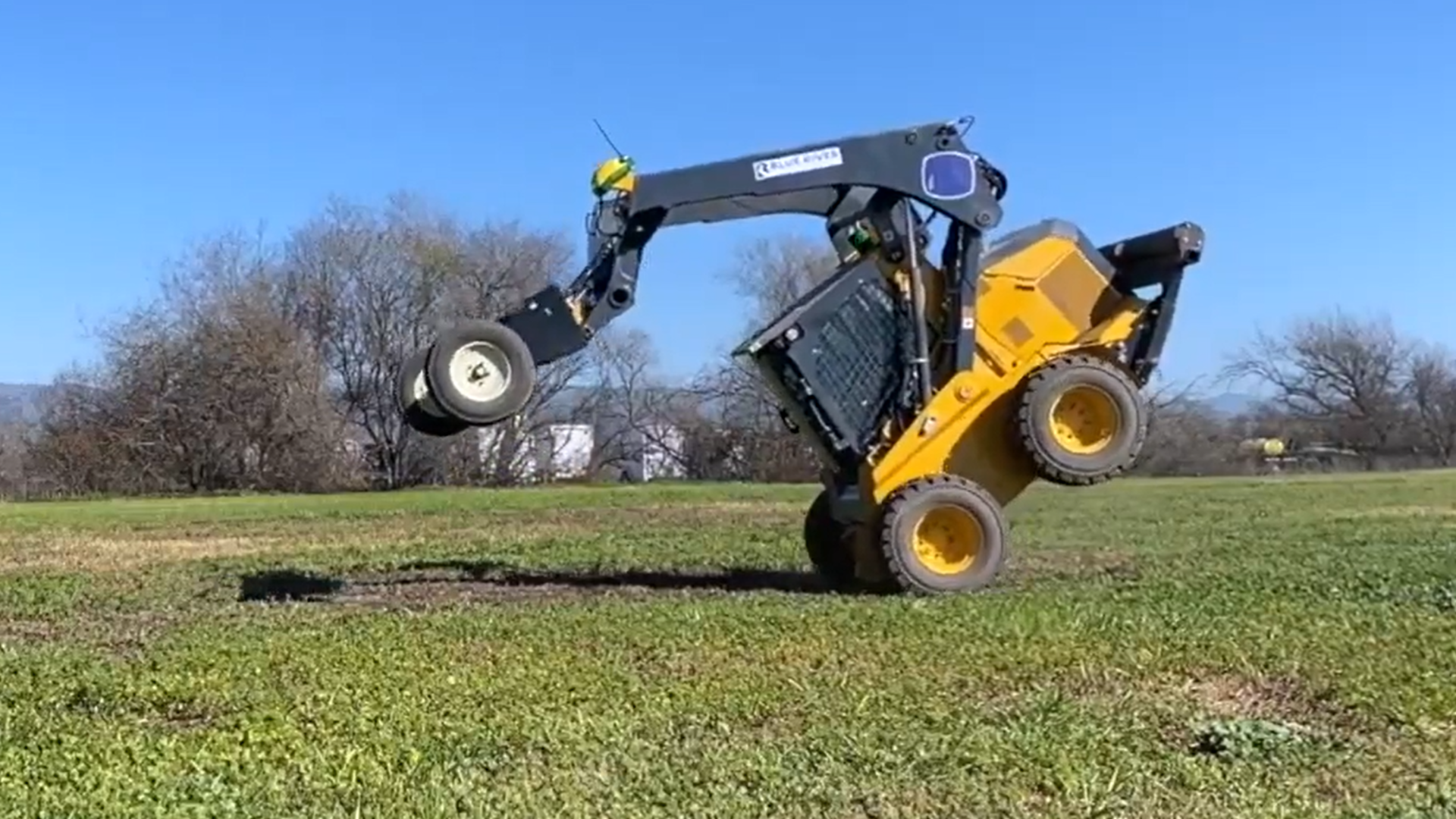
Researchers have demonstrated that a 12,000‑pound John Deere skid‑steer loader can perform complex, balance‑intensive maneuvers without a human driver, including spinning and staying upright on uneven ground while riding on just two wheels. The achievement marks a notable step forward for autonomous heavy‑equipment capabilities, showcasing how machine‑learning techniques can translate high‑risk tasks into controlled, repeatable actions.
The development process began in a virtual environment, where the loader's control algorithms were refined through extensive simulation. By exposing the AI to countless scenarios—varying terrain slopes, wheel traction levels, and dynamic obstacles—the system learned to anticipate and correct balance shifts in real time. Once the simulated performance met safety thresholds, the team transferred the learned policies to a physical loader for live testing.
During the on‑site demonstrations, the machine executed a series of acrobatic routines that would traditionally require a skilled operator. It lifted one side of its chassis, balanced on the remaining two wheels, and completed full rotations while maintaining stability on a non‑uniform surface. Observers noted that the loader performed these feats without any manual input, relying entirely on the pre‑trained neural network to modulate wheel torque and steering angles.
The breakthrough reflects a broader trend of integrating artificial intelligence into construction and earth‑moving equipment. Automation promises to reduce labor shortages, improve safety by keeping workers out of hazardous zones, and increase precision in tasks that demand fine motor control. However, experts caution that widespread deployment will require rigorous validation, especially in unpredictable real‑world conditions beyond controlled test sites.
Industry analysts see potential applications ranging from demolition projects—where precise, repeatable motions can minimize collateral damage—to mining operations that could benefit from autonomous loaders navigating steep, unstable pits. The ability to balance on two wheels could also enable equipment to traverse narrow passages or overcome obstacles that would otherwise halt conventional machines.
While the current demonstrations remain experimental, the research team plans to expand the system's capabilities, incorporating additional sensors and refining the learning framework to handle a broader array of tasks. As the technology matures, it may pave the way for fully autonomous construction fleets, reshaping how heavy machinery is operated on job sites worldwide.



Comments (0)
Be the first to comment.
Join the discussion