Microsoft Issues Patch for Critical Remote Desktop Client Flaw Allowing Low‑Privilege Code Execution
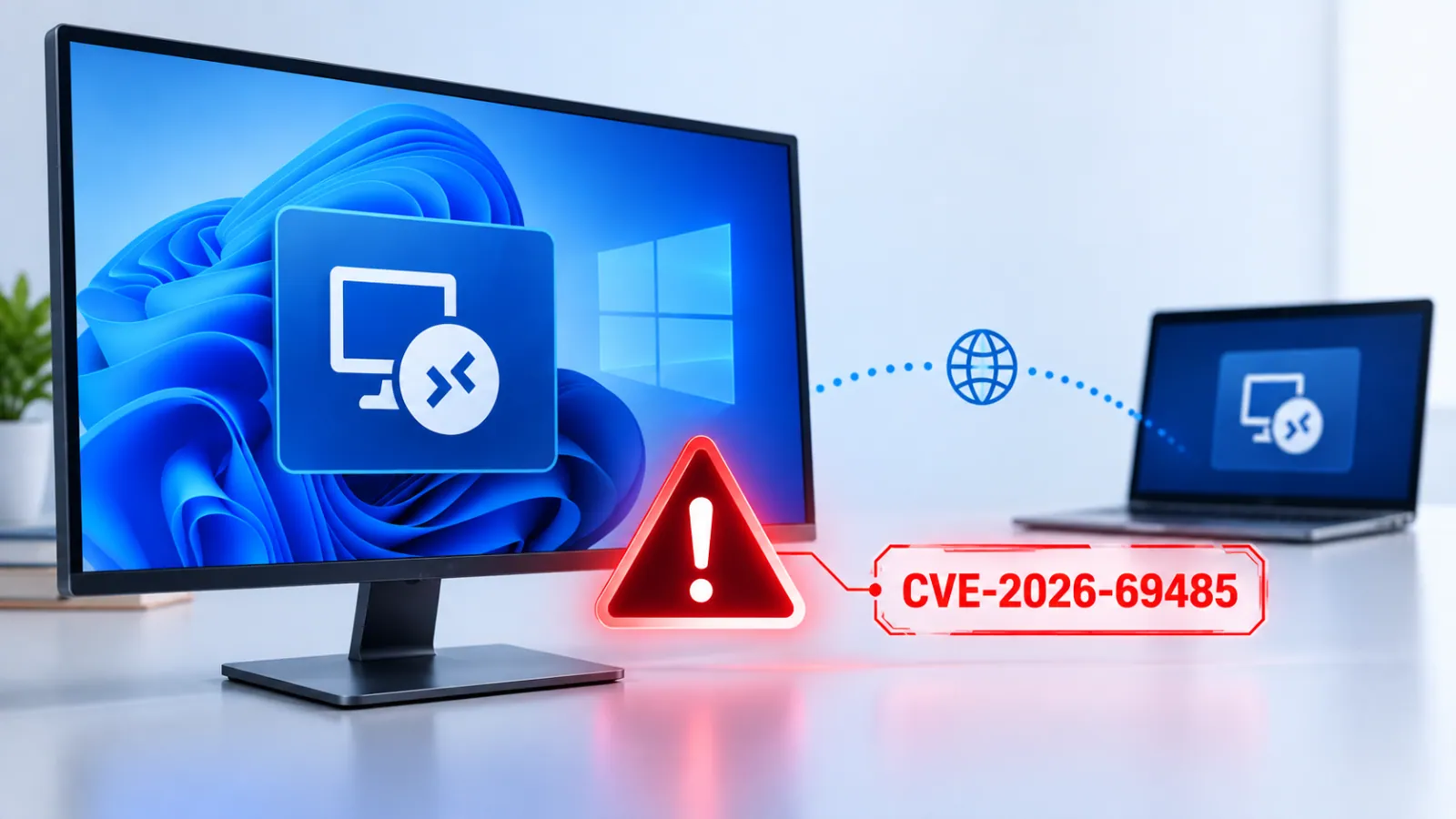
Microsoft on Tuesday released a set of security updates that address CVE-2026-69485, an Important‑rated vulnerability in the Windows Remote Desktop Client that could enable remote code execution. The advisory, first reported by cybersecuritynews, highlights the urgency of applying the patches to any systems that rely on the client for remote access.
The flaw resides in the way the Remote Desktop Client processes certain network packets. An attacker who has already obtained a low‑privilege, authenticated account on a target machine can craft a specially designed request that triggers the vulnerability, allowing the attacker to run arbitrary code in the context of the affected service. Because the exploit requires only minimal privileges, it could be leveraged to elevate access or to install additional malicious payloads on the host.
Remote Desktop Protocol (RDP) is a core component of Windows environments, providing administrators and end users with graphical access to remote machines. The client side of the protocol is installed on virtually every Windows workstation, which means the vulnerability has a broad attack surface. Microsoft classifies the issue as Important, indicating that successful exploitation could lead to significant impact, especially in enterprise networks where RDP is frequently used for management and support tasks.
In response, Microsoft’s security team issued patches for all supported versions of Windows that include the Remote Desktop Client. The updates modify the packet‑handling routine to validate input more rigorously, thereby preventing the malicious sequence from executing. Microsoft advises organizations to deploy the patches immediately, verify that they have been installed, and restart affected systems where required. The company also recommends disabling unnecessary RDP services and enforcing strong authentication mechanisms as additional layers of defense.
Security experts caution that attackers often target RDP as an entry point because it can bypass firewalls and other perimeter controls when misconfigured. The CVE‑2026‑69485 flaw underscores the need for continuous vulnerability management and timely patching, especially for services that are exposed to external networks. Administrators are urged to review their remote access policies, enforce network‑level authentication, and monitor logs for anomalous RDP activity.
Microsoft will continue to monitor the situation and release further guidance if additional concerns emerge. Organizations are encouraged to stay informed through official security bulletins and reputable threat‑intelligence sources. The rapid release of the fix demonstrates Microsoft’s commitment to addressing high‑risk vulnerabilities, but the onus remains on users and IT teams to apply updates promptly to mitigate the risk posed by this and similar flaws.


Comments (0)
Be the first to comment.
Join the discussion