Meta Introduces Parental Alerts for Repeated Self‑Harm Searches and AI Chats on Facebook
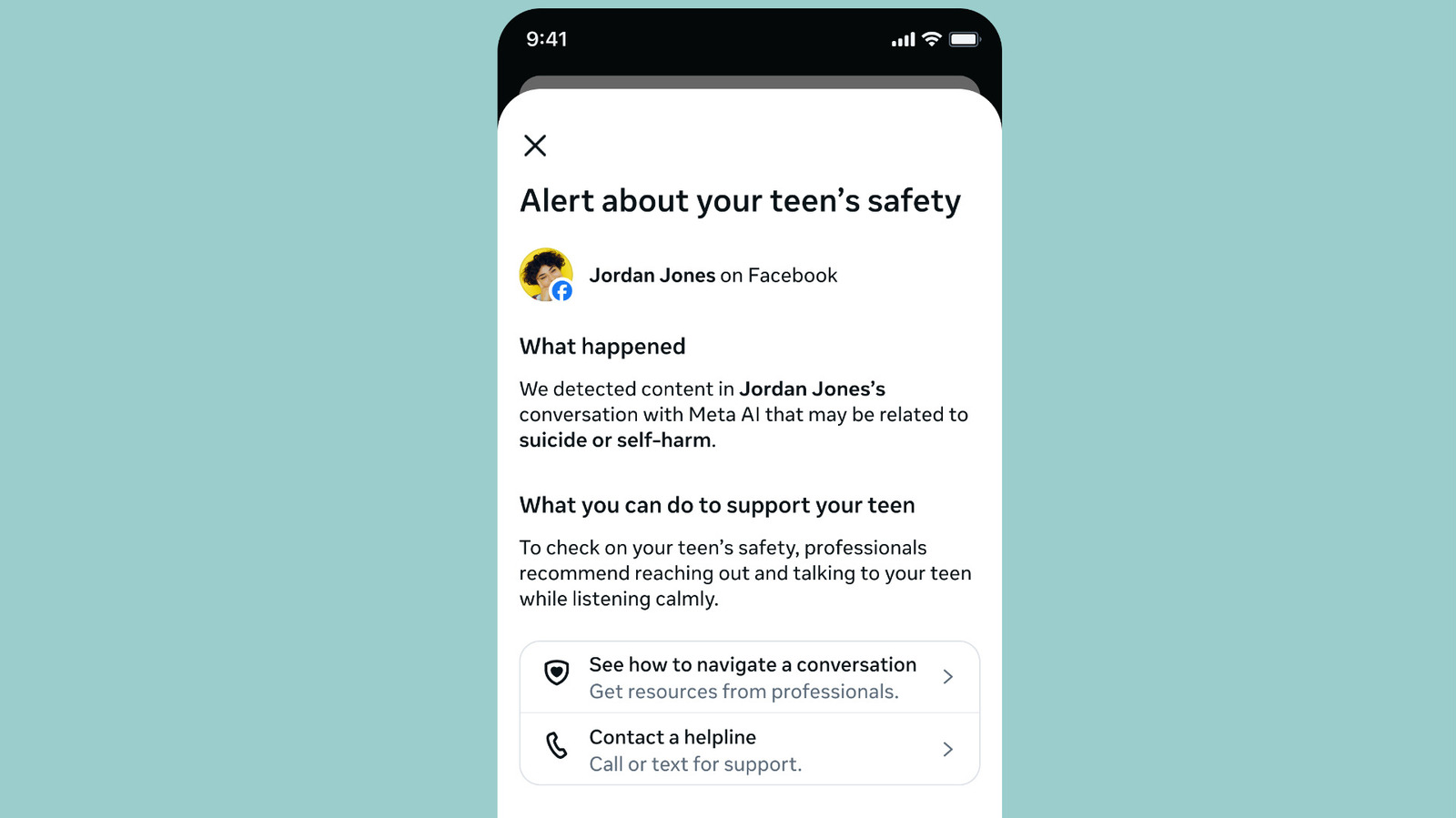
Meta announced that its Facebook platform will now send notifications to parents when a teenager repeatedly looks for self‑harm material. The new feature also extends to alerts about any conversations the teen has with Meta's artificial‑intelligence tools, such as the chatbot integrated into the app.
The move comes as part of Meta's broader effort to strengthen safety tools for younger users. Under the updated system, the algorithm will flag patterns of search behavior that suggest ongoing interest in self‑injurious content, rather than a single isolated query. When the threshold is reached, a push notification is sent to the account holder's designated parent or guardian, prompting them to discuss the issue with the teen.
Meta's decision follows growing scrutiny from mental‑health advocates and regulators who argue that social‑media companies must play a more active role in preventing online harms. In recent years, platforms have faced criticism for allowing harmful content to spread unchecked, especially among adolescents who are more vulnerable to suicidal ideation and self‑harm behaviors. The company's new alerts aim to give families a timely signal, potentially enabling earlier intervention.
In addition to self‑harm monitoring, the policy now covers interactions with Meta's AI assistants. If a teenager engages in repeated or concerning dialogue with the chatbot—such as asking for advice on self‑harm methods or expressing distress—the system will likewise notify a parent. Meta says the feature is designed to complement existing parental‑control settings, not replace them, and that it respects user privacy by only sharing the fact that an alert was triggered, not the full content of the searches or chats.
Industry analysts note that Meta is not the first tech giant to embed parental alerts for risky behavior, but its scale makes the policy noteworthy. Facebook hosts billions of active users worldwide, with a sizable teen demographic. By leveraging its machine‑learning infrastructure, Meta can detect patterns across vast amounts of data, a capability that smaller platforms may lack.
Critics caution that alerts could lead to privacy concerns or strained family dynamics if not handled sensitively. They suggest that parents receive guidance on how to approach the conversation constructively. Meta has pledged to provide educational resources alongside the notifications, aiming to help families navigate difficult topics without stigmatizing the teen.
Looking ahead, Meta plans to monitor the effectiveness of the alerts and may adjust the sensitivity thresholds based on feedback from users, mental‑health professionals, and policymakers. The company has not disclosed a timeline for rolling out the feature globally, but it is expected to be deployed in regions where parental‑consent regulations already apply.



Comments (0)
Be the first to comment.
Join the discussion