Lava Dome Swells on Russia’s Shiveluch Volcano, Satellite Shows Melt Flowing Like Toothpaste
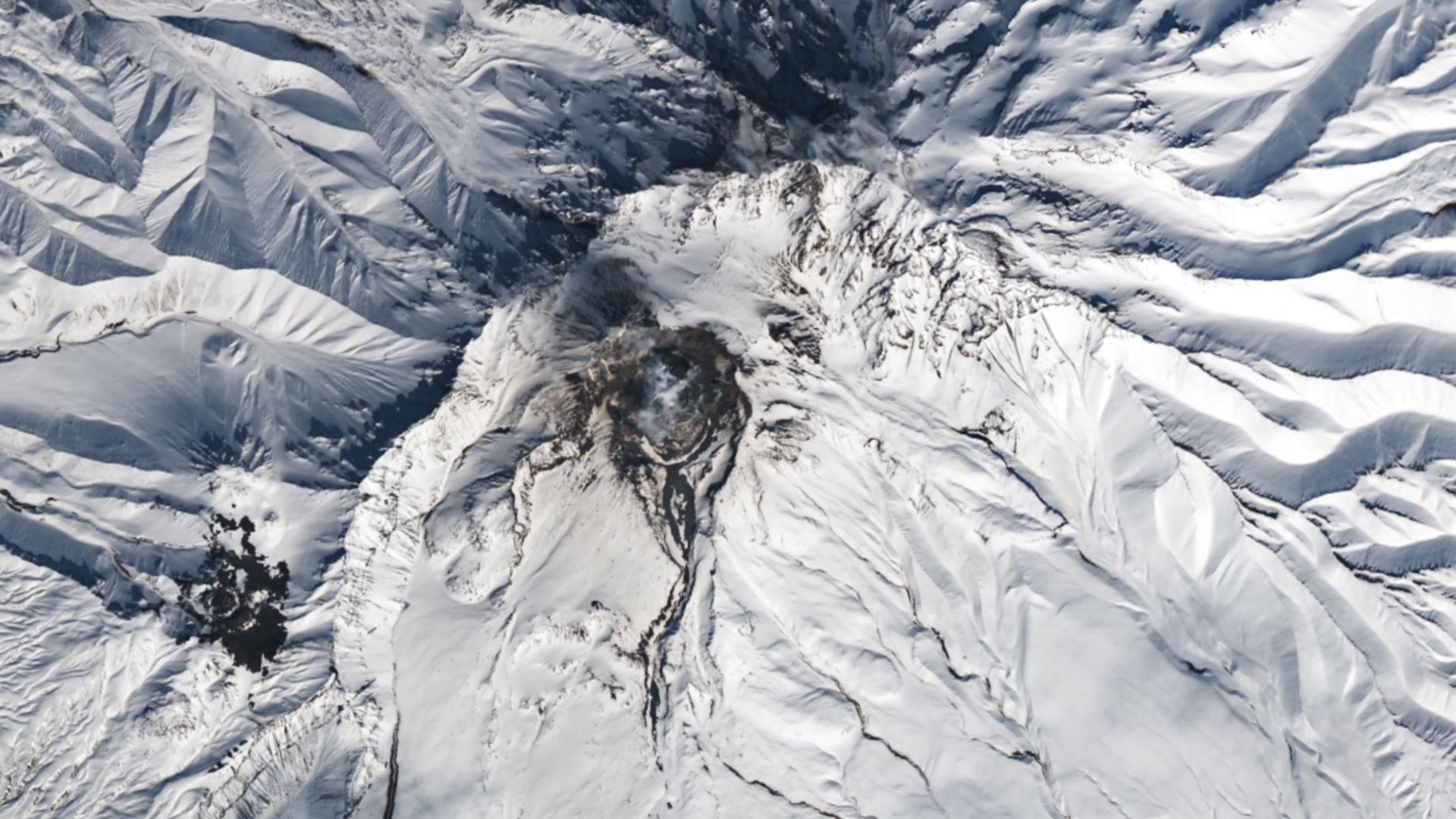
A new satellite image captured on April 23, 2026 shows a rapidly expanding lava dome at the summit of Shiveluch, a super‑active volcano on Russia’s Kamchatka Peninsula, with molten rock spilling over the surrounding snow in a manner likened to toothpaste.
Shiveluch, which rises more than 3,300 metres above sea level, has been one of the most persistently eruptive volcanoes in the region for decades. Its frequent explosions and ash plumes have earned it a reputation for sudden, hazardous activity, prompting continuous monitoring by Russian and international observatories.
The image was acquired by the Landsat 9 satellite, whose multispectral sensors captured the contrast between bright snowfields and the dark, viscous lava advancing down the crater walls. The photograph highlights a distinct band of melt that has begun to erode the snow cover, indicating that the dome’s growth is outpacing the rate at which the frozen mantle can re‑freeze.
Scientists warn that such dome expansion can increase the likelihood of a sector collapse, a type of landslide that can trigger explosive pyroclastic flows or generate lahars when meltwater mixes with volcanic debris. While the immediate vicinity of Shiveluch is sparsely populated, nearby settlements such as Klyuchi and the town of Petropavlovsk‑Kamchatsky could face ash fall or secondary flooding if a collapse occurs.
Lava domes form when viscous magma extrudes slowly, piling up near the vent rather than flowing away. Their growth is often punctuated by periods of rapid inflation, followed by sudden collapse. Monitoring techniques now combine satellite imaging, ground‑based seismic networks, and thermal cameras to detect subtle changes in dome shape, temperature, and gas emissions.
The Russian Federal Service for Supervision of Natural Monopolies (Rosprirodnadzor) has issued an advisory urging local authorities to keep evacuation routes ready and to maintain air‑traffic alerts for the region’s busy flight paths. Researchers anticipate that subsequent passes of Landsat 9 and other Earth‑observation platforms will track the dome’s evolution, providing critical data for hazard assessments in the weeks ahead.


Comments (0)
Be the first to comment.
Join the discussion