Indonesia's Peatlands Ignite Early as El Niño Fuels Unprecedented Underground Fires
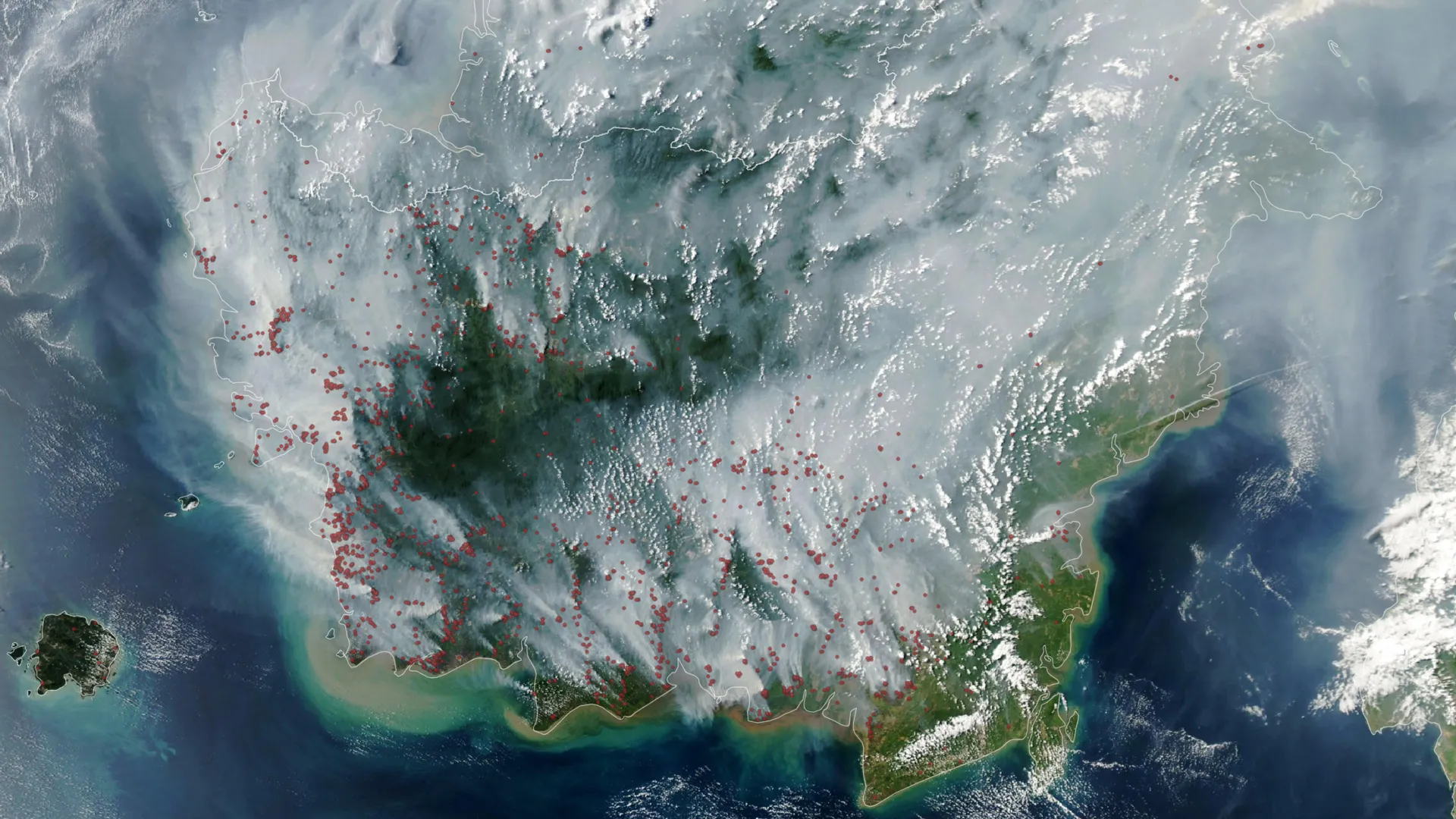
Indonesia is confronting an early surge of subterranean peat fires as the 2026 fire season begins under the influence of a strengthening El Niño and an intense drought that has left wetlands bone‑dry. Satellite monitoring this month shows a sharp rise in hot spots across Sumatra, Kalimantan and Papua, indicating that fires are igniting beneath the surface weeks before the typical peak of the season.
Peatlands, composed of centuries‑old organic matter, are especially prone to smoldering combustion. When the water table recedes, the peat dries and can ignite without visible flames, continuing to burn underground for weeks or even months. This hidden nature makes the fires difficult to detect and extinguish, while the slow, oxygen‑starved combustion produces large quantities of fine particulate matter and volatile organic compounds that are far more hazardous than the smoke from surface fires.
The health and environmental stakes are high. Fine particles (PM2.5) generated by peat fires can travel hundreds of kilometers, worsening air quality in major Indonesian cities and neighboring countries. Communities report increased respiratory complaints, and the haze contributes to school closures and reduced labor productivity. From a climate perspective, the carbon stored in peat—estimated at up to 30 percent of the world’s soil carbon—is released rapidly, adding a potent source of greenhouse gases to an already warming atmosphere.
Historically, Indonesia’s fire season peaks between August and October, when the dry season aligns with land‑clearing activities. This year, however, the combination of an early onset of drought and an unusually strong El Niño has shifted the timeline, allowing fires to ignite as early as May. Comparisons with the 2015 and 2019 crises—years marked by severe haze—suggest that the current conditions could produce a similarly extensive, if not larger, impact if containment efforts falter.
Authorities have mobilized fire‑fighting crews, aerial water drops, and community alert systems, but the underground nature of peat combustion limits the effectiveness of conventional suppression tactics. International agencies are monitoring the situation, and scientists stress that restoring peat hydrology—through re‑wetting projects and stricter land‑use enforcement—remains the most reliable long‑term mitigation strategy. As the season progresses, the trajectory of these hidden fires will shape regional air quality, public health outcomes, and Indonesia’s contribution to global carbon emissions.


Comments (0)
Be the first to comment.
Join the discussion