Record-Breaking Undersea Pyroclastic Flow Discovered in the Planet's Deepest Trench
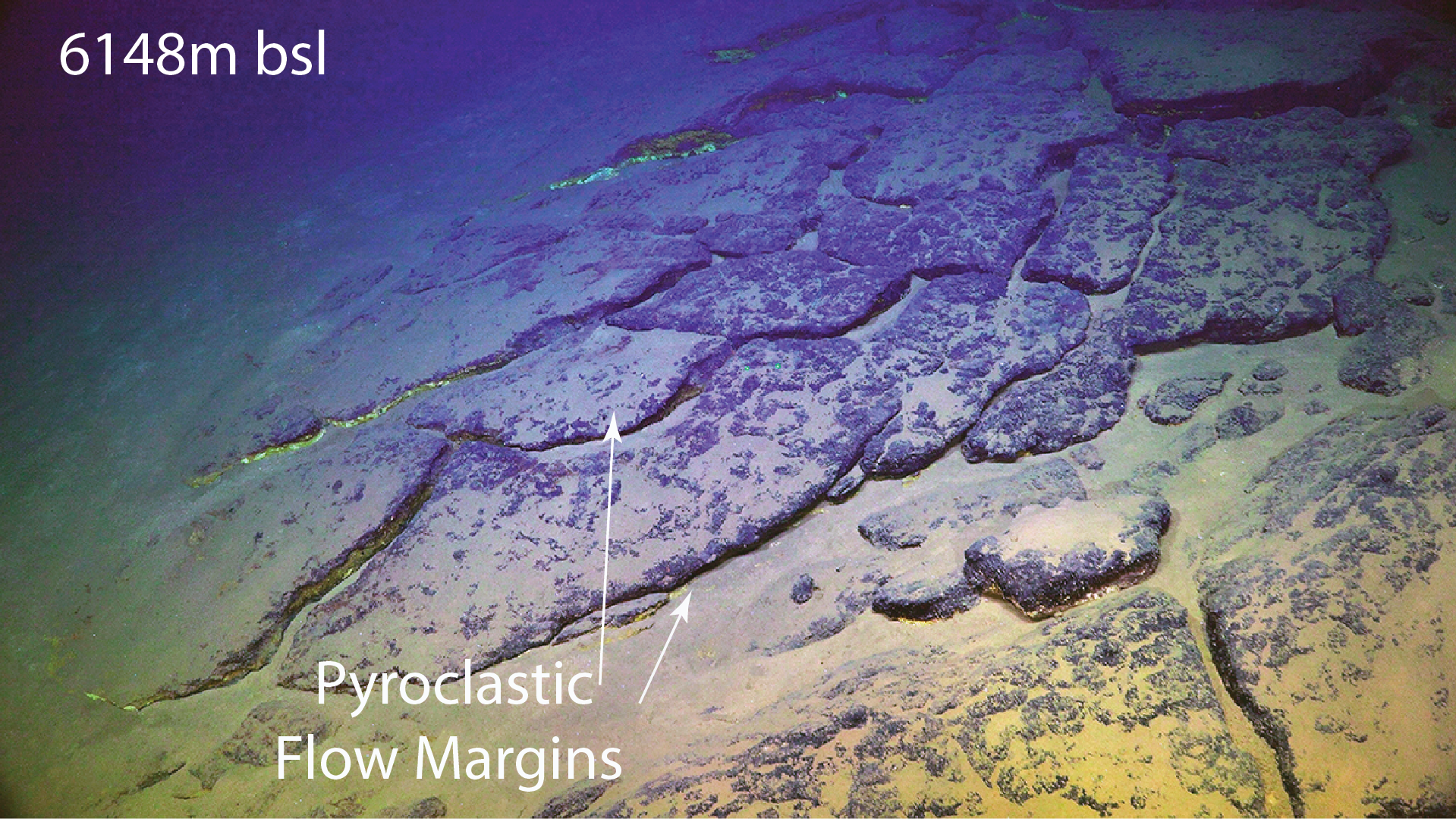
A multinational research team using a deep‑sea submersible has documented the deepest known pyroclastic volcanic flow on Earth, a find that challenges long‑standing assumptions about where the planet’s most violent eruptions can occur. The flow was captured in the Challenger Deep, the lowest point of the Mariana Trench, at a depth exceeding 10,900 meters, making it the first such feature ever observed at such extreme pressure and darkness.
The expedition, part of a broader effort to map the geology of the world’s oceanic trenches, deployed a crewed vehicle equipped with high‑definition cameras and multi‑beam sonar. While surveying the trench floor, the pilots encountered a massive, ash‑laden deposit that radiated outward from a central vent. The morphology and composition of the deposit matched that of pyroclastic flows—rapidly moving clouds of hot gas, ash, and rock fragments—commonly associated with explosive eruptions on land.
Geologists say the discovery is surprising because the Mariana Trench lies far from known volcanic arcs, and the extreme hydrostatic pressure at such depths was thought to suppress the kind of gas‑rich eruptions that produce pyroclastic flows. The presence of a vent that generated enough volatile material to breach the surrounding basaltic crust suggests that melt generation and gas accumulation can still occur under conditions previously deemed inhospitable.
Experts emphasize that the find has implications for our understanding of the deep‑sea carbon cycle and seismic risk. Pyroclastic deposits can transport volcanic gases, including carbon dioxide and sulfur compounds, into the abyssal environment, potentially influencing ocean chemistry over geological timescales. Additionally, the sudden release of energy in a trench setting could trigger localized seismic disturbances, a factor that may need to be incorporated into hazard models for submersible operations.
The research team plans to return with additional instrumentation to sample the flow material directly and to map the surrounding area in finer detail. By analyzing the chemistry of the ash and the surrounding sediments, scientists hope to reconstruct the eruption’s magnitude and frequency. The unexpected nature of the discovery underscores the importance of continued exploration of Earth’s most remote frontiers, where each new observation can upend established geological paradigms.


Comments (0)
Be the first to comment.
Join the discussion