Starship's Massive Scale Positions It as Cornerstone of NASA's Lunar Return
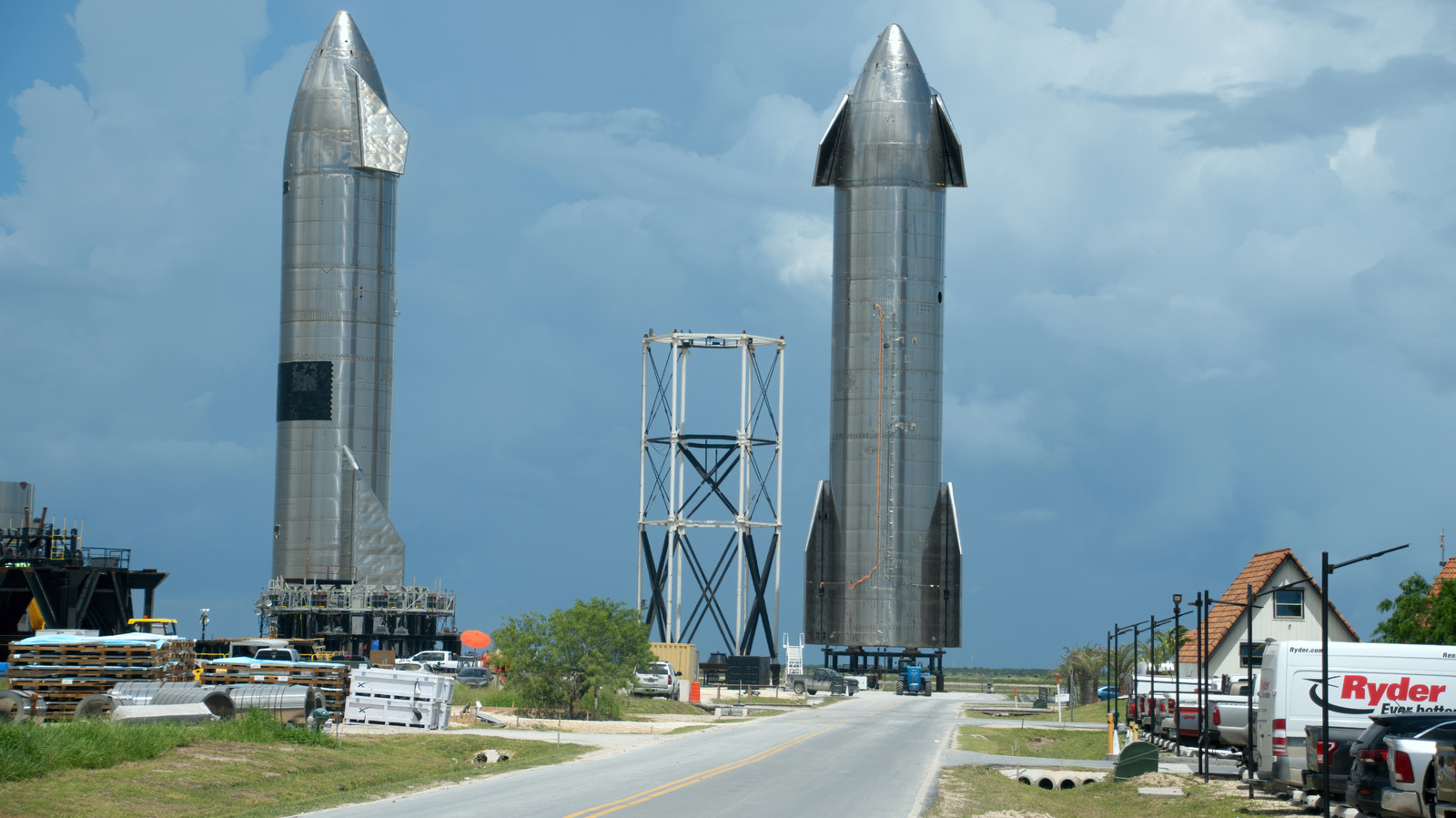
NASA’s Artemis program has identified SpaceX’s Starship as a central element in its strategy to return humans to the Moon, leveraging the vehicle’s unprecedented size and fully reusable design to lower costs and increase launch cadence.
Standing roughly 120 metres tall when its booster, Super Heavy, is attached, Starship dwarfs most existing launch systems. Its 9‑metre‑wide core and a combined lift‑off mass exceeding 5,000 metric tonnes give it a payload capacity that eclipses the Saturn V, the rocket that carried Apollo astronauts to the lunar surface.
The system’s two‑stage architecture separates the responsibilities of launch and orbital operations. The first stage, Super Heavy, houses dozens of Raptor engines that generate the thrust needed to escape Earth’s gravity. After burnout, it separates and is intended to return for a controlled landing, while the second stage—simply called Starship—continues to orbit, equipped with its own set of Raptor engines for maneuvering, refueling and deep‑space missions.
Beyond sheer size, Starship’s design promises rapid reusability. Both stages are built to land vertically and be turned around for subsequent flights within days, a capability that could dramatically reduce the cost per kilogram of cargo sent to lunar orbit. The vehicle’s large interior volume also allows it to carry crew, cargo, and even lunar landers in a single launch, simplifying mission architecture for NASA’s planned Gateway outpost and surface expeditions.
SpaceX is currently preparing for a series of high‑altitude and orbital test flights that will validate the integrated system’s performance, including its ability to refuel in orbit—a critical step for deep‑space missions. Successful demonstrations are expected to shape the final contract terms between NASA and SpaceX, influencing the timeline for crewed lunar landings slated for the mid‑2020s.
If Starship meets its ambitious milestones, it could become the workhorse not only for NASA’s Moon ambitions but also for future Mars missions, satellite deployments, and commercial payloads, marking a transformative shift in how humanity accesses space.



Comments (0)
Be the first to comment.
Join the discussion