Google upgrades Gemini for Mac, adding automated eBay listings and form‑filling
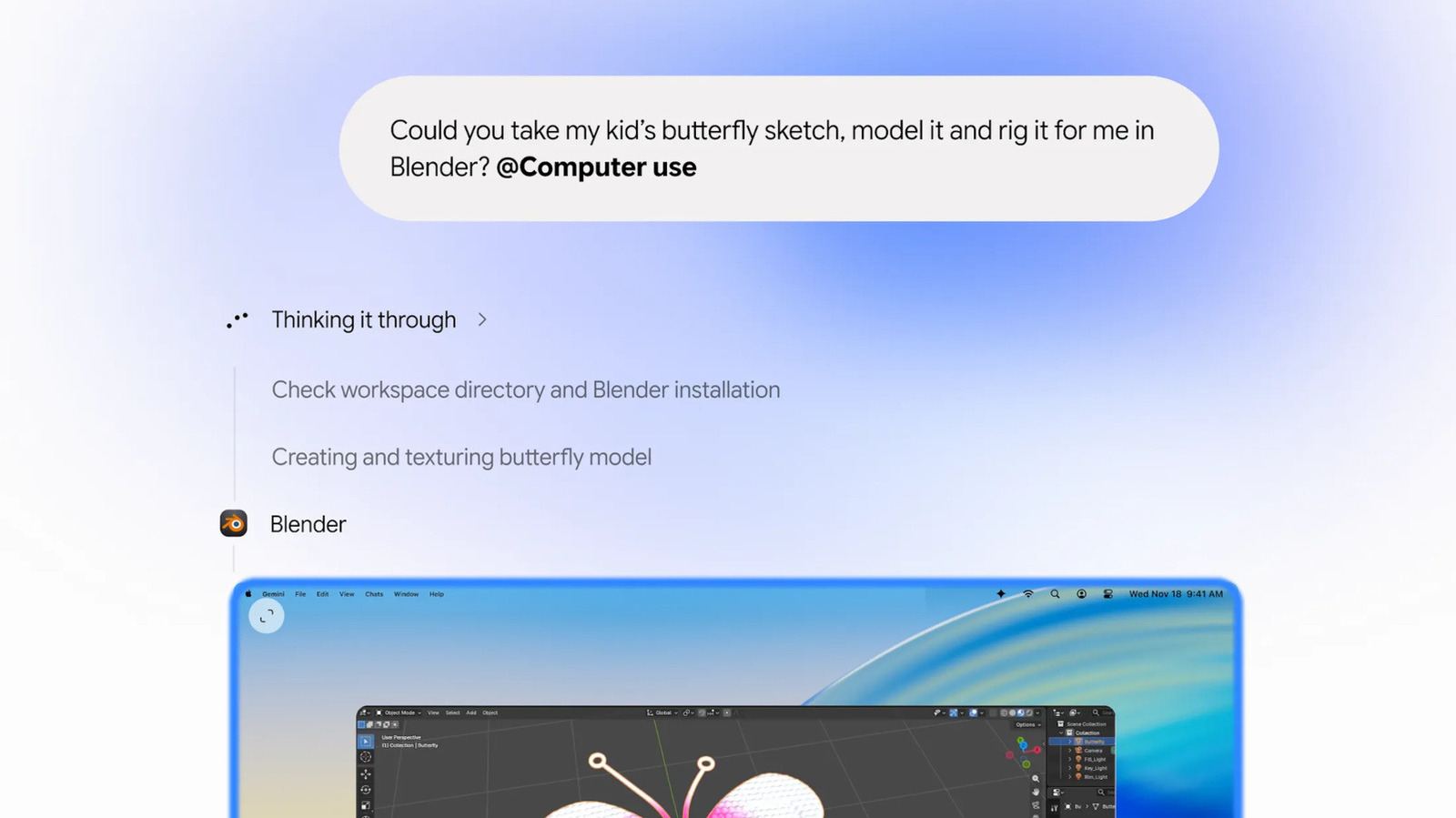
Google announced today that its Gemini AI assistant for macOS has received a major update aimed at reducing manual, repetitive work. The new version can run directly on a Mac, using the computer’s own resources to complete tasks that previously required multiple clicks and copy‑paste actions.
Among the highlighted functions are the ability to generate eBay product listings in bulk, accelerate creative pipelines such as drafting copy or generating design variations, and automatically populate online forms with stored information. Users can invoke Gemini through a simple prompt, and the assistant will navigate the appropriate web pages, enter data and confirm submissions without further input.
The upgrade relies on a hybrid model that combines cloud‑based language processing with on‑device execution. By performing the final steps locally, Gemini can interact with native macOS APIs, access the file system securely and keep sensitive data out of the cloud. Google says this approach balances speed with privacy, a point that has become a selling feature for AI tools on personal computers.
The move reflects a broader trend of AI‑driven productivity assistants expanding beyond smartphones and browsers. Competitors such as Microsoft’s Copilot for Windows and Apple’s own Siri shortcuts have recently added similar automation capabilities. Google’s decision to focus on the Mac platform signals its intent to capture a share of the professional market that relies heavily on desktop applications.
For freelancers, small businesses and power users, the ability to offload routine chores could translate into measurable time savings. Automating eBay listings, for instance, can streamline inventory management for sellers who handle dozens of items daily. At the same time, industry observers caution that widespread adoption may reshape certain job functions, prompting workers to shift toward higher‑level decision making.
Google has opened the updated Gemini app to a public beta, inviting feedback on performance and edge‑case behavior. The company indicated that future releases will broaden the range of supported websites, improve multi‑step reasoning, and integrate more tightly with third‑party productivity suites. As the feature set matures, the assistant could become a staple of the macOS workflow for a growing segment of users.



Comments (0)
Be the first to comment.
Join the discussion