From Selfies to Science: How Beach Photos Are Informing Climate Research
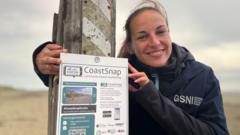
In an innovative approach to environmental monitoring, scientists are now harnessing the power of everyday photography to deepen their understanding of climate change's effects on global coastlines. This collaborative effort transforms casual beach snapshots into valuable scientific data, enlisting the public as a vast network of citizen scientists.
The initiative, initially highlighted by BBC Science, recognizes that millions of photographs taken by beachgoers over years and decades offer an unparalleled visual record. These images can reveal subtle yet significant alterations to shorelines, such as shifts in sand dunes, changes in beach width, patterns of erosion, and the emergence or submergence of features, all of which are crucial indicators of coastal evolution influenced by climatic shifts.
Traditionally, consistent, long-term monitoring of vast stretches of coastline presents considerable logistical and financial challenges for research institutions. By inviting individuals to contribute their personal photo archives or current observations, researchers gain access to a geographically diverse and historically rich dataset that would otherwise be impossible to compile. Each submitted photograph, when cataloged with its location and date, becomes a data point contributing to a larger picture of coastal vulnerability.
The insights gathered from this photographic evidence are vital for comprehending the real-world impacts of a changing climate. As sea levels rise and extreme weather events, including powerful storms, become more frequent, coastal areas face intensified erosion and habitat loss. Understanding these dynamic processes through direct observation is fundamental for developing effective conservation strategies, informing urban planning, and protecting coastal communities and ecosystems.
This citizen science model democratizes scientific research, allowing anyone with a camera and a passion for the environment to play a direct role in addressing one of the most pressing global challenges. The collective effort of countless individuals submitting their visual records creates a robust, distributed monitoring system that complements traditional scientific methods, providing both broad coverage and historical depth.
Looking ahead, the success of such initiatives underscores the potential for public engagement in large-scale environmental studies. As climate change continues to reshape our planet, continuous and widespread observation will remain critical. Projects like this pave the way for ongoing public participation, ensuring a steady stream of data to track the long-term trends affecting our vulnerable coastlines.
Ultimately, the transformation of holiday memories into scientific insights represents a powerful fusion of technology, community, and environmental stewardship. It demonstrates how seemingly simple actions, when aggregated and analyzed, can yield profound knowledge, helping scientists to better predict, prepare for, and mitigate the far-reaching consequences of a warming world on our precious coastal environments.


Comments (0)
Be the first to comment.
Join the discussion