Fossils Reveal 66‑Pound Rodent Roamed Thailand 34 Million Years Ago
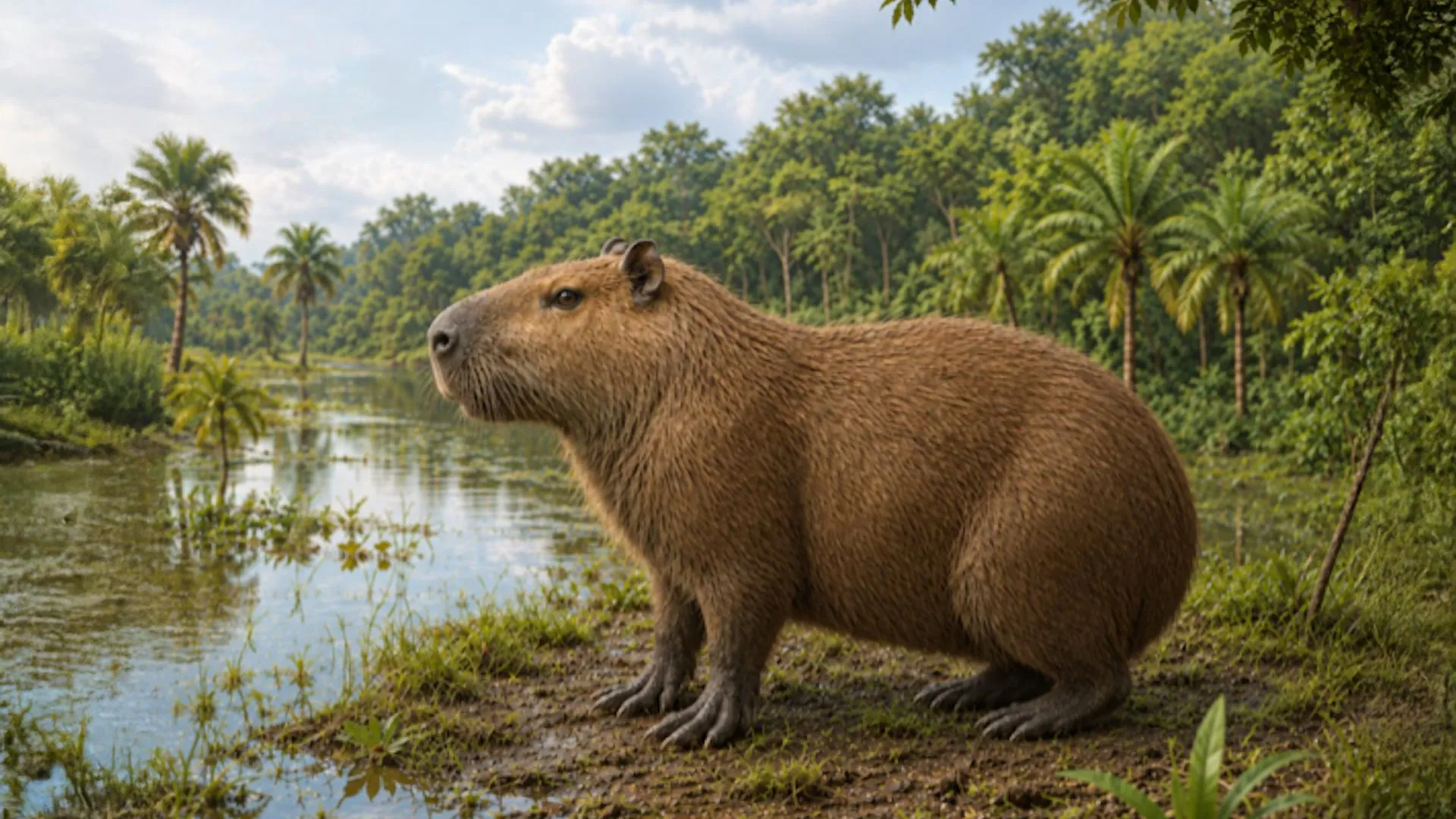
Scientists have announced the discovery of a massive rodent that lived in what is now Thailand about 34 million years ago, pushing back the timeline for the evolution of large-sized rodents. The creature, identified as Yakamys sirindhornae, is estimated to have weighed roughly 30 kilograms (about 66 pounds), making it comparable in size to a modern-day small dog.
The fossils, unearthed from Oligocene‑age sedimentary layers, include a well‑preserved skull and several jaw fragments that allowed researchers to reconstruct the animal's morphology. The dental pattern and bone structure indicate a herbivorous diet, similar to that of today’s capybaras and other large rodents, suggesting that abundant vegetation supported such sizable mammals even in the early stages of the epoch.
Prior to this find, the consensus among paleontologists was that rodents remained relatively small for most of their evolutionary history, with the emergence of truly giant forms occurring only in the more recent Pleistocene. The Thai specimen challenges that view, demonstrating that the lineage leading to today’s oversized rodents had already diversified and attained considerable body mass during the Oligocene, a period marked by cooling climates and the expansion of open habitats across Asia.
While the exact ecological niche of Yakamys sirindhornae remains a subject of ongoing study, its size implies a role as a primary consumer capable of processing tough plant material. The discovery also adds to a growing record of unusual megafauna from Southeast Asia, a region that has yielded a range of extinct mammals, from giant pangolins to massive marsupials, highlighting the area’s importance for understanding mammalian evolution.
Researchers caution that the weight estimate is based on scaling relationships derived from modern rodents and may be refined as additional specimens are examined. Nonetheless, the find underscores the potential for further revelations about ancient ecosystems in the region, especially as more fossil sites are explored with contemporary excavation techniques.
The identification of Yakamys sirindhornae not only expands the known diversity of prehistoric rodents but also prompts a reassessment of how quickly mammals adapted to changing climates and habitats in deep time. Future work will aim to place the species within a broader phylogenetic framework, determine its relationship to other extinct and extant rodents, and explore what factors may have driven the evolution of such large body sizes so early in the mammalian record.


Comments (0)
Be the first to comment.
Join the discussion