Reassessment Reveals Scottish Bog Bronze Boot Likely Not Roman Loot
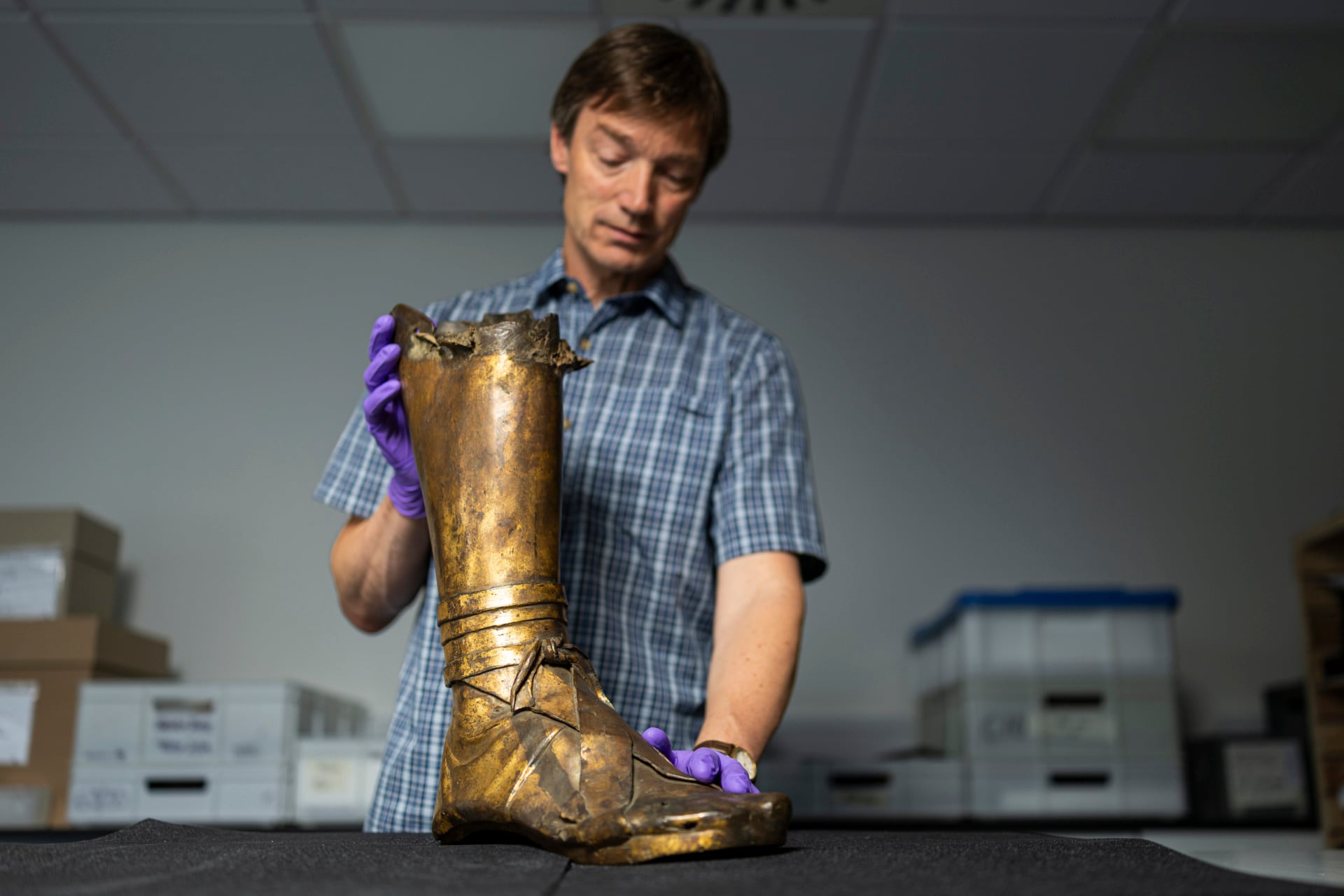
New scientific testing is overturning a two‑century‑old assumption that a massive gilded bronze boot recovered from a Scottish bog was a stolen Roman artifact, suggesting instead that the piece was produced locally and likely served a ceremonial purpose.
The boot, which first emerged from the peat more than 200 years ago, has long been a curiosity of European archaeology. Its size—large enough to cover a man's foot and calf—and its striking gold leaf finish led early scholars to label it a Roman relic, an interpretation that persisted through museum catalogues and popular media.
Researchers from a university metallurgical department applied contemporary analytical methods to the boot's alloy composition and casting marks. Their findings show a metal mixture and manufacturing technique that differ from known Roman bronze work, aligning more closely with Iron Age Celtic metalcraft documented elsewhere in Scotland. Radiometric dating of organic residues attached to the object also points to a later time frame than the Roman occupation of Britain.
Scotland’s peatlands are renowned for preserving artifacts that offer snapshots of pre‑historic life, and the boot fits within that tradition. Its elaborate gilding and oversized form suggest it may have been a votive offering or a status symbol used in ritual processions, rather than a utilitarian piece of footwear. Similar oversized metal objects have been recovered from other bog sites, reinforcing the idea of a regional practice of depositing high‑value items in wetlands.
The reassessment carries implications for how museums present the boot and for broader narratives about cultural exchange in ancient Britain. Curators are expected to update exhibit labels to reflect the new interpretation, and scholars anticipate further comparative studies with other Celtic metal finds. While the boot’s exact function remains a subject of debate, the revised analysis underscores the importance of applying modern techniques to longstanding archaeological mysteries.



Comments (0)
Be the first to comment.
Join the discussion