Decades-Long Decline Detected in Atlantic Heat-Transport Current Raises Climate Concerns
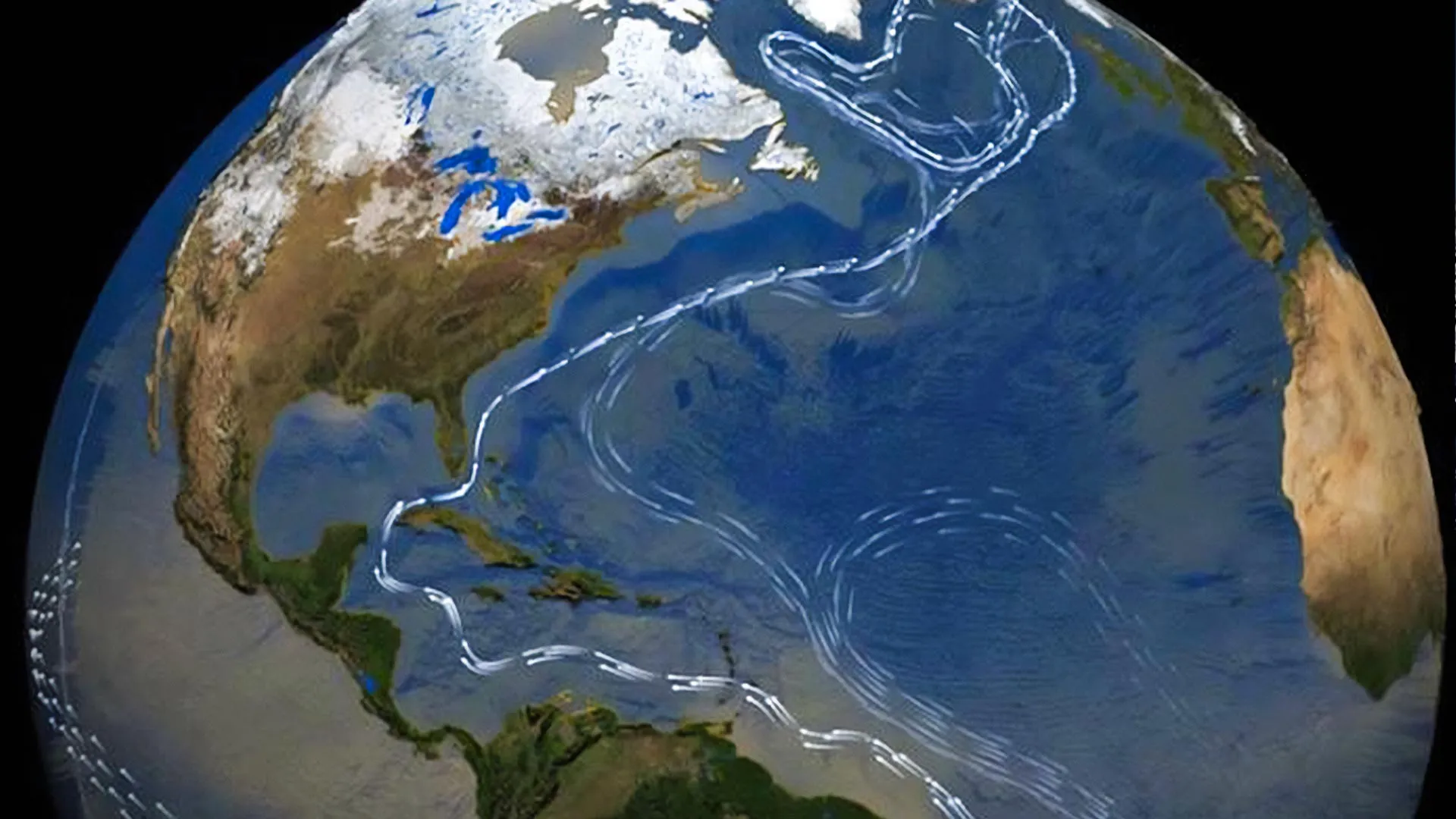
New analysis of long‑term ocean observations indicates that a central segment of the Atlantic Meridional Overturning Circulation (AMOC) has been losing strength for nearly twenty years, prompting researchers to warn of far‑reaching climate implications.
The AMOC, often described as a giant conveyor belt, carries warm, salty water from the tropics toward the North Atlantic where it releases heat into the atmosphere before sinking and flowing southward at depth. This redistribution of heat helps regulate temperature gradients that shape weather systems across the Northern Hemisphere.
Scientists arrived at the conclusion by integrating data from a network of Argo profiling floats, satellite altimetry, and deep‑sea moorings that span a broad swath of the Atlantic. The combined record shows a consistent reduction in the volume of northward flow, with the slowdown becoming apparent in the early 2000s and persisting through the most recent measurements.
If the trend continues, models suggest the weakening could shift precipitation belts, intensify or reroute storm tracks, and alter the severity of winter conditions in Europe and eastern North America. Changes in sea‑surface temperature patterns may also affect marine ecosystems, fisheries, and the carbon‑uptake capacity of the ocean.
Researchers stress that while the observed decline is robust, the exact trajectory remains uncertain. Ongoing monitoring, expanded observational coverage, and refined climate simulations are needed to gauge how quickly the AMOC might further weaken and what thresholds could trigger more abrupt climate responses. The findings underscore the importance of sustained investment in ocean‑observing infrastructure as policymakers grapple with the broader implications for climate adaptation strategies.



Comments (0)
Be the first to comment.
Join the discussion