Canadian CHIME Telescope Demonstrates Solo Mapping of Cosmic Expansion
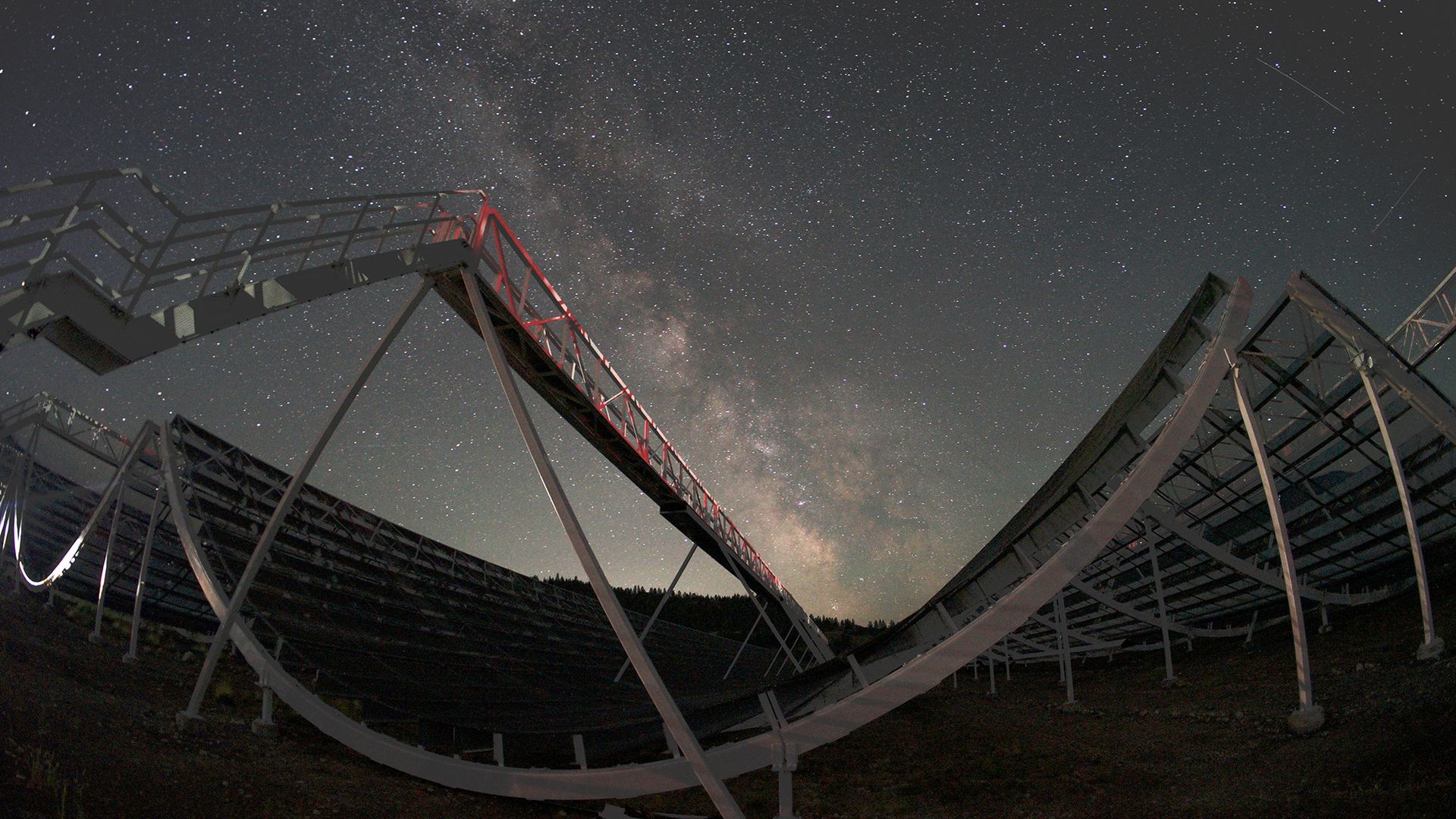
Canada's CHIME (Canadian Hydrogen Intensity Mapping Experiment) telescope has achieved a milestone by independently charting the large‑scale distribution of hydrogen gas to probe the universe’s accelerating expansion, marking the first time the instrument has relied solely on its own observations for this purpose.
Originally built to map the faint 21‑centimeter radio emission from neutral hydrogen across billions of light‑years, CHIME was designed to trace the cosmic web that underpins galaxy formation. By measuring subtle variations in the intensity of this signal, scientists can infer how structures have stretched over time, offering a complementary route to the supernova‑based evidence for dark energy.
In the latest analysis, researchers processed years of CHIME data without cross‑referencing external surveys, demonstrating that the telescope’s intrinsic sensitivity and calibration are sufficient to produce reliable intensity‑mapping maps. This self‑contained approach reduces systematic uncertainties that can arise when stitching together disparate data sets, strengthening confidence in the derived cosmological parameters.
The achievement comes amid a broader push for independent probes of the so‑called Hubble tension—the discrepancy between expansion rates measured locally and those inferred from the early universe. By providing an alternative measurement of the expansion history, CHIME’s results could help reconcile—or further highlight—this fundamental inconsistency.
While the current findings focus on a statistical description of hydrogen distribution, the team plans to refine the technique, extending coverage to higher redshifts and improving angular resolution. Future upgrades to CHIME’s hardware and data‑processing pipelines aim to tighten constraints on the dark energy equation of state and test alternative gravity theories.
Astrophysicists worldwide have welcomed the development as a proof of concept for intensity mapping as a stand‑alone cosmological tool. If subsequent observations continue to match or surpass the precision of traditional methods, CHIME could join a new generation of surveys that map the universe’s expansion without relying on optical telescopes, broadening the toolkit for unraveling one of modern physics’ most perplexing mysteries.


Comments (0)
Be the first to comment.
Join the discussion