Beyond the Math: What a 1000 Wh Portable Power Station Can Actually Power
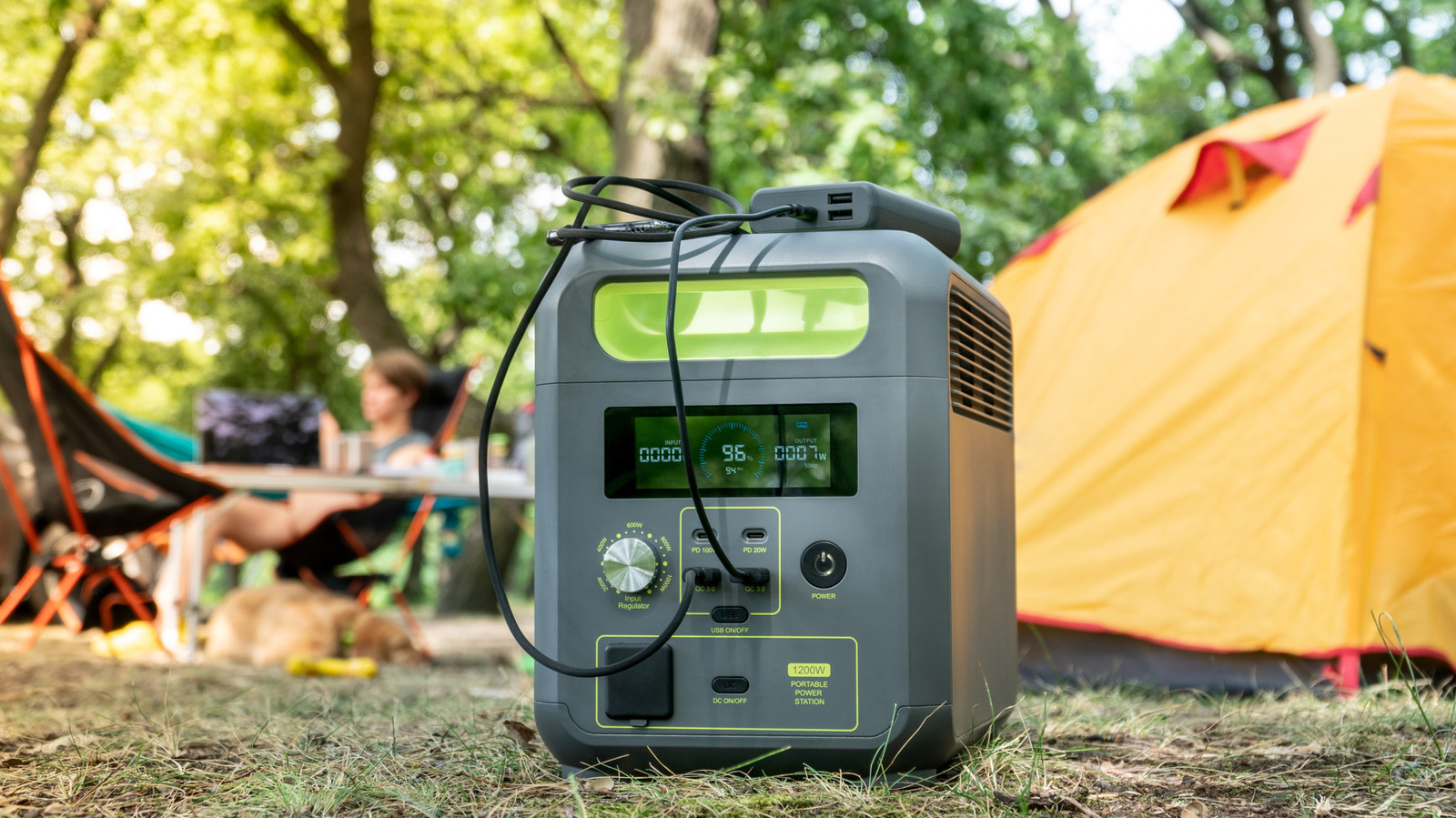
Portable power stations marketed with a 1000‑watt‑hour (Wh) rating are often presented as a simple solution for keeping gadgets alive on the go, but the real‑world runtime depends on more than a quick division of capacity by device draw.
While the textbook approach—dividing 1000 Wh by a device’s wattage—gives a rough upper bound, it assumes a constant load, 100% conversion efficiency, and a perfectly flat battery voltage, none of which hold true in practice.
Inverters that turn the station’s DC storage into usable AC power typically shed 10‑15 percent of the energy as heat, and many devices pull a higher surge current when they start up. Battery chemistry also means the usable capacity drops as voltage falls, especially under heavy loads or in cold weather, further shortening the usable time.
Consequently, a laptop that averages 45 W might run for roughly 18‑20 hours, whereas a small refrigerator drawing 70 W could see only 10‑12 hours of operation. Even low‑draw LED lighting at 10 W can extend well beyond 80 hours, but only if the lights are the sole load and the station’s internal management system allows deep discharge.
These nuances matter for campers, emergency‑preparedness planners, and anyone relying on a portable station during outages. Users are advised to tally the total wattage of all intended devices, factor in a 15‑20 percent loss margin, and consider the station’s recommended depth‑of‑discharge limits to avoid premature battery wear.
Manufacturers increasingly publish runtime tables that incorporate typical inverter losses and average consumption patterns, but they still represent idealized scenarios. Savvy buyers often run a quick spreadsheet calculation: (Battery Wh × 0.85 efficiency) ÷ (Total W) to arrive at a more realistic estimate.
As lithium‑ion and emerging solid‑state technologies push energy density higher, future models will stretch those runtime figures farther. Until then, understanding the interplay of efficiency, load variability, and battery behavior remains the key to getting the most out of a 1000 Wh power station.



Comments (0)
Be the first to comment.
Join the discussion