Antarctic Sea Ice Hits Third‑Lowest Winter Maximum in 2026, Signaling Possible Long‑Term Shift
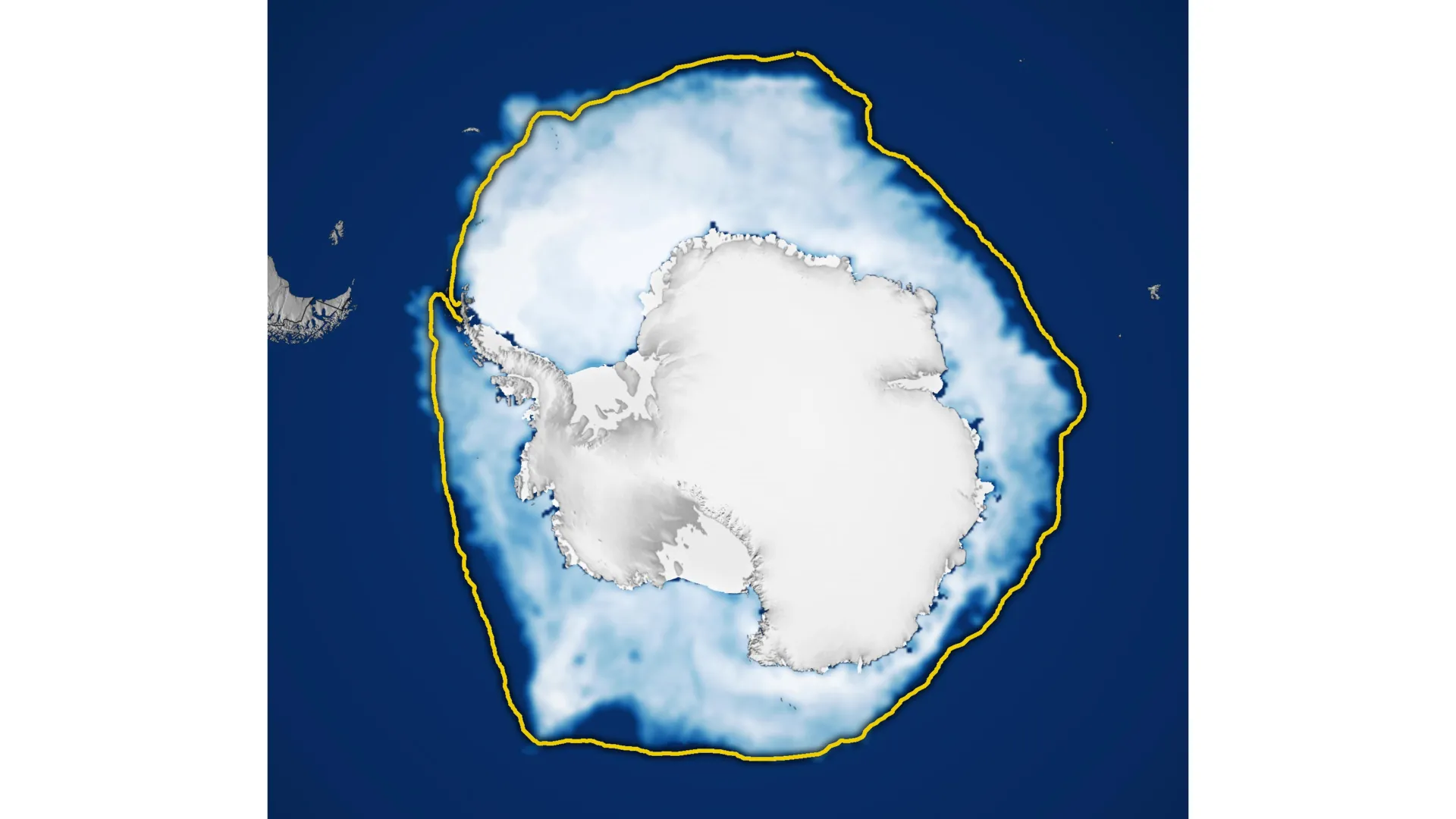
Antarctic sea ice reached its third‑lowest winter maximum on record in 2026, a stark reversal after a decade of unprecedented expansion that saw the continent’s ice edge push farther north than ever before.
Satellite observations show the winter extent in the Southern Hemisphere fell well below the 1979‑2020 average, trailing only the two lowest values previously logged in the satellite era. The decline follows a period that began in the early 2010s when the Antarctic sea‑ice cover consistently set new seasonal highs, a trend that puzzled climate scientists and prompted revisions to model projections.
Researchers are now examining a suite of potential drivers for the abrupt downturn. Changes in wind patterns, particularly a strengthening of the circumpolar westerlies, can redistribute sea‑ice floes and thin the overall pack. At the same time, warmer ocean currents encroaching on the continental shelf may be melting ice from below, while reduced freshwater input from melting glaciers could alter surface salinity and stability. The interplay of these factors is being evaluated through coupled ocean‑atmosphere models and extended field campaigns.
The development carries broader implications for the planet’s climate system. While the Arctic has experienced a steady loss of sea ice for decades, the Antarctic’s recent growth had been cited as a counterbalancing signal. A sudden contraction could diminish that offset, affecting global albedo, heat exchange, and the strength of oceanic circulations that link the poles to lower latitudes.
Ecologically, a thinner and more fragmented ice cover may disrupt habitats for krill, penguins, and seals that rely on stable sea‑ice platforms for breeding and feeding. Such changes can ripple through the Southern Ocean food web and influence commercial fisheries that depend on krill harvests.
Scientists emphasize that the 2026 low does not yet constitute a definitive trend, but it underscores the need for continuous monitoring. Ongoing satellite missions, autonomous floats, and research vessel surveys aim to clarify whether the recent dip marks the start of a longer‑term decline or a temporary fluctuation within a more complex cycle. The findings will feed into next‑generation climate models, which must account for rapid shifts in polar environments to improve predictions of future sea‑level rise and global weather patterns.


Comments (0)
Be the first to comment.
Join the discussion