Ancient Megaliths Reveal Prehistoric Transport Feat: 25‑ton Stones Moved 11 Miles to Form Britain’s Tallest Stone Row
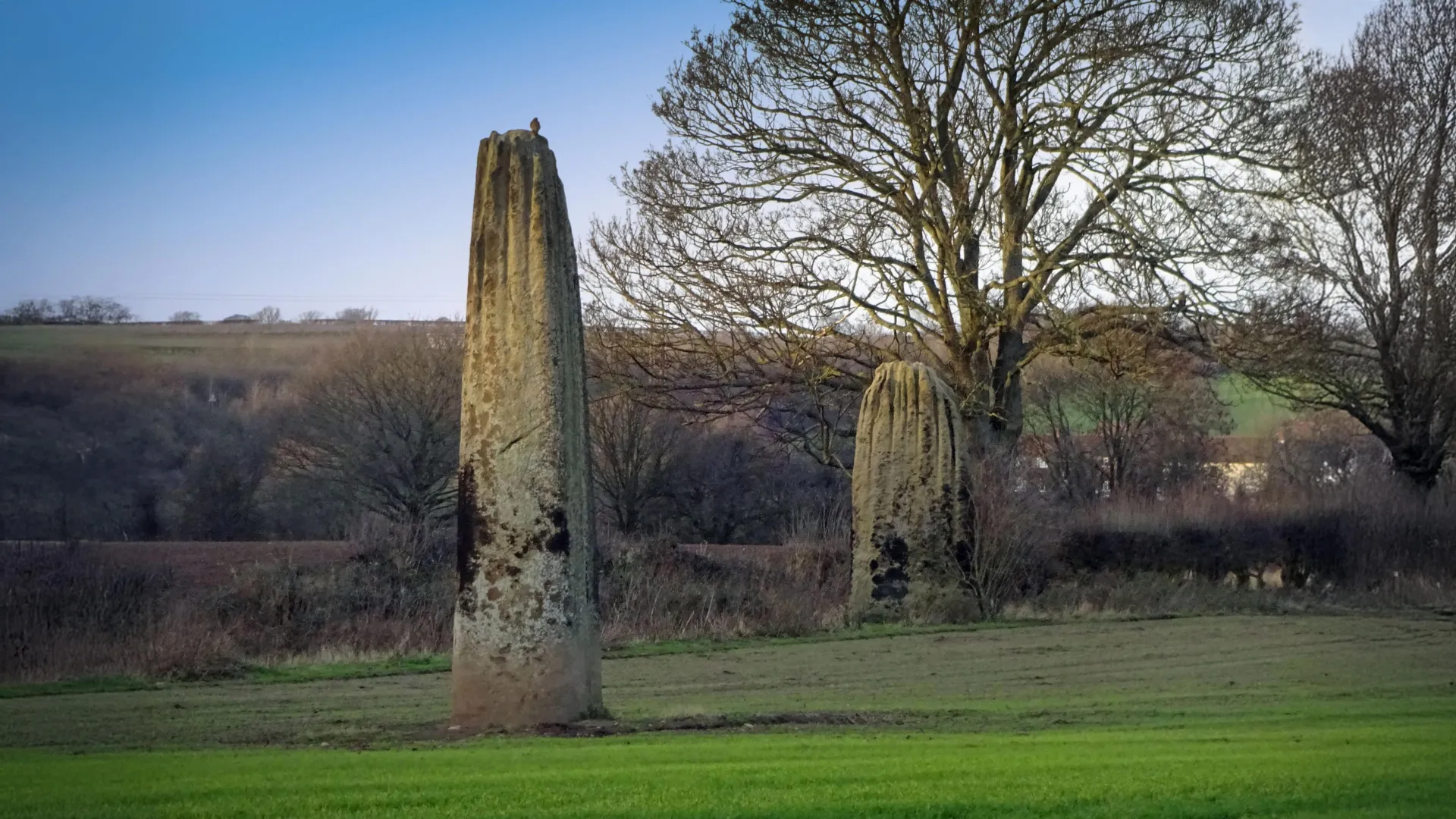
Archaeologists have confirmed that the three monoliths known as the Devil’s Arrows were erected using stones weighing roughly 25 tonnes each, and that the rocks were transported from a source at Brimham Rocks some 18 kilometres (about 11 miles) away. The finding, based on detailed geological testing, pushes the known limits of Neolithic engineering in Britain and dates the construction to around 4,000 years ago.
The Devil’s Arrows stand on the southern edge of the North York Moors, rising to a height that makes them the tallest stone row in the country. Each upright reaches more than four metres into the sky, and the alignment of the three stones has long drawn interest from both scholars and visitors. Their prominence has now been linked to a deliberate choice of material rather than convenience.
Researchers employed petrographic microscopy and geochemical fingerprinting to match the mineral composition of the monoliths with outcrops at Brimham Rocks, a limestone formation known for its distinctive fossil content. Radiocarbon dates from organic material found in the surrounding soil corroborate a construction window in the late Neolithic to early Bronze Age, roughly 2000 BC. The convergence of geological and chronological data leaves little doubt about the stones’ provenance.
Moving a 25‑tonne block over a distance of 18 kilometres would have required coordinated labour, sophisticated planning, and suitable transport technology. While no written records exist, experimental archaeology suggests that a combination of wooden sledges, log rollers, and possibly river or trackway assistance could have been employed. The effort implies a community capable of mobilising and sustaining large workforces, reflecting a social structure with the capacity to direct resources toward monumental projects.
The decision to source the stones from Brimham Rocks, rather than nearer outcrops, hints at cultural or symbolic motivations. The specific limestone may have held particular aesthetic or ritual significance, or its distant origin could have been intended to demonstrate the community’s reach and influence. Such intentionality aligns with patterns observed at other prehistoric sites, where material selection often carries meaning beyond mere practicality.
The Devil’s Arrows now join a growing list of British monuments that reveal the technical ingenuity of their builders, from Stonehenge to the standing stones of Avebury. By establishing a clear link between the monoliths and a remote quarry, the study adds a new dimension to our understanding of prehistoric landscape manipulation. Ongoing surveys and experimental reconstructions aim to refine estimates of the labor force involved and to explore whether similar long‑distance transport was common across the island during this era.


Comments (0)
Be the first to comment.
Join the discussion