Ancient Chilean Eruption Captures Andes in Their Infancy, Offering Fresh Clues to Mountain‑Building Processes
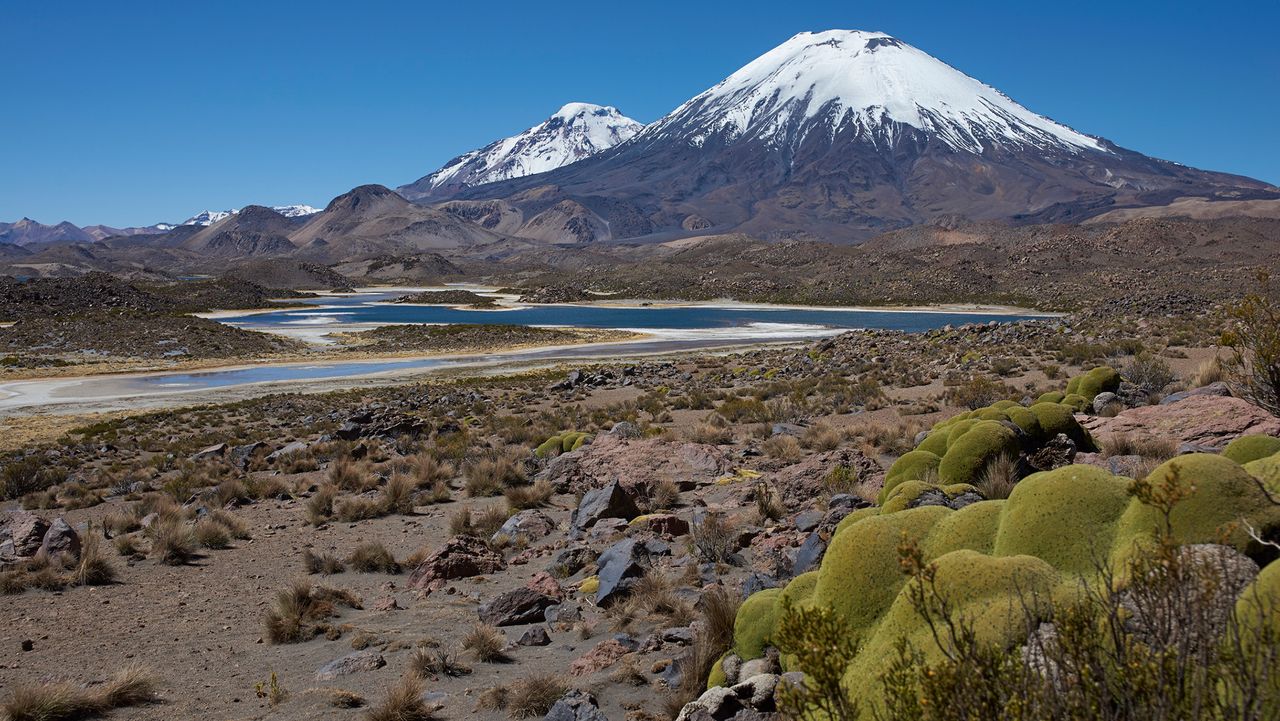
Researchers have identified a 22‑million‑year‑old volcanic deposit that effectively froze a moment in the early development of the Andes, providing a rare window into how the continent‑spanning range rose over millions of years.
The deposit originated from a massive eruption of the Lauca Caldera, situated in what is now northern Chile. The blast expelled a thick blanket of ash and pumice that settled across the surrounding terrain, preserving a detailed record of the landscape much as the ash from Vesuvius sealed the Roman town of Pompeii.
Analysis of the ash‑laden strata reveals that, at the time of the eruption, the Andes were a modest series of uplifted blocks rather than the towering peaks seen today. Fossilized plant remains and sedimentary layers indicate a landscape of rolling hills, river valleys, and volcanic plains, suggesting that the mountain chain grew incrementally rather than through a single, dramatic uplift event.
Scientists employed radiometric dating techniques on volcanic minerals to confirm the 22‑million‑year age, while stratigraphic studies mapped the distribution of ash layers across a wide area. The presence of well‑preserved flora, including early‑Miocene species of podocarp and araucaria, allowed paleobotanists to reconstruct the climate and ecological conditions that accompanied the nascent Andes.
The findings have broader implications for understanding the mechanics of orogeny. The Andes are the product of the Nazca Plate subducting beneath the South American Plate, a process that generates both volcanic activity and crustal shortening. The new evidence supports a model in which the mountain range advanced through a series of modest, sustained uplift episodes, punctuated by occasional volcanic eruptions that contributed ash and lava to the evolving topography.
Beyond academic interest, the study offers insights into how mountain building influences regional climate patterns and biodiversity. The gradual rise of the Andes reshaped atmospheric circulation, affecting precipitation regimes that later fostered the rich ecosystems of the Amazon and the high‑altitude puna.
Future research aims to locate comparable ash deposits along other segments of the Andean spine, which could refine timelines of uplift and help assess the interplay between tectonics and volcanism. Improved understanding of these processes also informs hazard assessments for modern populations living in the seismically active Andean corridor.
By capturing a snapshot of the Andes in their youth, the Lauca Caldera eruption has become a natural archive, allowing scientists to piece together the slow, steady choreography that built one of the world’s most formidable mountain ranges.


Comments (0)
Be the first to comment.
Join the discussion