All‑Female Burial Site Linked to Homo naledi Reveals Unprecedented Prehistoric Ritual
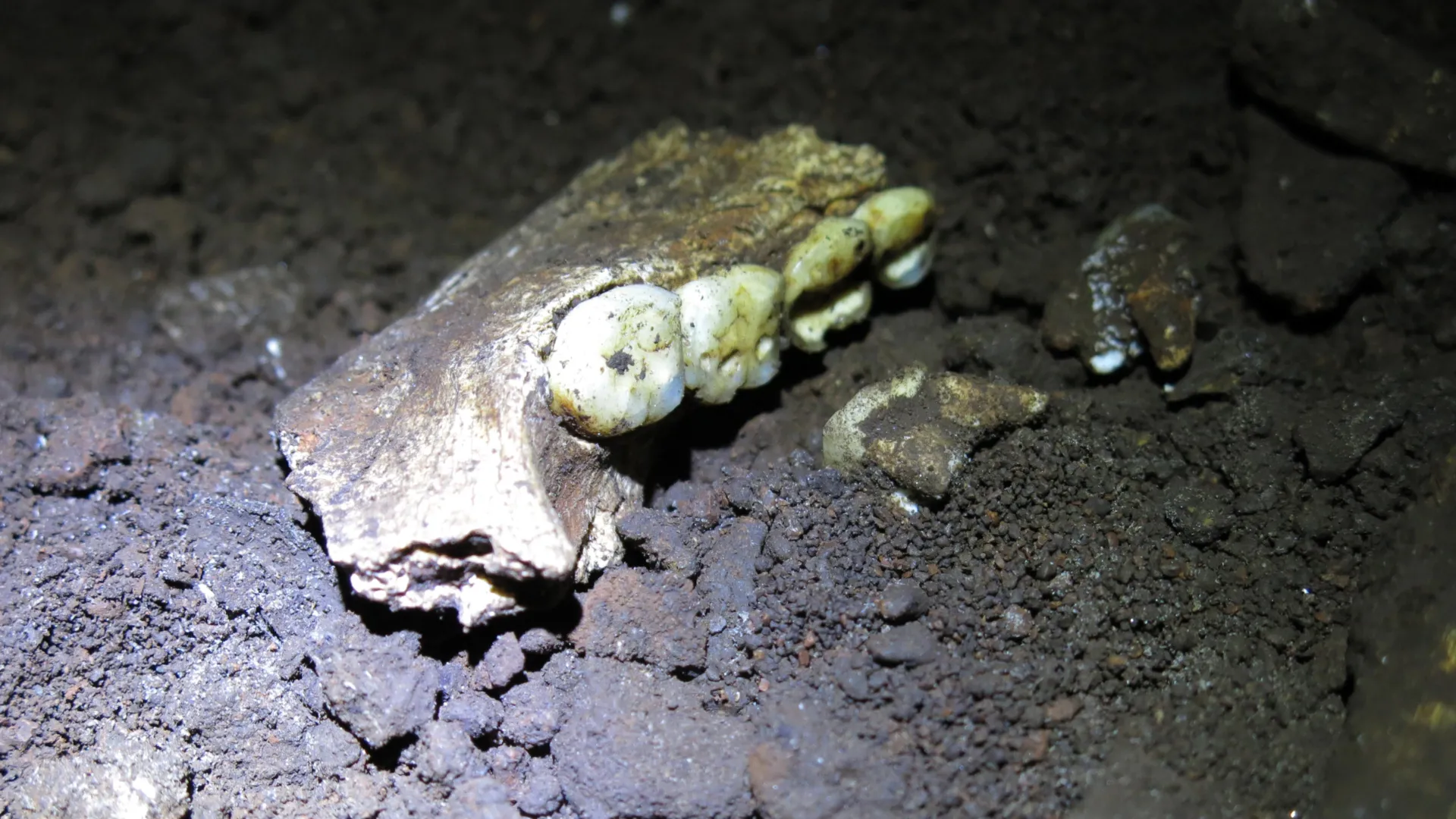
Scientists examining a deep South African cave have uncovered what appears to be a burial assemblage composed entirely of females belonging to the extinct hominin Homo naledi, pushing the timeline of complex social behavior among early humans back more than 240,000 years.
The assemblage, recovered from a remote karst system in Gauteng province, includes the dental remains of at least twenty individuals. Researchers focused on the proteins preserved within the enamel, employing cutting‑edge palaeoproteomic techniques to determine biological sex without relying on DNA, which rarely survives in such ancient contexts.
By sequencing ancient enamel proteins, the team searched for the presence of amelogenin Y, a protein uniquely expressed in males. The analyses consistently failed to detect any male‑specific markers across the sample set, leading the authors to conclude that every individual represented was biologically female. This conclusion marks the first documented instance of a single‑sex burial attributed to a non‑modern hominin.
Homo naledi, first announced to the scientific community in 2015 after the discovery of a prolific fossil deposit in the same region, is known for its mosaic of primitive and derived traits—a small cranial capacity combined with hand morphology suited for tool use. The new findings add a cultural dimension to the species, suggesting that its members may have engaged in ritualized treatment of the dead, a behavior previously documented primarily in later Homo sapiens and Neanderthals.
The all‑female composition of the burial raises questions about the social organization of the group. In modern hunter‑gatherer societies, gendered mortuary practices can reflect roles, status, or kinship structures. While it is premature to project specific cultural meanings onto Homo naledi, the pattern hints at a level of communal care and perhaps a symbolic distinction attached to female members of the group.
These results also challenge longstanding assumptions that complex mortuary customs emerged only with larger‑brained hominins. If Homo naledi, with its modest brain size, was capable of orchestrating a gender‑specific burial, the cognitive prerequisites for such behavior may have been more widely distributed among early human relatives than previously thought.
Future work will aim to extract any surviving genetic material, refine the dating of the burial layer, and compare the protein signatures with those from other Homo naledi sites. As researchers continue to piece together the social fabric of our ancient cousins, the all‑female burial stands as a striking reminder that the deep past still holds many unexpected stories about who we were and how we honored our dead.


Comments (0)
Be the first to comment.
Join the discussion